 Back
BackIntroduction to Chemistry: The Chemical World, Scientific Method, and Classification of Matter
Study Guide - Smart Notes
 Tailored notes based on your materials, expanded with key definitions, examples, and context.
An Introduction to Chemistry
The Nature of Chemistry
Chemistry is the science that studies the composition, structure, properties, and reactions of matter, especially at the atomic and molecular levels. It is a central science, connecting physics with biology and other natural sciences. Understanding chemistry is essential for making informed decisions in everyday life and for careers in health care, engineering, environmental science, and more.
Chemistry investigates both the macroscopic world (what we see and experience) and the microscopic world (atoms and molecules).
Chemists seek to understand the principles that govern the behavior of all matter.
Applications of chemistry include medicine, materials science, environmental protection, and food production.

Thinking Like a Chemist: Macroscopic vs. Microscopic Views
Chemists analyze everyday objects by considering their underlying atomic and molecular structure. For example, water in a lake appears continuous and uniform, but at the microscopic level, it consists of individual water molecules (H2O), each made of two hydrogen atoms and one oxygen atom.
Macroscopic: Observable properties and phenomena (e.g., color, state, temperature).
Microscopic: Structure and behavior of atoms and molecules.

Measurement and Problem Solving
A Scientific Approach to Problem Solving
The scientific method is a logical, systematic approach to solving problems and understanding natural phenomena. It is used in both scientific research and everyday decision-making.
Steps of the Scientific Method:
Collect facts or data (observation).
Formulate a hypothesis (a tentative explanation).
Plan and perform experiments to test the hypothesis.
Modify the hypothesis as necessary based on experimental results.
Hypothesis: A tentative explanation for observations, subject to testing.
Theory: A well-established explanation supported by evidence.
Scientific Law: A statement describing consistent natural phenomena, with no known exceptions under specified conditions.
Example: If you have eight oxygen atoms and fifteen hydrogen atoms, you can make seven water molecules (since each requires two hydrogens and one oxygen), with one hydrogen and one oxygen atom left over.
Matter and Energy
The Particulate Nature of Matter
Matter is anything that has mass and occupies space. All matter is composed of tiny, discrete particles called atoms. Although matter appears continuous to the naked eye, it is actually made up of these fundamental particles.
States of Matter:
Solid: Definite shape and volume; particles are tightly packed and rigid.
Liquid: Definite volume but no definite shape; particles are close but can move past each other.
Gas: No definite shape or volume; particles move freely and are far apart.
Amorphous solids lack a regular internal structure (e.g., glass, plastics), while crystalline solids have a repeating geometric pattern (e.g., salt, sugar).
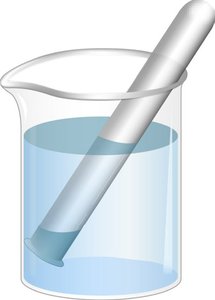
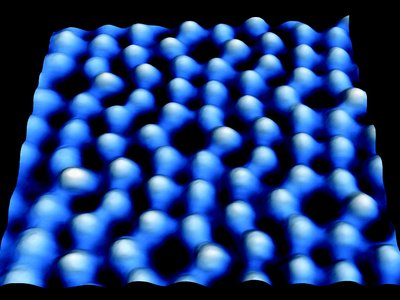
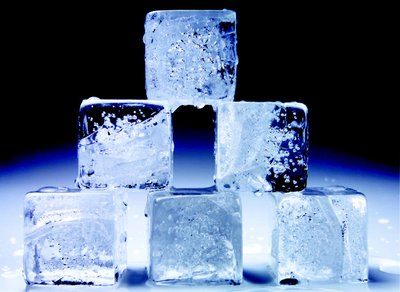

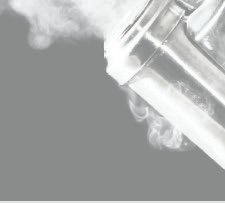
Table: Physical Properties of Solids, Liquids, and Gases
State | Shape | Volume | Particles | Compressibility |
|---|---|---|---|---|
Solid | Definite | Definite | Rigidly clinging; tightly packed | Very slight |
Liquid | Indefinite | Definite | Mobile; adhering | Slight |
Gas | Indefinite | Indefinite | Independent; far apart | High |
Classifying Matter
Pure Substances and Mixtures
Matter can be classified as a pure substance or a mixture based on its composition.
Pure Substance: Has a definite, fixed composition. Can be an element (e.g., gold, oxygen) or a compound (e.g., water, salt).
Mixture: Contains two or more substances physically combined. Composition can vary.
Homogeneous Mixture (Solution): Uniform composition throughout (e.g., saltwater, air).
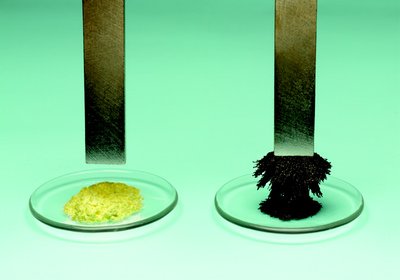
Heterogeneous Mixture: Non-uniform composition; different phases are visible (e.g., sand and iron filings, salad dressing).
Phase: A homogeneous part of a system separated by physical boundaries.
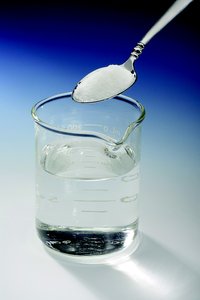
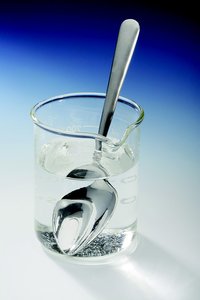
Table: Classification of Matter
Matter | Pure Substances | Mixtures |
|---|---|---|
Homogeneous composition | Elements Compounds | Homogeneous (solutions) Heterogeneous |
Distinguishing Mixtures from Pure Substances
A mixture always contains two or more substances that can be present in varying amounts and can be separated by physical means.
A pure substance always has a definite composition by mass and can only be separated into its elements by chemical means.

Summary Table: Key Terms and Concepts
Term | Definition |
|---|---|
Chemistry | Science of the composition, structure, properties, and reactions of matter |
Scientific Method | Logical approach to solving problems (observation, hypothesis, experiment, theory/law) |
Matter | Anything with mass and volume |
Solid | Definite shape and volume; rigid particles |
Liquid | Definite volume, indefinite shape; mobile particles |
Gas | Indefinite shape and volume; independent particles |
Pure Substance | Definite, fixed composition (element or compound) |
Mixture | Variable composition; can be homogeneous or heterogeneous |
Homogeneous | Uniform composition throughout |
Heterogeneous | Non-uniform composition; visible phases |
Additional info:
Crystalline solids have a regular, repeating pattern; amorphous solids do not.
Most naturally occurring matter is found as mixtures, not pure substances.
Physical means (e.g., filtration, magnetism) can separate mixtures; chemical means are required to separate compounds into elements.
