 Back
BackMatter and Energy: Foundations of Chemistry
Study Guide - Smart Notes
 Tailored notes based on your materials, expanded with key definitions, examples, and context.
Matter and Energy
What Is Chemistry?
Chemistry is the scientific study of the composition, structure, and properties of matter, as well as the changes it undergoes and the energy involved in these changes. Understanding chemistry allows us to predict how substances interact and transform, which is fundamental to both natural and applied sciences.
What is Matter?
Matter is defined as anything that has mass and occupies space. The mass of a substance refers to the amount of particles it contains. It is important to distinguish between mass and weight: mass is a measure of the amount of matter, while weight is the force exerted by gravity on that mass.
Atoms, Elements, and Compounds
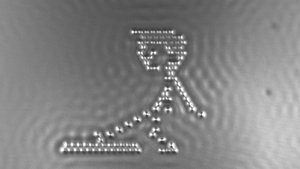
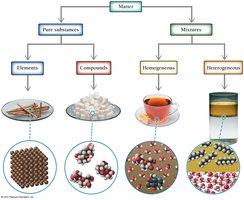
Atoms are the smallest units of an element, which is a pure substance made of only one type of atom. Elements cannot be broken down into simpler substances by chemical means. Compounds are substances formed from two or more types of atoms chemically bonded in fixed proportions.
States of Matter
Matter exists in different states, primarily solid, liquid, and gas. The arrangement and movement of particles define these states. Solids have a fixed shape and volume, liquids have a fixed volume but take the shape of their container, and gases have neither fixed shape nor volume. Solids can be crystalline (ordered structure) or amorphous (disordered structure).
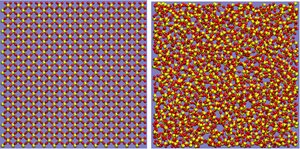
Gases are compressible due to the large spacing between particles, while solids and liquids are not.
What Defines a Substance?
A substance is any material with a fixed composition. Examples include silver (Ag), bromine (Br2), table salt (NaCl), and phosphoric acid (H3PO4). Substances can be elements or compounds. The classification of materials like glass or air depends on their uniformity and composition.
Physical Properties and Changes
Physical properties are characteristics observed without changing the substance's composition, such as color, melting point, and density. Physical changes alter the form or appearance of matter but not its composition (e.g., melting, freezing, dissolving). These changes can be reversible or irreversible. Changing states (solid to liquid, etc.) is a physical change.

Mixtures
Mixtures are combinations of two or more substances physically mixed together. They can be classified as:
Heterogeneous mixtures: Non-uniform distribution of components (e.g., sand in water).
Homogeneous mixtures: Uniform distribution, also called solutions (e.g., salt dissolved in water).
Separating Mixtures
Chemists use physical methods to separate mixtures into their components. Common techniques include:
Decanting: Pouring off liquid from solid.
Filtration: Collecting solids from liquids using a filter.
Distillation: Separating liquids based on differences in boiling points.
These are physical processes and do not change the chemical identity of the substances.
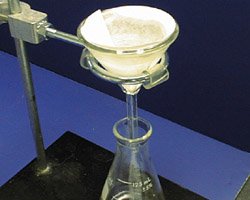
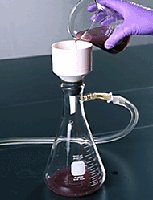
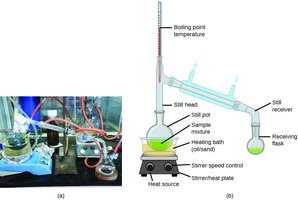
Chemical Properties and Changes
Chemical properties describe a substance's ability to undergo changes that transform its composition. Chemical changes result in the formation of new substances with different properties. Examples include flammability, acidity, and toxicity.
Classic signs of a chemical change: transfer of energy (heat, light, sound), color change, gas production, formation of a precipitate.
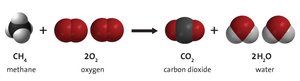
Classifying Matter
Classification of matter is systematic and helps in understanding its properties and behavior. Matter can be divided into pure substances (elements and compounds) and mixtures (homogeneous and heterogeneous).
The Law of Conservation of Mass
The Law of Conservation of Mass states that matter cannot be created or destroyed in a chemical or physical process. This principle, established by Antoine Lavoisier in 1789, is fundamental to all laboratory manipulations and chemical reactions.
Energy and Chemical Transformations
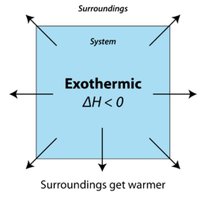
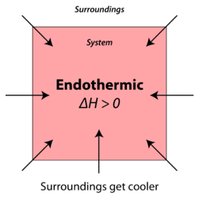
Energy is central to chemical transformations. Systems with high potential energy tend to change in ways that lower their potential energy. Chemists focus on the energy changes within the system under study.
Temperature
Temperature measures the random motion of particles in a substance. Higher temperature means faster particle motion. Common temperature scales include Fahrenheit (°F), Celsius (°C), and Kelvin (K). The Kelvin scale is used in chemical calculations:
Heat
Heat is the transfer of thermal energy caused by a temperature difference. It is measured in joules (J). The sign convention is: (energy out of system), (energy into system).
Specific Heat
Specific heat capacity is the quantity of heat required to change the temperature of 1 gram of a substance by 1°C. It is a characteristic property used to identify materials. The formula for heat transfer is:
where is heat (J), is mass (g), is specific heat capacity (J/g·°C), and is the change in temperature (°C).

Example: Water has a high specific heat capacity, which is why it is effective at moderating temperature changes in the environment.
Additional info: The notes have been expanded to include definitions, examples, and equations for clarity and completeness.
