 Back
BackCredit Market and Interest Rates: Principles of Macroeconomics Study Notes
Study Guide - Smart Notes
 Tailored notes based on your materials, expanded with key definitions, examples, and context.
Credit Market: Concepts and Mechanisms
Wealth, Saving, Capital Gains, and Capital Losses
The concepts of wealth, saving, capital gains, and capital losses are fundamental to understanding individual and aggregate economic behavior. Net wealth (or net worth) is the total value of all assets owned by an individual, including both real and financial assets, minus liabilities. Saving refers to the portion of after-tax income not spent on consumption or interest payments. Saving increases net wealth, while changes in asset values lead to capital gains (when asset prices rise) or capital losses (when asset prices fall).
Net Wealth: Value of assets minus liabilities.
Saving: Increases net wealth; not spent on consumption or debt interest.
Capital Gains: Increase in asset value.
Capital Losses: Decrease in asset value.
Example: If you save $500 from your income, your net wealth increases by $500.
Interest Payment and Interest Rate
Interest payment is the fee charged for borrowing financial capital, while the interest rate is the ratio of the interest payment to the amount borrowed, expressed as a percentage. For borrowers, interest is the cost of consuming earlier; for lenders, it is compensation for delaying consumption.
Interest Rate Formula:
Example: Borrow \frac{100}{1000} \times 100\% = 10\%$ per year.
Present Value: Concept and Calculation
The present value concept reflects the idea that money received in the future is less valuable than money received today, due to the opportunity to earn interest. The present value of a future sum is calculated by discounting it at the prevailing interest rate.
Present Value Formula: , where is the interest rate.
Example: \frac{1}{1.05} = 0.9524$ today.
Nominal Interest Rate versus Real Interest Rate
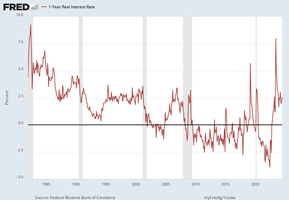
The nominal interest rate is the stated rate on loan contracts, not adjusted for inflation. The real interest rate adjusts the nominal rate for expected inflation, representing the true cost of borrowing in terms of goods and services.
Nominal Rate: Dollar price of loanable funds.
Real Rate: Adjusted for inflation; reflects purchasing power.
Fisher Equation: Where = nominal rate, = real rate, = expected inflation.

Effect of Interest Rate on Consumption and Investment
Interest rates influence both consumption and investment decisions. Lower real interest rates reduce the opportunity cost of borrowing, encouraging more consumption and investment.
Consumption: Lower real interest rate () leads to higher consumption ().
Investment: Lower real interest rate () increases investment () due to higher expected profitability.
Credit Market Structure and Equilibrium
Credit Market Overview
The credit market (or loanable funds market) coordinates borrowing and lending among firms, governments, and households. Financial intermediaries, such as banks, facilitate these transactions. The credit market excludes the stock market and determines both short-term and long-term interest rates.
Participants: Firms, government, households.
Financial Intermediaries: Banks and similar institutions.
Excludes: Stock market.
Demand and Supply of Loanable Funds
The demand for loanable funds is the relationship between the quantity demanded and the real interest rate, holding other factors constant. The supply of loanable funds is similarly defined for lenders. Changes in business opportunities or consumer time preferences can shift these curves.
Demand: Borrowers' plans depend on real interest rate.
Supply: Lenders' plans depend on real interest rate.
Other Influences: Business opportunities, consumer impatience.
Credit Market Equilibrium
Equilibrium in the credit market occurs where the quantity of loanable funds demanded equals the quantity supplied, determining the real interest rate.
Equilibrium: Intersection of demand and supply curves for loanable funds.
Financial Assets: Bonds and Stocks
Types of Financial Assets
Financial assets are claims on physical capital and are traded in financial markets. The two main types are stocks (equity) and bonds (debt). Stocks confer ownership rights, while bonds are debt contracts with no ownership rights.
Stocks: Direct claims; ownership rights; not part of credit market.
Bonds: Indirect claims; debt contracts; part of credit market.
Financial Investment: Purchase of financial assets, distinct from economic investment (creation of new capital).
Bonds: Structure and Types
A bond is a debt security obligating the issuer to repay the principal at maturity and make periodic coupon payments. Bonds are used by firms and governments to finance projects and deficits.
Principal: Amount repaid at maturity.
Coupon Payment: Periodic interest payment.
Types: Corporate (investment-grade, junk), government (Treasury, municipal, inflation-indexed).
Bond Prices: Inverse relationship with interest rates.
Financial Risks
Types of Financial Risks
Financial risks affect both lenders and borrowers in the credit market. The main types are:
Credit Risk (Default Risk): Risk that borrowers may not repay loans.
Market Risk: Risk that changes in market conditions (e.g., interest rates) affect asset values.
Liquidity Risk: Risk that lenders may need to sell illiquid assets at a loss to raise cash.
Credit Market in the News
Current Trends and Policy Implications
Recent news highlights how tougher credit conditions, such as reduced loan demand and stricter lending standards, can influence Federal Reserve policy. Weakening credit demand and tighter standards may signal a cooling economy, supporting the case for interest rate cuts.
Policy Impact: Credit conditions affect monetary policy decisions.
Example: Federal Reserve may cut rates if credit demand weakens and inflation remains benign.
Additional info: These notes expand on brief lecture points to provide a comprehensive overview of the credit market, interest rates, and financial assets, suitable for exam preparation in a macroeconomics course.
