 Back
BackFoundations of Texas Politics and Government: Historical and Institutional Context
Study Guide - Smart Notes
 Tailored notes based on your materials, expanded with key definitions, examples, and context.
Introduction to Politics and Goods Matrix
Definition and Principles of Politics
Politics is the process of determining who gets what, when, and how, as defined by Harold Laswell. It is fundamentally about the distribution of resources and the mechanisms by which societies make collective decisions. The study of politics involves understanding individual and collective behavior, institutional rules, and the path-dependent nature of political outcomes.
Individual behavior is goal or preference driven: People act to achieve their own goals, which influences political outcomes.
Politics is about collective action problems: Societies must cooperate to solve shared challenges.
Institutional rules help solve collective action problems: Rules and structures facilitate cooperation and decision-making.
Political outcomes are products of preferences and rules: Compromises and institutional frameworks shape results.
Political outcomes are path dependent: Once a solution is adopted, it tends to persist until it no longer works.
The Goods Matrix: Types of Goods
Goods can be classified based on two criteria: how they are consumed (rivalrous vs. non-rivalrous) and how they are provided (excludable vs. non-excludable).
Rivalrous Consumption: One person's use diminishes availability for others (e.g., a donut).
Non-rivalrous Consumption: One person's use does not affect others (e.g., a scenic view).
Excludable Provision: Access can be restricted (e.g., train ride with a ticket).
Non-excludable Provision: Access cannot be easily restricted (e.g., national defense).
Type of Good | Rivalrous? | Excludable? | Example |
|---|---|---|---|
Private Good | Yes | Yes | Sports car |
Common Good | Yes | No | Natural resources |
Club/Toll Good | No (to a point) | Yes | Cable TV, toll roads |
Public Good | No | No | Air, national defense |
Private goods are efficiently distributed by markets, while common, club, and public goods often require government intervention due to issues like the free-rider problem.
Theories of Government Origin
Hobbesian Theory
Thomas Hobbes argued that in the absence of government, humans exist in a state of nature characterized by anarchy and conflict. To escape this, people give unanimous consent to a sovereign authority (the Leviathan) with absolute power.
Assumptions: People are self-interested and competitive.
Mechanism: Unanimous consent to a sovereign.
Outcome: Absolute authority until revolt.
Lockean Theory
John Locke viewed the state of nature as one of perfect liberty, governed by the law of nature (do no harm). However, enforcement is problematic, leading to the formation of government through tacit consent—people accept authority in exchange for protection.
Assumptions: People are free and equal, but self-interested.
Mechanism: Tacit consent by enjoying state protections.
Outcome: Government legitimacy is based on ongoing consent.
Geological and Prehistoric Context of Texas
Geological Eras and Early Life
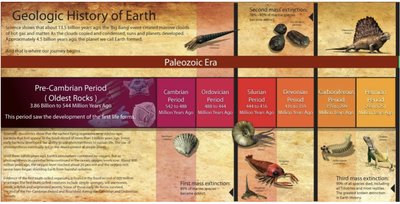
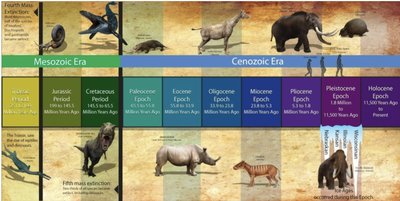
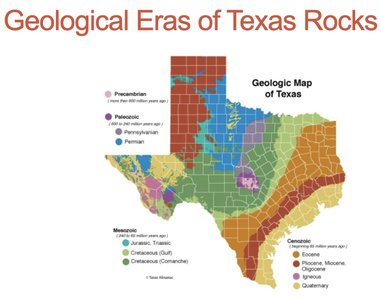
Texas's geological history spans from the Precambrian to the Cenozoic, shaping its resources and environment. The region's rocks and fossils reveal a rich history of life and mass extinctions.
Paleo-Americans and Native Tribes
The first humans in Texas, known as Paleo-Americans, arrived at the end of the Pleistocene Epoch. They were followed by diverse native tribes, each adapted to their environment and contributing to global agriculture through crops like maize, potatoes, and tobacco.
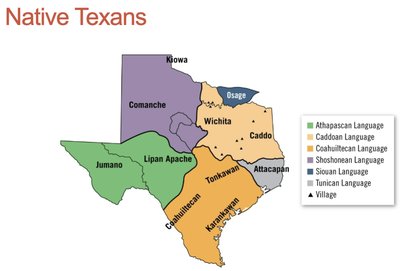
Caddo: Agriculturalists in the Piney Woods, lived in villages.
Karankawa: Nomadic, lived off the Gulf Coast.
Coahuiltecan: Survived in desert areas.
Lipan Apache: Hill country, displaced by Comanches.
Comanche: Dominant horse culture, "Lords of the Plains."
European Colonization and Conflict
Spanish Exploration and Settlement
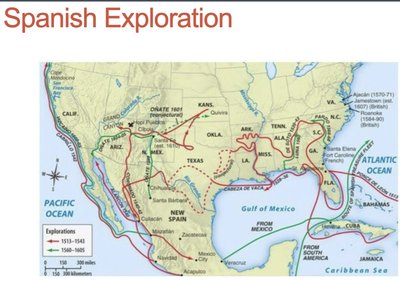
Spanish explorers sought wealth and established missions in Texas, but faced resistance from native tribes and struggled to impose their hierarchical society. The introduction of horses transformed native cultures, especially the Comanche.
Anglo-Celtic Migration and the Coming Conflict
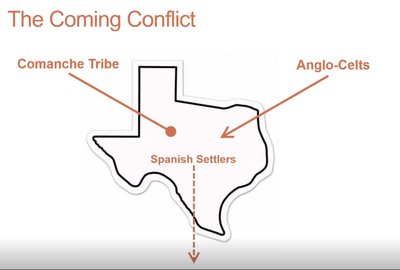
Anglo settlers, primarily from the Appalachian region, migrated into Texas, bringing a non-hierarchical, combative culture. This set the stage for conflict among the Comanche, Anglo-Celts, and Spanish settlers.
Colonial Powers and Territorial Claims
Colonial Competition in North America
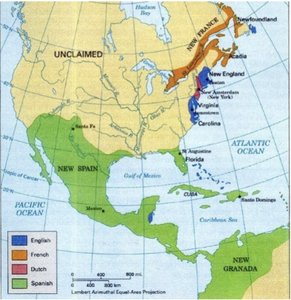
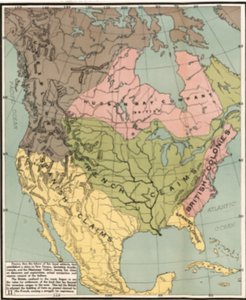
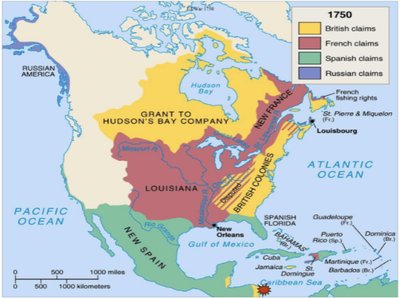
Spain, France, England, and the Dutch competed for control of North America, with water routes playing a critical role in exploration, trade, and territorial claims.
French and Indian War
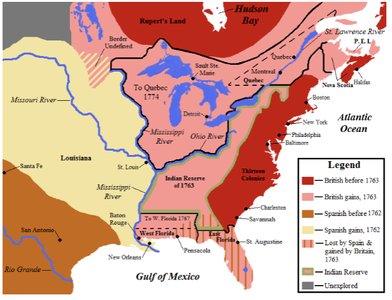
The French and Indian War (part of the global Seven Years' War) resulted in the removal of France from the continent, British dominance, and the setting aside of Indian reserves. Spain gained control of lands west of the Mississippi.
Mexican Independence and Texas Settlement
Empresario System and Anglo Settlement
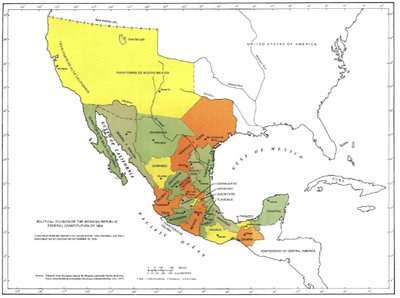
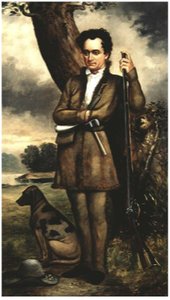
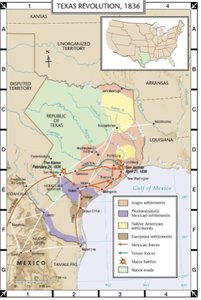
After Mexican independence, the government encouraged Anglo settlement through the empresario system, granting land to agents who brought settlers. Stephen F. Austin was the most successful empresario, establishing the "Old Three Hundred."
Rising Tensions and Revolution
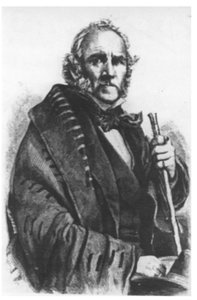
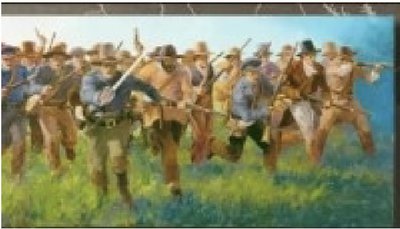
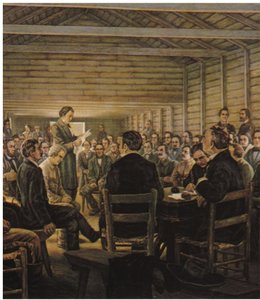
Conflicts arose over immigration, slavery, and governance. The Edict of April 6, 1830, ended immigration, fueling unrest. Santa Anna's centralization of power and the arrest of Austin radicalized settlers, leading to the Texas Revolution.
Republic and Statehood
Texas as an Independent Republic
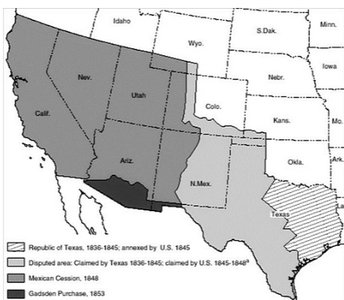
After winning independence, Texas became a republic but faced economic challenges and political instability. Annexation to the United States was delayed due to the issue of slavery.
Mexican-American War and Expansion
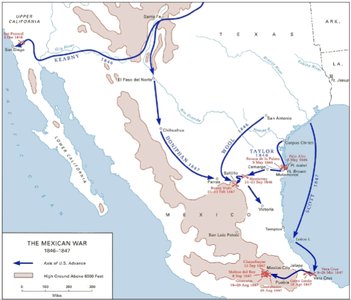
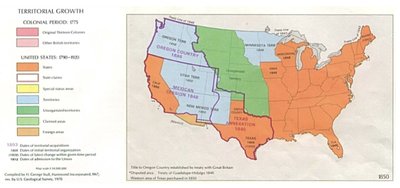
Texas was annexed in 1845, leading to the Mexican-American War and the Mexican Cession of 1848, which expanded U.S. territory significantly.
Constitutions of Texas
Evolution of Texas Constitutions
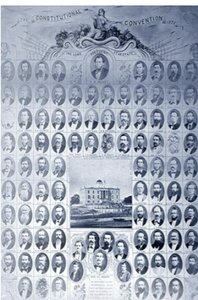
Texas has had several constitutions, reflecting changes in sovereignty and political culture. The current constitution, adopted in 1876, emphasizes limited government, separation of powers, and individual rights.
Republic of Texas (1836): Modeled after the U.S. Constitution, included separation of powers and a bill of rights, but allowed slavery.
State Constitution of 1845: Established Texas as a U.S. state, expanded suffrage, and included homestead and women's property rights.
Constitution of 1876: Still in effect, highly detailed, amended over 500 times, and designed to prevent concentration of power.
Texas Government Structure
Separation of Powers
Texas government is divided into three branches: executive, legislative, and judicial. Each branch has distinct powers and responsibilities.
Executive: Enforces laws, vetoes, appointments, pardons, military authority.
Legislative: Passes laws, controls budget, oversight, economic regulation.
Judicial: Handles real cases, criminal justice, tort litigation, and constitutionality.
Legislative Structure and Process
The Texas Legislature is bicameral, consisting of the House and Senate. It operates part-time, with limited sessions and compensation. The legislative process involves multiple readings, committee assignments, and opportunities for delay (e.g., filibuster, chubbing).
House: 150 members, 2-year terms.
Senate: 31 members, 4-year terms.
Speaker of the House: Controls committee assignments and legislative calendar.
Lieutenant Governor: Powerful role in the Senate, assigns bills and committees.
Types of Laws and Resolutions
General Law: Applies to all Texans.
Special Law: Exempts specific entities.
Local Law: Applies to specific localities.
Joint Resolution: Constitutional amendments.
Concurrent Resolution: Direction to agencies.
Simple Resolution: Procedural or ceremonial.
Conclusion
The political and governmental development of Texas is shaped by its unique history, diverse populations, and evolving institutional structures. Understanding these foundations is essential for analyzing contemporary issues in Texas politics and governance.
