 Back
BackAllergic Reactions and Anaphylaxis: Medical Terminology and Emergency Care
Study Guide - Smart Notes
 Tailored notes based on your materials, expanded with key definitions, examples, and context.
Allergic Reactions
Introduction to Allergic Reactions
An allergic reaction is an exaggerated immune response to a foreign substance known as an allergen. The immune system is designed to protect the body from harmful substances, but in some cases, it overreacts, causing symptoms that can range from mild to life-threatening.
Allergen: Any substance that triggers an allergic reaction (e.g., pollen, foods, medications).
Immune response: The body's defense mechanism against foreign substances.
Anaphylaxis: A severe, systemic, and life-threatening allergic reaction, also known as anaphylactic shock.
Pathophysiology of Allergic Reactions
Allergic reactions occur in two stages: sensitization and re-exposure. On first exposure, the immune system forms antibodies against the allergen. On subsequent exposures, these antibodies trigger the release of chemicals such as histamines, leading to a spectrum of symptoms.
First exposure: Formation of antibodies, no reaction occurs.
Second exposure: Antibodies react with the allergen, releasing histamines and other mediators.
Histamines: Chemicals that cause vasodilation, increased capillary permeability, and smooth muscle contraction.
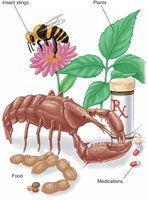
Common Causes of Allergic Reactions
Insect stings: Bees, wasps, hornets.
Foods: Nuts, eggs, milk, shellfish.
Plants: Poison ivy, poison oak, poison sumac.
Medications: Penicillin and other antibiotics.
Other: Dust, chemicals, latex, soaps, makeup.
Latex Allergy
Latex allergy is a significant concern in healthcare settings. Patients with multiple surgeries or frequent exposure to latex are at higher risk. Healthcare providers can also develop latex sensitivity over time.
Clinical Manifestations of Allergic Reactions
Spectrum of Symptoms
The symptoms of allergic reactions can vary widely and may affect multiple organ systems. The most severe form, anaphylaxis, involves respiratory compromise and/or shock.
Skin: Itching, hives (urticaria), flushing, swelling (angioedema), warm or tingling sensations.
Respiratory: Throat/chest tightness, cough, rapid or noisy breathing, hoarseness, stridor, wheezing.
Cardiovascular: Increased heart rate (tachycardia), decreased blood pressure (hypotension).
General: Itchy/watery eyes, headache, runny nose, sense of impending doom.
Shock: Altered mental status, flushed or pale/clammy skin, nausea/vomiting, changes in vital signs.


Distinguishing Anaphylaxis from Mild Allergic Reaction
Any of the above symptoms can occur in an allergic reaction. Anaphylaxis is diagnosed when there is respiratory distress or signs of shock in addition to allergic symptoms.
Assessment and Management of Allergic Reactions
Patient Assessment
Assessment involves a primary survey to address immediate life threats (Airway, Breathing, Circulation), followed by a secondary survey to gather history and details of the reaction.
Ask about history of allergies, exposure, route, symptoms, progression, and interventions.
Assess baseline vital signs and past medical history.
Suspect allergic reaction if there is known exposure and symptoms such as itching, hives, or breathing difficulty.
Patient Care
Manage airway and breathing; provide high-concentration oxygen if needed.
If altered mental status or respiratory failure, maintain airway and provide artificial ventilation.
Consider assisting with or administering epinephrine if indicated (see below).
Monitor vital signs and reassess frequently.

Epinephrine in Allergic Reactions
Self-Administered Epinephrine
Epinephrine is a medication that constricts blood vessels and dilates bronchioles, counteracting the effects of anaphylaxis. It is commonly administered via auto-injectors (e.g., EpiPen®).
Auto-injectors are available in adult and child doses.
Check expiration date and clarity of liquid before use.
Inject into the outer thigh, through clothing if necessary.
Reassess after 2 minutes; pulse may increase, symptoms should decrease.
Monitor for side effects, especially in patients with heart conditions or hypertension.
EMT-Administered Epinephrine
Some EMS systems allow EMTs to administer epinephrine using hypodermic needles and syringes (Ready-Check-Inject method). Proper training and protocol adherence are required.
Standard adult dose: 0.3 mL; child dose: 0.15 mL (intramuscular).
Verification of dose by a second provider is required.
Follow agency protocols and obtain medical direction as needed.
Summary Table: Signs and Symptoms of Anaphylactic Reaction
System | Signs/Symptoms |
|---|---|
Skin | Itching, hives, flushing, swelling, tingling |
Respiratory | Throat/chest tightness, cough, noisy breathing, hoarseness, stridor, wheezing |
Cardiovascular | Increased heart rate, decreased blood pressure |
General | Itchy/watery eyes, headache, runny nose, sense of impending doom |
Shock | Altered mental status, flushed/pale/clammy skin, nausea/vomiting, vital sign changes |
Key Medical Terminology
Allergen: Substance that triggers an allergic reaction.
Anaphylaxis: Severe, systemic allergic reaction with life-threatening features.
Histamine: Chemical mediator released during allergic reactions.
Urticaria: Medical term for hives.
Angioedema: Swelling of the deeper layers of the skin, often around the eyes and lips.
Bronchoconstriction: Narrowing of the airways in the lungs.
Hypotension: Abnormally low blood pressure.
Formulas and Equations
Standard Epinephrine Dose (IM):
Summary and Critical Points
Allergic reactions are common; anaphylaxis is rare but life-threatening.
Rapid recognition and treatment with epinephrine can be life-saving.
Assessment must distinguish between mild and severe reactions.
Follow local protocols for epinephrine administration and always reassess the patient.
Additional info: In clinical practice, always consult medical direction and follow local EMS protocols for the management of allergic reactions and anaphylaxis.
