 Back
BackBody Organization and Medical Care: Structured Study Notes for Medical Terminology
Study Guide - Smart Notes
 Tailored notes based on your materials, expanded with key definitions, examples, and context.
Body Organization and Medical Care
Health and Disease
Understanding health and disease is fundamental in medical terminology. Health is defined by the World Health Organization as a state of complete physical, mental, and social well-being. Disease refers to any change in the normal structure or function of the body, with its etiology being the cause or origin. Preventive medicine focuses on maintaining health and preventing disease.
Health: Complete well-being, not merely the absence of disease.
Disease: Any abnormality in structure or function; can be acute, subacute, or chronic.
Etiology: The cause or origin of a disease.
Disorder: Disturbance of action or function.
Preventive Medicine: Healthcare aimed at preventing disease.
Approaches to Studying the Human Body
The human body can be studied from various perspectives, each providing unique information. Anatomy is the study of body structures, while physiology focuses on their functions. The organization of the body follows a hierarchy: cells form tissues, tissues form organs, and organs form body systems.
Anatomy: Study of structures.
Physiology: Study of functions.
Hierarchy: Cells → Tissues → Organs → Body Systems.
Body Planes, Directions, and Positions
Body planes and directions are essential for describing locations and movements within the body. The standard anatomical position is standing erect, head up, eyes forward, arms at sides with palms forward, and legs straight with toes forward.
Body Planes: Imaginary flat surfaces dividing the body.
Standard Anatomical Position: Reference for all anatomical descriptions.

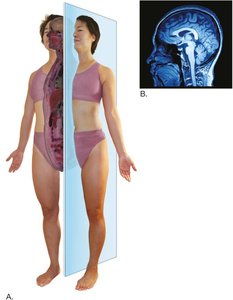
Sagittal Plane
The sagittal plane divides the body into right and left sides. Medical imaging, such as MRI, often uses this plane to create detailed slices of the body.
Sagittal Plane: Right and left division.
Application: MRI scans along sagittal plane.
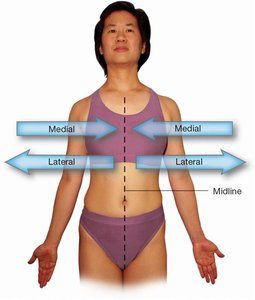
Medial and Lateral Directions
Medial refers to movement toward the midline of the body, while lateral refers to movement away from the midline. These are opposite directions.
Medial: Toward the midline.
Lateral: Away from the midline.
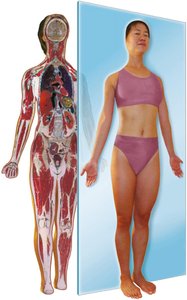
Coronal (Frontal) Plane
The coronal or frontal plane divides the body into front (anterior, ventral) and back (posterior, dorsal) sections.
Coronal Plane: Front and back division.
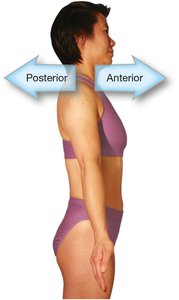
Anterior and Posterior Directions
Anterior is movement toward the front of the body, while posterior is movement toward the back. These are opposite directions.
Anterior: Toward the front.
Posterior: Toward the back.
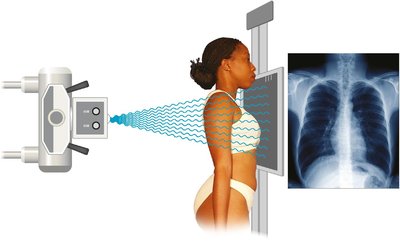
Posteroanterior Chest X-Ray
Posteroanterior (PA) and anteroposterior (AP) describe the path of an x-ray beam. In a PA chest x-ray, the beam enters the posterior and exits the anterior chest.
PA X-Ray: Posterior to anterior path.
AP X-Ray: Anterior to posterior path.
Transverse Plane
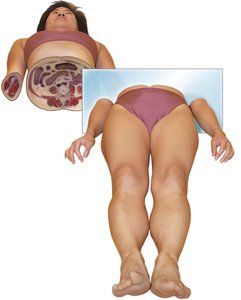
The transverse plane divides the body into upper (superior) and lower (inferior) segments.
Transverse Plane: Superior and inferior division.
Superior and Inferior
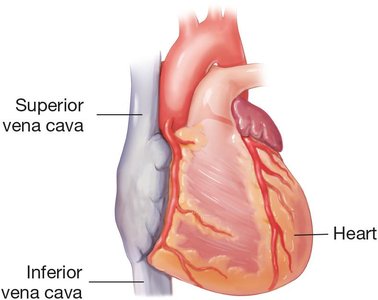
Superior refers to structures above or toward the head, while inferior refers to structures below or toward the feet. The superior and inferior vena cava are major blood vessels bringing blood to the heart from the upper and lower body, respectively.
Superior: Above or toward the head.
Inferior: Below or toward the feet.
Cephalad and Caudad Directions
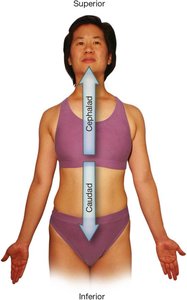
Cephalad means moving toward the head, while caudad means moving toward the tailbone. These are opposite directions.
Cephalad: Toward the head.
Caudad: Toward the tailbone.
Distal and Proximal Directions
Distal refers to movement away from the trunk toward the fingers or toes, while proximal refers to movement toward the trunk from the extremities.
Distal: Away from the trunk.
Proximal: Toward the trunk.
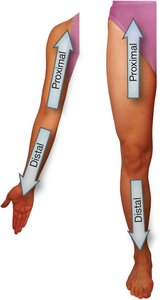
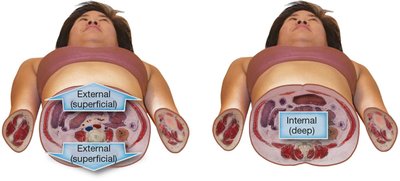
External and Internal
External refers to the superficial or outer part of the body or an organ, while internal refers to deep inside the body or an organ.
External: Superficial or outer part.
Internal: Deep inside.
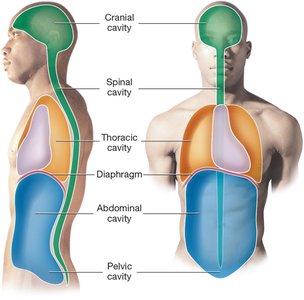
Body Cavities
Body cavities are hollow spaces within the body, surrounded by bones or muscles that protect the organs inside. The five main cavities are cranial, spinal, thoracic, abdominal, and pelvic.
Cranial cavity: Inside the head.
Spinal cavity: Runs down the back.
Thoracic cavity: Within the chest.
Abdominal cavity: Upper abdomen.
Pelvic cavity: Lower abdomen.
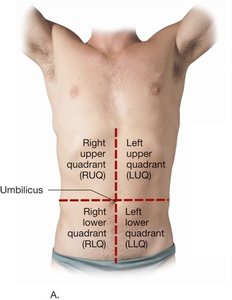
Body Quadrants and Regions
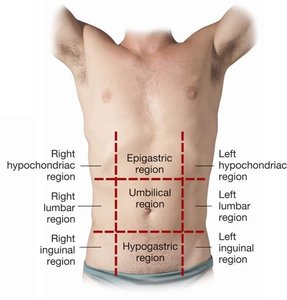
The anterior surface of the abdominopelvic cavity is divided into four quadrants or nine regions for reference during physical examination.
Quadrants: RUQ, LUQ, RLQ, LLQ.
Regions: Epigastric, umbilical, hypogastric, right/left hypochondriac, right/left lumbar, right/left inguinal.
Disease Categories
Diseases are classified by their etiology and characteristics. Categories include congenital, degenerative, environmental, genetic, hereditary, hospital-acquired, iatrogenic, idiopathic, infectious, neoplastic, and nutritional.
Disease Type | Etiology | Example(s) |
|---|---|---|
Congenital | Fetal abnormality or abnormal process during gestation or birth | Cleft lip and palate, cerebral palsy |
Degenerative | Progressive destruction of cells due to disease or aging | Multiple sclerosis, arthritis |
Environmental | Exposure to substances in the environment | Breathing problems from smoking, pollen allergy |
Genetic | Mutation in genes or chromosomes during fetal development | Down syndrome |
Hereditary | Inherited defective gene from a parent | Cystic fibrosis, hemophilia |
Hospital-acquired infection | Exposure to disease-causing agent in hospital | Wound infection after surgery |
Iatrogenic | Medicine or treatment received by patient | Wrong drug, side effects |
Idiopathic | No identifiable cause | Idiopathic thrombocytopenia |
Infectious | Pathogen (bacterium, virus, fungus) | Gonorrhea, COVID-19 |
Neoplastic | Growth of benign or malignant mass | Benign cysts, cancerous tumors |
Nutritional | Lack of nutritious food or inability to utilize nutrients | Malnutrition, iron deficiency anemia |
Onset, Course, and Outcome of Disease
The onset of disease is marked by symptoms (experienced by the patient) and signs (observable by others). Diseases may be acute, subacute, or chronic. The course includes all events from onset to outcome, which may be recuperation, residual chronic disease, or terminal illness.
Symptom: Felt by patient.
Sign: Observable by others.
Acute: Sudden and severe.
Subacute: Less severe.
Chronic: Lasts three months or longer.
Exacerbation: Sudden worsening.
Remission: No symptoms after treatment.
Relapse: Return of symptoms.
Sequela: Complication remaining after disease resolves.
Recuperation: Recovery to normal health.
Terminal illness: Disease leads to death.
Medical Specialties and Specialists
Medical specialties focus on specific body systems or areas of care. Specialists are physicians trained in these areas.
Specialty | Body System/Area | Specialist |
|---|---|---|
Dermatology | Integumentary system | Dermatologist |
Gastroenterology | Gastrointestinal system | Gastroenterologist |
Pulmonology | Respiratory system | Pulmonologist |
Cardiology | Cardiovascular system | Cardiologist |
Hematology | Blood | Hematologist |
Immunology | Lymphatic system | Immunologist |
Orthopedics | Skeletal and muscular systems | Orthopedist |
Neurology | Nervous system | Neurologist |
Urology | Urinary system | Urologist |
Male reproductive medicine | Male genitourinary system | Male reproductive specialist |
Gynecology/Obstetrics | Female reproductive system | Gynecologist/Obstetrician |
Endocrinology | Endocrine system | Endocrinologist |
Ophthalmology | Eyes | Ophthalmologist |
Otolaryngology | Ears, nose, throat | Otolaryngologist |
Psychiatry | Mind and emotions | Psychiatrist |
Oncology | Cancer | Oncologist |
Radiology/Nuclear Medicine | Imaging | Radiologist |
Dentistry | Teeth | Dentist |
Geriatrics | Older adults | Geriatrician |
Internal Medicine | Adults | Internist |
Neonatology | Newborns | Neonatologist |
Pediatrics | Children | Pediatrician |
Pharmacology | Medications | Pharmacist |
Healthcare Professionals
Healthcare teams include physicians, physician extenders, nurses, and allied health professionals. Physicians lead the team, diagnose and treat patients, and may specialize in various fields. Physician extenders (e.g., physician assistants, nurse practitioners) perform many duties under supervision. Nurses provide care, education, and advocacy. Allied health professionals support patient care through specialized services.
Physicians: MD or DO degree, lead care teams.
Physician Extenders: PA, NP, CNM, CRNA.
Nurses: RN, LPN, LVN; provide direct care.
Allied Health Professionals: Therapists, technologists, dietitians, etc.
Healthcare Settings
Healthcare is provided in various settings, including hospitals, physician offices, clinics, ambulatory surgery centers, long-term care facilities, home health agencies, and hospices. Each setting serves specific patient needs and care requirements.
Hospitals: Acute care, inpatient services.
Physician's Office: Outpatient diagnosis and treatment.
Clinic: Specialized outpatient care.
Ambulatory Surgery Center: Minor surgeries.
Long-term Care Facility: Residential care for chronic needs.
Home Health Agency: Care in patient homes.
Hospice: Palliative care for terminal illness.
History and Physical Examination
Diagnosis begins with a thorough medical history and physical examination. History includes present illness, surgical, family, and social history, and allergies. Physical examination techniques include inspection, palpation, auscultation, and percussion. Vital signs (temperature, pulse, respiration, blood pressure) are collected prior to examination.
Inspection: Visual examination.
Palpation: Feeling with fingers.
Auscultation: Listening with stethoscope.
Percussion: Tapping to produce sounds.
Vital Signs: TPR and BP.
Electronic Health Records (EHR)
Electronic health records have replaced paper records, improving documentation and care quality. EHRs include narrative notes, checklists, admission history, operative reports, and discharge summaries. Standard headings in healthcare documents include chief complaint, history of present illness, past medical history, social and family history, review of systems, physical examination, laboratory and x-ray data, diagnosis, and disposition.
EHR: Computerized patient care documentation.
Standard Headings: CC, HPI, PMH, SH, FH, ROS, PE, Dx, DS.
Abbreviation Summary
Medical terminology uses numerous abbreviations for efficiency. Key abbreviations include:
ASC: Ambulatory surgery center
BP: Blood pressure
CC: Chief complaint
CNM: Certified nurse midwife
CRNA: Certified registered nurse anesthetist
DO: Doctor of osteopathy
DS: Discharge summary
Dx: Diagnosis
ED: Emergency department
EHR: Electronic health record
EMR: Electronic medical record
FH: Family history
H&P: History and physical
HIPAA: Health insurance portability and accountability act
HPI: History of present illness
ICU: Intensive care unit
LLQ: Left lower quadrant
LPN: Licensed practical nurse
LUQ: Left upper quadrant
LVN: Licensed vocational nurse
MD: Doctor of medicine
NP: Nurse practitioner
PA: Physician's assistant
PE: Physical examination
PCP: Primary care physician
Pharm.D.: Doctor of pharmacy
PMH: Past medical history
PT: Physical therapy
RLQ: Right lower quadrant
RN: Registered nurse
R/O: Rule out
ROS: Review of systems
RUQ: Right upper quadrant
SH: Social history
SNF: Skilled nursing facility
TPR: Temperature, pulse, respiration
