 Back
BackBody Organization and Medical Terminology: Structured Study Notes
Study Guide - Smart Notes
 Tailored notes based on your materials, expanded with key definitions, examples, and context.
Body Organization
Levels of Organization in the Human Body
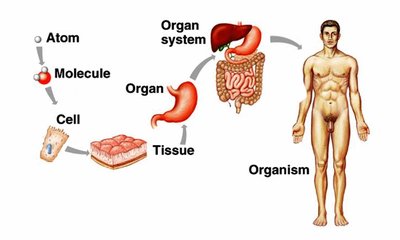
The human body is organized into hierarchical levels, each building upon the previous. Understanding these levels is fundamental to medical terminology and anatomy.
Cells: The fundamental unit of life, capable of responding to stimuli, engaging in metabolic activity, and reproducing.
Tissues: Groups of similar cells working together to perform a specific function.
Organs: Structures composed of multiple tissue types, performing specialized tasks.
Systems: Groups of organs working together for complex functions.
Organism: The complete living individual.
Cell Structure and Function
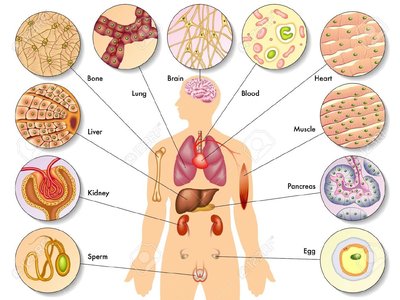
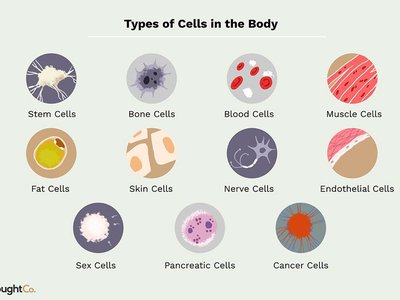
Cells are the basic building blocks of all tissues and organs. They perform essential functions for the body, including reproduction, hormone secretion, energy production, and excretion. Specialized cells carry out unique tasks such as muscle contraction and electrical impulse transmission.
Key Properties: Alive, responsive, metabolic, reproductive.
Examples: Muscle cells contract, nerve cells transmit impulses.
Tissues
Types of Tissues
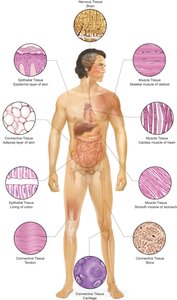
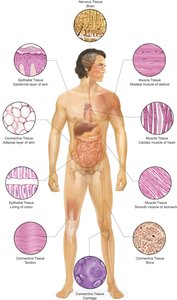
Tissues are formed when like cells are grouped together to perform an activity. There are four primary types of tissue in the human body:
Muscular Tissue: Produces movement by contracting; composed of muscle fibers.
Epithelial Tissue: Known as epithelium; lines internal organs and covers the skin. Functions include protection, absorption, secretion, and excretion.
Connective Tissue: Supports and protects; includes adipose, bone, cartilage, and tendons.
Nervous Tissue: Conducts electrical impulses and coordinates body functions.
Muscular Tissue
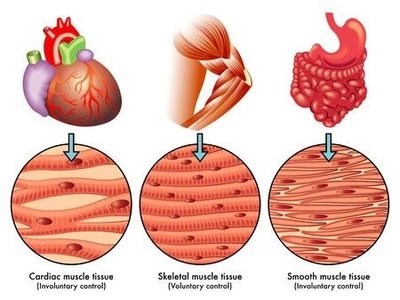
Muscular tissue is responsible for movement in the body. It is composed of muscle fibers and exists in three basic types:
Skeletal Muscle: Attached to bones; voluntary control.
Smooth Muscle: Found in internal organs like the intestine and uterus; involuntary control.
Cardiac Muscle: Found only in the heart; involuntary control.
Epithelial Tissue
Epithelial tissue forms protective barriers, absorbs substances, secretes products, and excretes wastes.
Examples: Skin (protection), intestinal lining (absorption), sweat glands (secretion), kidney tubules (excretion).
Connective Tissue
Connective tissue supports and protects the body. Its function depends on location and form.
Forms: Adipose (fat), bone, cartilage, tendons.
Anatomical Position and Body Planes
Anatomical Position
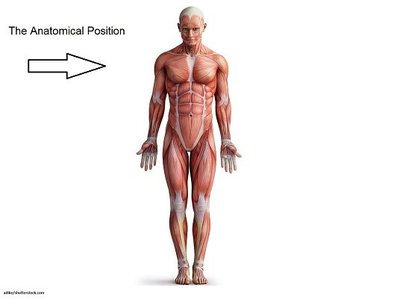
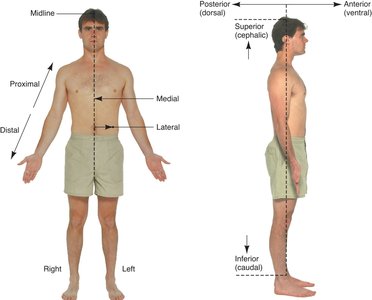
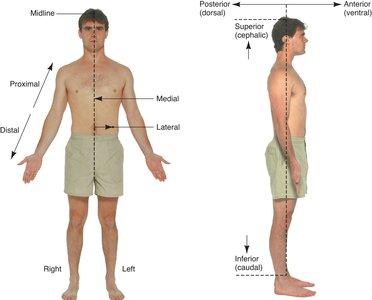
The anatomical position is a standard reference for describing the locations and relationships of body structures.
Standing erect
Arms at sides
Palms facing forward
Eyes straight ahead
Legs parallel, feet forward

Body Planes
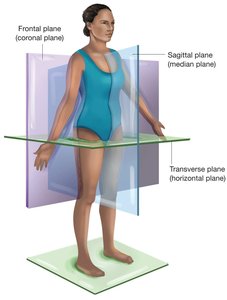
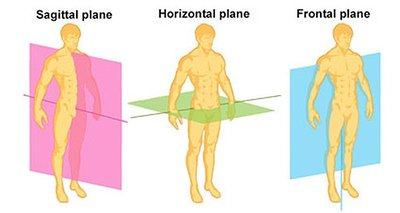
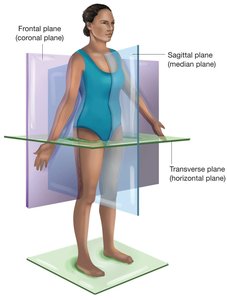
Body planes are imaginary lines used to divide the body and describe locations.
Sagittal Plane (Median): Vertical, divides body into left and right portions.
Frontal Plane (Coronal): Vertical, divides body into front (anterior) and back (posterior) portions.
Transverse Plane (Horizontal): Crosswise, divides body into upper (superior) and lower (inferior) portions.
Sections
Cross-section: Slice perpendicular to the long axis.
Longitudinal section: Slice along the long axis.
Body Regions and Cavities
Body Regions
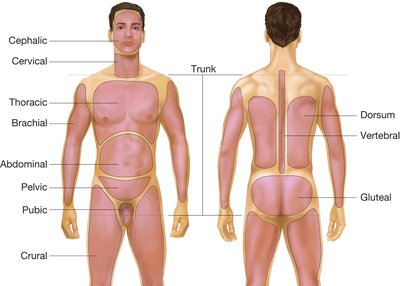
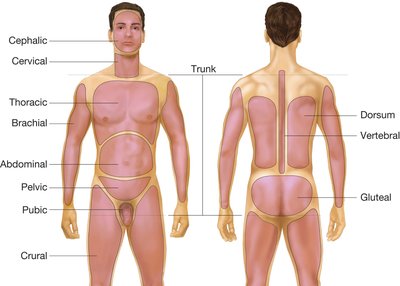
The body is divided into regions for descriptive purposes.
Brachial: Arm
Cephalic: Head
Cervical: Neck
Crural: Leg
Trunk (Torso): Includes thoracic (chest), abdominal, pelvic, pubic (genitals), dorsum (back), vertebral, gluteal (buttocks)
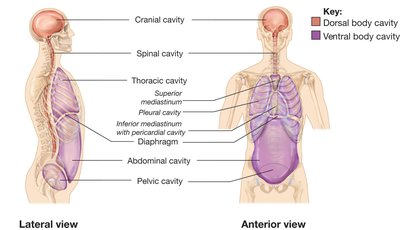
Body Cavities
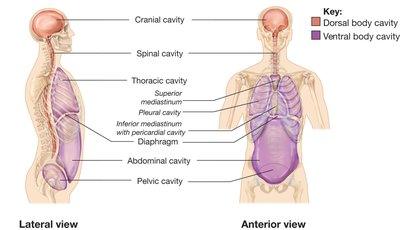
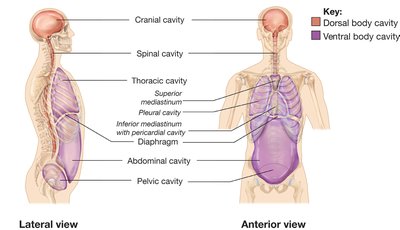
The body contains open spaces called cavities, which house organs.
Dorsal Cavities: Cranial (brain), Spinal (spinal cord)
Ventral Cavities: Thoracic (lungs, mediastinum), Abdominopelvic (digestive, excretory, reproductive organs)
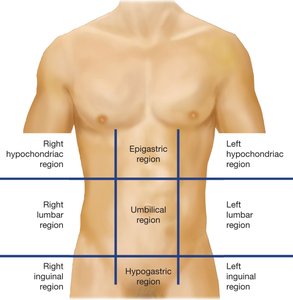
Anatomical Divisions of the Abdomen
The abdomen is divided into regions and quadrants for clinical and anatomical reference.
Upper row: Right/Left hypochondriac, epigastric
Middle row: Right/Left lumbar, umbilical
Lower row: Right/Left inguinal, hypogastric
Clinical Divisions of the Abdomen
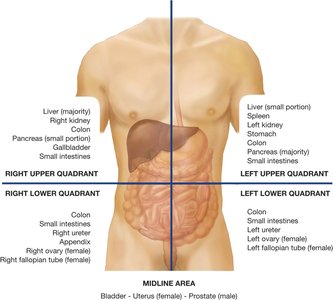
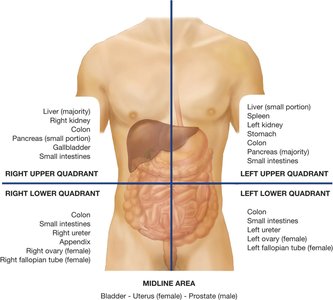
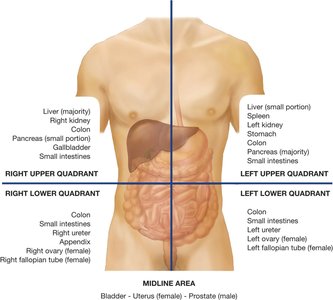
The abdomen is also divided into four quadrants:
Quadrant | Main Organs |
|---|---|
Right Upper (RUQ) | Majority of liver, gallbladder, small portion of pancreas, small intestine, colon |
Right Lower (RLQ) | Small intestine, colon, right ovary, right fallopian tube, appendix, right ureter |
Left Upper (LUQ) | Small portion of liver, spleen, stomach, majority of pancreas, small intestine, colon |
Left Lower (LLQ) | Small intestine, colon, left ovary, left fallopian tube, left ureter |
Descriptive Terms for Body Position
Directional Terms
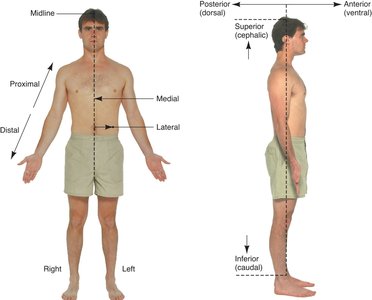
Medical terminology uses specific terms to describe locations and relationships:
Superior (cephalic): Toward the head
Inferior (caudal): Toward the feet
Anterior (ventral): Toward the front
Posterior (dorsal): Toward the back
Medial: Toward the middle
Lateral: Toward the side
Proximal: Nearer to the point of attachment
Distal: Farther from the point of attachment
Apex: Tip or summit of an organ
Base: Bottom or lower part of an organ
Superficial: Toward the surface
Deep: Further from the surface
Body Positions
Supine: Lying horizontally facing upward
Prone: Lying horizontally facing downward


Summary Table: Levels of Organization
Level | Description |
|---|---|
Cell | Basic unit of life |
Tissue | Group of similar cells |
Organ | Structure with multiple tissue types |
System | Group of organs |
Organism | Complete living individual |
Key Medical Terminology
Epithelium: Lining tissue
Muscle fiber: Cell of muscle tissue
Diaphragm: Muscle separating thoracic and abdominopelvic cavities
Mediastinum: Central compartment of thoracic cavity
Quadrant: One of four divisions of the abdomen
Additional info:
Medical terminology is essential for accurate communication in healthcare settings.
Understanding anatomical position and directional terms is foundational for describing injuries, procedures, and anatomical relationships.
