 Back
BackCardiology and the Cardiovascular System: Medical Terminology Study Guide
Study Guide - Smart Notes
 Tailored notes based on your materials, expanded with key definitions, examples, and context.
Cardiology and the Cardiovascular System
Introduction to Cardiology
Cardiology is the medical specialty focused on the anatomy, physiology, diseases, and treatments of the cardiovascular system. Understanding medical terminology in this field is essential for accurate communication and patient care.
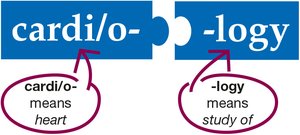
Cardi/o-: means heart
-logy: means study of
Cardiologists use diagnostic tests, medical and surgical procedures, and drugs to treat cardiovascular diseases.
Structures of the Cardiovascular System
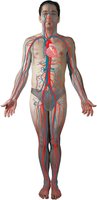
The cardiovascular system consists of the heart and blood vessels, forming a continuous pathway that circulates blood throughout the body.
Heart: Central organ located in the thoracic cavity, behind the sternum and between the lungs.
Blood Vessels: Include arteries, veins, and capillaries.
Anatomy of the Heart
External Surface and Chambers
The heart is roughly the size of a fist and contracts at least once per second. Its external surface is irregular, with mounds and grooves reflecting internal chambers and containing fat, blood vessels, and nerves.
Membranes and Layers
The heart is surrounded by the pericardium, a two-layered membrane forming the pericardial sac:
Parietal pericardium: Outer layer
Epicardium: Inner layer
Pericardial fluid: Lubricates the space between layers
Myocardium: Muscular layer responsible for contraction
Endocardium: Innermost layer lining chambers and valves
Heart Chambers
The heart contains four chambers:
Atria: Two small upper chambers
Ventricles: Two large lower chambers
Septum: Central wall dividing right and left sides
Heart Valves
Four valves control blood flow:
Tricuspid valve: Between right atrium and right ventricle (three cusps)
Pulmonary valve: Between right ventricle and pulmonary arteries (three cusps)
Mitral valve: Between left atrium and left ventricle (two cusps)
Aortic valve: Between left ventricle and aorta (three cusps)
Chordae tendineae are ropelike strands that help keep the tricuspid and mitral valves closed during ventricular contraction.
Thoracic Cavity and Mediastinum
The thoracic cavity contains the lungs and mediastinum, which houses the heart, great vessels (aorta, vena cavae, pulmonary arteries and veins), esophagus, trachea, and thymus.
Blood Vessels
Types and Functions
Blood vessels are vascular channels for blood circulation. All have a central lumen and are lined with endothelium (intima).
Arteries: Carry blood away from the heart; most are oxygen-rich and deep beneath the skin.
Capillaries: Smallest vessels, connect arteries and veins, deliver blood to cells.
Veins: Carry blood toward the heart; most are oxygen-poor and near the surface.
Arteries
Arteries branch into arterioles and have smooth muscle for vasoconstriction and vasodilation, which regulate blood pressure.
Veins
Veins have valves to ensure one-way blood flow, especially in large veins.
Circulation Pathways
Blood circulates through two main pathways:
Systemic circulation: Vessels throughout the body except the lungs
Pulmonary circulation: Vessels to, within, and from the lungs
Blood passes through both pathways in one complete trip.
Physiology of the Heart
Conduction System
The heart's conduction system initiates and transmits electrical impulses:
Sinoatrial (SA) node: Pacemaker, initiates heartbeat
Atrioventricular (AV) node: Receives impulse from SA node
Bundle of His and bundle branches: Transmit impulse through septum
Purkinje fibers: Cause ventricles to contract
Heart Rate and Rhythm
A normal heartbeat has two phases:
Systole: Contraction phase
Diastole: Resting phase
Normal sinus rhythm (NSR) is controlled by the SA node. Heart rate is regulated by the parasympathetic (acetylcholine) and sympathetic (norepinephrine, epinephrine) nervous systems.
Common Cardiovascular Diseases
Heart Diseases
Angina pectoris: Chest pain due to reduced blood flow to the heart muscle
Congestive heart failure: Inability of the heart to pump effectively, leading to edema
Myocardial infarction: Heart attack caused by blocked coronary arteries
Blood Vessel Diseases
Aneurysm: Abnormal bulging of an artery wall
Atherosclerosis: Narrowing of arteries due to plaque buildup
Hypertension: High blood pressure
Varicose veins: Enlarged, twisted veins
Conduction System Diseases
Arrhythmias: Abnormal heart rhythms, including bradycardia, tachycardia, fibrillation, and asystole
Laboratory and Diagnostic Procedures
Exercise Stress Tests
Used to assess heart function during physical activity.
Electrocardiography (ECG)
Records electrical activity of the heart using chest leads and produces a 12-lead ECG.
Ultrasonography and Echocardiography
Ultrasound techniques visualize blood flow and heart structure.
Medical Procedures
Blood Pressure Measurement
Manual sphygmomanometer measures systolic and diastolic pressures using an inflatable cuff and stethoscope.
Automatic External Defibrillator (AED)
AEDs are used in emergencies to restore normal heart rhythm.
Pulse Points
Pulse points are locations where arterial pulse can be felt to assess heart rate and blood flow.
Drugs and Surgical Procedures
Cardiovascular Drugs
Digitalis drugs, originally derived from the foxglove plant (Digitalis purpurea), are used to treat heart conditions.
Open Heart Surgery
Involves cutting the sternum to access the heart for various procedures.
Pacemaker Implantation
Pacemakers are implanted to regulate abnormal heart rhythms.
Balloon Angioplasty and Stent Placement
Balloon angioplasty compresses plaque to open arteries; stents provide ongoing support to keep arteries open.
Valve Replacement
Artificial valves are implanted to replace damaged heart valves, ensuring proper blood flow.
Key Medical Terminology and Abbreviations
Understanding abbreviations and terminology is essential for communication in cardiology. Refer to course materials for a comprehensive list.
Summary Table: Types of Blood Vessels
Type | Function | Blood Direction | Oxygen Content |
|---|---|---|---|
Arteries | Carry blood away from heart | Away | Mostly oxygen-rich |
Veins | Carry blood toward heart | Toward | Mostly oxygen-poor |
Capillaries | Exchange gases/nutrients | Connect arteries and veins | Mixed |
Additional info: Academic context and expanded explanations were added to ensure completeness and clarity for medical terminology students.
