 Back
BackChapter 1: Concepts, Suffixes, and Prefixes of Medical Terminology
Study Guide - Smart Notes
 Tailored notes based on your materials, expanded with key definitions, examples, and context.
Concepts of Medical Terminology
Introduction to Medical Terminology
Medical terminology is a specialized vocabulary used by healthcare professionals to ensure effective and accurate communication. Most medical terms are derived from Latin and Greek, providing consistency and uniformity across the world.
Purpose: Facilitates precise communication in healthcare settings.
Languages: Latin and Greek are the primary sources of medical word parts.
Application: Used in medical records, diagnoses, and procedures.

Word Parts
Root
The root is the fundamental unit of each medical word, establishing its basic meaning. Prefixes and suffixes are added to the root to modify its meaning.
Definition: The main part of a word that provides its core meaning.
Example: The root cardi means "heart."

Suffix
A suffix is a short word part added to the end of a root, modifying its meaning. Suffixes are indicated by a dash before the suffix (e.g., -itis).
Function: Alters the meaning of the root, often indicating a condition, procedure, or specialty.
Example: -itis means "inflammation" (e.g., neuritis).

Prefix
A prefix is a short word part added before a root to modify its meaning. Prefixes are followed by a dash (e.g., pre-).
Function: Provides additional information such as location, number, or time.
Example: pre- means "before" (e.g., prenatal).

Word Construction
Medical terms are often constructed by combining a prefix, root, and suffix. This structure allows for the creation of complex terms with specific meanings.
Example: unilateral = uni- (one) + lateral (side)

Combining Forms
Combining Vowel
A combining vowel, usually "o," is inserted between the root and the next word part to aid in pronunciation. Roots shown with a combining vowel are called combining forms.
Usage: Insert "o" before a suffix beginning with a consonant.
Example: neur/o + -logy = neurology (study of the nervous system)
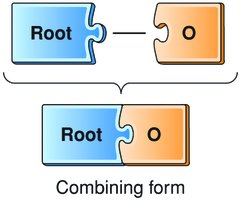
Combining Form Construction
When a suffix begins with a vowel, the combining vowel is omitted.
Example: neur + -itis = neuritis (inflammation of a nerve)

Word Derivations
Origins of Medical Terms
Most medical word parts are derived from Greek and Latin. Understanding these origins helps in deciphering unfamiliar terms.
Example: Muscle comes from the Latin word for "mouse." Coccyx is named for the cuckoo’s bill.
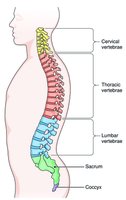
Special Rules in Medical Terminology
Words Ending in x
When adding a suffix to a word ending in "x," the "x" changes to "g" or "c" depending on the preceding letter.
Consonant before x: x changes to g (e.g., pharynx → pharyngeal)
Vowel before x: x changes to c (e.g., thorax → thoracotomy)
Suffixes Beginning with rh
When a suffix beginning with "rh" is added to a root, the "r" is doubled.
Example: hem/o (blood) + -rhage = hemorrhage (bursting forth of blood)
Pronunciation and Spelling
Pronunciation Rules
A vowel alone or at the end of a syllable gets a long pronunciation (e.g., "e" as in tea).
A vowel within a syllable gets a short pronunciation (e.g., "a" as in hat).
Silent letters and unusual pronunciations are common (e.g., pneumonia is pronounced "n"; pseudonym is pronounced "s").
Soft and Hard c and g
Soft c: "s" sound (e.g., racer → "RA-ser")
Hard c: "k" sound (e.g., candy → "KAN-de")
Soft g: "j" sound (e.g., page → "paje")
Hard g: "g" sound (e.g., grow → "gro")
Abbreviations and Symbols
Word and Phrase Abbreviations
Abbreviations and acronyms are used to save time but may cause confusion if not universally understood.
Acronym: Formed from the first letter of each word in a phrase (e.g., ASAP = as soon as possible).
Symbols: Used as shorthand in case histories (e.g., ® = right, = increase).
Medical Dictionaries
Types and Features
Medical dictionaries are valuable references for health professionals, providing information on meanings, derivations, and related terms.
Types: Complete/unabridged, portable/abridged, online, phone app.
Features: Definitions, word breakdowns, combining forms, appendices.
Key Terms
Suffixes
Definition: Word ending that modifies a root.
Function: May indicate a noun or adjective; often determines how the definition begins.
Examples: myel/o (bone marrow) + -oid = myeloid (like or pertaining to bone marrow); myel/o + -oma = myeloma (tumor of the bone marrow).
Noun Suffixes
Suffixes can convert roots into nouns. The ending -sis may appear with different combining vowels as: -osis, -iasis, -esis, or -asis.
Adjective Suffixes
Adjective endings meaning "pertaining to," "like," or "resembling" include: -ac (cardiac), -form (muciform), -ory (respiratory).
Forming Plurals
Special Plural Forms
Words ending in -a carry plural ending -ae (e.g., gingiva vs. gingivae).
Words ending in -is carry plural ending -es (e.g., diagnosis vs. diagnoses).
Exceptions: sinus → sinuses, virus → viruses, serum → sera or serums.
Prefixes
Definition and Function
A prefix is a short word part added before a root to modify its meaning.
Example: uni- (one) + lateral = unilateral (affecting one side); contra- (against) + lateral = contralateral (opposite side).
Types of Prefixes
Numbers: bi- (two), tri- (three)
Colors: cyan- (blue), leuk- (white)
Negative: a- (without), anti- (against)
Direction: ab- (away), ad- (toward)
Degree: hyper- (excessive), hypo- (deficient)
Size/Comparison: macro- (large), micro- (small)
Time/Position: pre- (before), post- (after)
Health Professions
Health Information Technician (HIT)
Health information technicians organize and manage patient medical records, assign codes to diagnoses and procedures, and analyze medical records to reveal health trends.
Employment Areas: Hospitals, long-term care facilities, government agencies, medical clinics, insurance companies.
Summary Table: Word Part Functions
Word Part | Position | Function | Example |
|---|---|---|---|
Prefix | Beginning | Modifies meaning | pre- (before) |
Root | Middle | Basic meaning | cardi (heart) |
Suffix | End | Modifies meaning | -itis (inflammation) |
Example Table: Plural Endings
Singular | Plural |
|---|---|
gingiva | gingivae |
diagnosis | diagnoses |
sinus | sinuses |
virus | viruses |
serum | sera/serums |
Example Table: Prefixes for Degree
Prefix | Meaning | Example |
|---|---|---|
hyper- | Excessive | hyperglycemia |
hypo- | Deficient | hypoglycemia |
Example Table: Prefixes for Position
Prefix | Meaning | Example |
|---|---|---|
pre- | Before | prenatal |
post- | After | postoperative |
Additional info:
Medical dictionaries often provide pronunciation guides, combining forms, and appendices for word parts.
Understanding the structure of medical terms aids in learning and applying terminology across all medical specialties.
