 Back
BackChapter 1: Introduction to Medical Terminology – Mini-Textbook Study Notes
Study Guide - Smart Notes
 Tailored notes based on your materials, expanded with key definitions, examples, and context.
Introduction to Medical Terminology
Overview of Medical Terminology
Medical terminology forms the foundation for communication in healthcare. It is a specialized language used to describe the human body, its conditions, procedures, and treatments. Understanding the structure and rules of medical terms enables students and professionals to accurately interpret and construct complex medical vocabulary.
Medical terminology is like learning a new language, with its own rules and structure.
Memorizing all terms is impractical; instead, learning to analyze word parts is essential.
Key word parts: word roots, combining forms, prefixes, and suffixes.

Building Medical Terms from Word Parts
Word Roots
The word root is the core of a medical term, providing its fundamental meaning. It often refers to a body system, part, or an action.
Word root: Foundation of the term (e.g., cardi = heart, cis = to cut).
Medical terms may have more than one root (e.g., osteoarthritis combines bone and joint).

Combining Vowel and Combining Form
Combining vowels, usually "o", are used to connect word roots or a word root and suffix, making terms easier to pronounce.
Use a combining vowel between two word roots, even if the second root begins with a vowel (e.g., gastroenteritis).
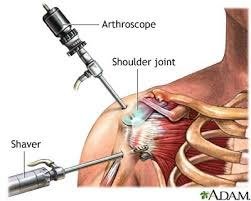
Do not use a combining vowel if the suffix begins with a vowel (e.g., arthritis), but use it if the suffix begins with a consonant (e.g., arthroscope).
Combining forms are written as root/vowel (e.g., cardi/o, arthr/o, gastr/o).
Common Combining Forms
Combining forms are used to construct medical terms and often indicate body parts or functions.
bi/o – life
carcin/o – cancer
cardi/o – heart
chem/o – chemical
cis/o – to cut
dermat/o – skin
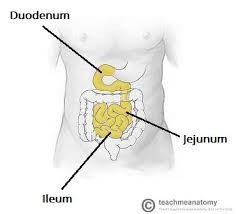
enter/o – small intestine
gastr/o – stomach
gynec/o – female
hemat/o – blood
immun/o – immunity
laryng/o – voice box
nephr/o – kidney
neur/o – nerve
ophthalm/o – eye
ot/o – ear
path/o – disease
pulmon/o – lung
rhin/o – nose
Prefixes
Definition and Usage
Prefixes are added to the beginning of medical terms to modify their meaning. They can indicate location, number, or time.
Examples: sub- = below, mono- = one, post- = after.
When written alone, prefixes are followed by a hyphen (e.g., intra-, hyper-).
Not all medical terms have a prefix.
Common Prefixes
Prefix | Meaning | Example |
|---|---|---|
a-, an-, de- | without, away from | anemia (without enough blood cells) |
anti- | against | antibiotic |
auto- | self | autoimmune |
brady- | slow | bradycardia |
dys- | painful, difficult, abnormal | dyspepsia |
endo-, intra- | within, inside | endoscope, intra-abdominal |
hyper- | over, above | hypertension |
hypo- | under, below | hypovolemic |
macro-, micro- | large, small | microcephaly |
neo- | new | neoplasm |
peri-, post-, pre- | around, after, before | prenatal |
tachy- | fast | tachycardia |

Number Prefixes
Prefix | Meaning |
|---|---|
bi- | two |
hemi-, semi- | half, partial |
mono- | one |
multi-, poly- | many |
nulli- | none |
pan- | all |
quadri-, tetra- | four |
tri- | three |
Suffixes
Definition and Usage
Suffixes are attached to the end of medical terms and add meaning related to conditions, diseases, or procedures. Every medical term must have a suffix.
Examples: -algia = pain, -itis = inflammation, -ectomy = surgical removal.
When written alone, suffixes are preceded by a hyphen (e.g., -logy, -cyte).
Common Suffixes
Suffix | Meaning | Example |
|---|---|---|
-algia, -dynia | pain | neuralgia |
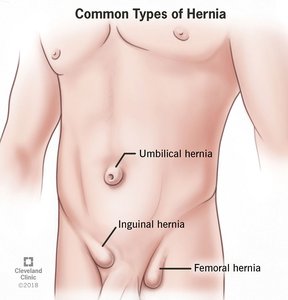
-cele | hernia, protrusion | cystocele |
-cyte | cell | erythrocyte |
-ectasis | dilatation | bronchiectasis |
-gen, -genic | producing | pathogenic |
-itis | inflammation | arthritis |
-logist, -logy | one who studies, study of | cardiologist, cardiology |
-oma | tumor, mass | hematoma |
-osis | abnormal condition | cyanosis |
-pathy | disease | neuropathy |
-plasm | formation, development | neoplasm |
-plegia | paralysis | hemiplegia |
-rrhage, -rrhagia | excessive flow | hemorrhage |
-rrhea | discharge, flow | diarrhea |
-sclerosis | hardening | arteriosclerosis |
-stenosis | narrowing | aortic stenosis |
-therapy | treatment | chemotherapy |
-trophy | nourishment, development | hypertrophy |
Adjective Suffixes
Adjective suffixes convert a word root into a descriptive term, often meaning "pertaining to". These are used to modify other words.
Example: gastr/o (stomach) + -ic (pertaining to) = gastric (pertaining to the stomach).
Common adjective suffixes: -ac, -al, -an, -ar, -ary, -ic, -ous, -tic, etc.
Surgical and Procedural Suffixes
Surgical suffixes indicate procedures performed on the body, while procedural suffixes relate to diagnostic or measurement processes.
-centesis: puncture to withdraw fluid
-ectomy: surgical removal
-ostomy: surgically create an opening
-otomy: cutting into
-pexy: surgical fixation
-plasty: surgical repair
-rrhaphy: suture
-tome: instrument to cut
-gram: record or picture
-graphy: process of recording
-meter: instrument for measuring
-metry: process of measuring
-scope: instrument for viewing
-scopic: pertaining to visually examining
-scopy: process of visually examining

Word Building and Interpretation
Constructing Medical Terms
Medical terms are constructed by combining word roots, prefixes, suffixes, and combining vowels according to established rules. Understanding the meaning of each part is essential for accurate term formation.
Example: hypo- (below), derm/o (skin), -ic (pertaining to) → hypodermic (pertaining to under the skin).
Interpreting Medical Terms
To interpret a medical term, divide it into its word parts, define each part, and combine the meanings.
Example: gastroenterology → gastr (stomach), o (combining vowel), enter (small intestine), o (combining vowel), -logy (study of) → study of the stomach and small intestine.
Pronunciation and Spelling
Pronunciation
Pronunciation of medical terms may vary by region and education. Phonetic spelling and stressed syllables are used to aid learning.
Example: pericarditis (per ih car DYE tis)
Spelling
Correct spelling is crucial, as changing one letter can alter the meaning of a term.
Example: abduction (moving away) vs. adduction (moving towards)
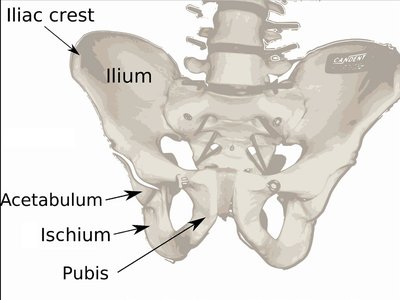
ileum (small intestine) vs. ilium (hip bone)
Singular and Plural Endings
Rules for Plurals
Many medical terms are derived from Greek or Latin, and their plural forms follow different rules than English.
Example: atrium → atria (not atriums)
Some terms use English rules: ventricle → ventricles
Abbreviations
Usage and Cautions
Abbreviations are commonly used in medical documentation to save time, but they can cause confusion. It is best to spell out terms if clarity is needed and avoid personal abbreviations.
Do not use drawings or text speak in medical documentation.
Summary Table: Word Parts and Their Functions
Word Part | Location | Function | Example |
|---|---|---|---|
Root | Middle | Core meaning | cardi (heart) |
Prefix | Beginning | Modifies meaning | brady- (slow) |
Suffix | End | Specifies condition/procedure | -itis (inflammation) |
Combining vowel | Between parts | Ease pronunciation | o in cardi/o |
Additional info: Academic context was added to clarify the rules and provide examples for each word part, as well as to expand on the importance of correct spelling and pronunciation in medical terminology.
