 Back
BackChapter 3: Organization of the Body – Medical Terminology Study Notes
Study Guide - Smart Notes
 Tailored notes based on your materials, expanded with key definitions, examples, and context.
Organization of the Body
Introduction
This chapter introduces the structural organization of the human body, essential anatomical terminology, and the foundational concepts necessary for understanding medical language. Mastery of these topics is crucial for accurate communication in healthcare settings.
Anatomy and Physiology
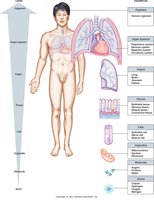
Levels of Organization
The human body is organized into a hierarchy of structural units, each with specific roles in maintaining homeostasis—a state of internal equilibrium that supports optimal cellular function.
Atoms: The smallest chemical units, consisting of protons, neutrons, and electrons. Six main elements in the body: oxygen, carbon, hydrogen, nitrogen, calcium, phosphorus.
Molecules: Combinations of atoms (e.g., H2O for water, N2 for nitrogen gas). Water is vital, comprising 55–65% of body weight.
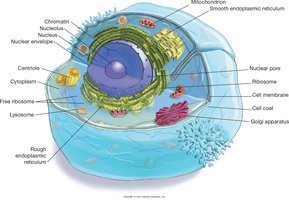
Cells: Basic building blocks of life, specialized by structure and function. Main components: cell membrane (selective barrier), cytoplasm (site of organelles), nucleus (genetic control center).
Tissues: Groups of similar cells performing specific functions. Four types: epithelial, connective, muscle, nerve.
Organs: Structures composed of multiple tissue types working together (e.g., heart, liver).
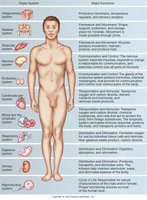
Systems: Groups of organs with a common purpose (e.g., digestive system).
Organism: The complete living human body.
Cells
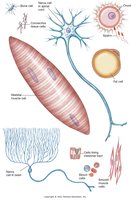
Cells vary in shape and size, reflecting their specialized functions. All cells share basic structures:
Cell Membrane: Regulates entry and exit of substances (selectivity).
Cytoplasm: Jelly-like matrix containing organelles (e.g., mitochondria, endoplasmic reticulum, Golgi apparatus, lysosomes, centrioles).
Nucleus: Contains chromosomes (23 pairs in humans) and genes, directing metabolism, growth, and reproduction. The genome is the complete set of genetic material.
Stem Cells
Stem cells are unspecialized cells capable of dividing and differentiating into specialized cell types. They are found in embryos, adult tissues, and umbilical cord blood, and are important in regenerative medicine.
Tissues
Tissues are groups of similar cells performing specialized functions. The four basic types are:
Epithelial Tissue: Covers surfaces, lines cavities, forms glands. Functions: protection, sensation, secretion, absorption, excretion, diffusion.
Connective Tissue: Most abundant; supports, connects, and binds organs and tissues. Includes bone, cartilage, fat, blood.
Muscle Tissue: Responsible for movement. Types: skeletal (voluntary, striated), smooth (involuntary, in organs), cardiac (heart only).
Nerve Tissue: Composed of neurons and neuroglia; enables excitability and conductivity, coordinating body activities.
Organs and Systems
Organs are made of multiple tissue types working together. Systems are groups of organs with a shared function, supporting the organism as a whole.
Anatomical Locations and Positions
Standard Anatomical Position
Medical professionals use a standard anatomical position for reference: body erect, head forward, arms at sides with palms facing forward. Left and right refer to the patient’s perspective.
Directional and Positional Terms
These terms describe the location of body parts relative to each other and are essential for physical assessment and documentation. (See Table 3.2 in your textbook for a comprehensive list.)
Body Planes
Imaginary lines dividing the body for descriptive purposes:
Sagittal Plane: Divides body into right and left sides.
Midsagittal Plane: Divides body into equal right and left halves.
Transverse (Horizontal) Plane: Divides body into superior (upper) and inferior (lower) parts.
Coronal (Frontal) Plane: Divides body into anterior (front) and posterior (back) parts.
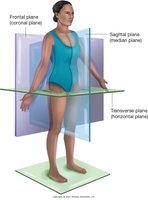
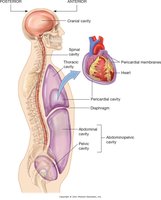
Body Cavities
Body cavities are hollow spaces containing organs. Two main cavities:
Ventral (Anterior) Cavity: Front of body; includes thoracic (chest), abdominal, and pelvic cavities.
Dorsal (Posterior) Cavity: Back of body; includes cranial (brain) and spinal (spinal cord) cavities.
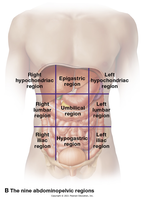
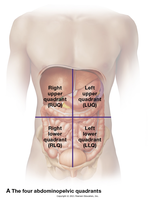
Abdominopelvic Regions and Quadrants
The abdominopelvic cavity is divided for clinical reference:
Nine Regions: Right/left hypochondriac, epigastric, right/left lumbar, umbilical, right/left iliac, hypogastric.
Four Quadrants: Right upper (RUQ), left upper (LUQ), right lower (RLQ), left lower (LLQ).
The Trunk
The trunk (torso) is the central part of the body, excluding head, arms, and legs. It contains most vital organs, including the heart, lungs, digestive organs, liver, gallbladder, kidneys, and reproductive organs.
Head-to-Toe Assessment
Medical terminology for body areas is essential for documenting and understanding patient assessments. (See Table 3.3 in your textbook for specific terms.)
Building Your Medical Vocabulary
Understanding word roots, prefixes, and suffixes is key to mastering medical terminology. Examples:
Android: andr = man, -oid = resemble
Chromosome: chromo- = color, -some = body
Internal: intern = within, -al = pertaining to
Physiology: physi/o = nature, -logy = study of
Unilateral: uni- = one, later = side, -al = pertaining to
Drug Highlights
Drug Classifications and Uses
Drugs are chemicals that alter body functions. They may be over-the-counter (OTC) or prescription. Five main uses:
Therapeutic: Relieve symptoms
Diagnostic: Aid in locating disease
Curative: Eliminate disease agents
Replacement: Supplement missing substances
Preventive: Prevent or reduce disease severity
Drug Names
Chemical Name: Describes chemical structure
Generic Name: Official, descriptive name
Brand/Trade Name: Registered, FDA-approved name
Drug Reactions and Orders
Adverse Reaction: Harmful, unintended effect
Drug Interaction: One drug alters the effect of another; can also involve food, alcohol, tobacco
Medication Order: Specifies drug, dosage, form, timing, and route of administration
Abbreviations and Acronyms
Abbreviations and acronyms are commonly used in medical records and communication. Refer to your textbook for a comprehensive list relevant to this chapter.
