 Back
BackDigestive System: Medical Terminology and Anatomy Study Guide
Study Guide - Smart Notes
 Tailored notes based on your materials, expanded with key definitions, examples, and context.
Digestive System Overview
Introduction to the Digestive System
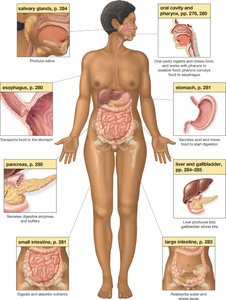
The digestive system, also known as the gastrointestinal (GI) system, is responsible for breaking down food, absorbing nutrients, and eliminating waste. It consists of a continuous muscular tube (the alimentary canal or gut) and accessory organs that aid in digestion.
Main functions: Digestion, absorption, and elimination of solid waste.
Major organs: Mouth, pharynx, esophagus, stomach, small intestine, large intestine, anus.
Accessory organs: Salivary glands, liver, gallbladder, pancreas.
Anatomy and Physiology of the Digestive System
Oral Cavity
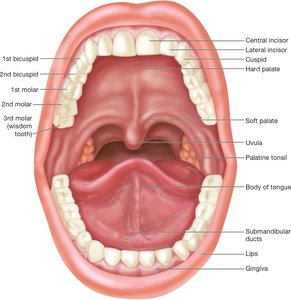
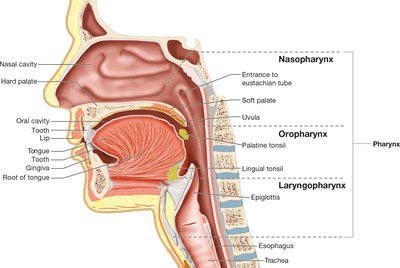
The oral cavity (mouth) is the entry point for food and the site where mechanical and chemical digestion begins. Structures include the teeth, tongue, palate, and salivary glands.
Mastication: Chewing of food by teeth.
Saliva: Produced by salivary glands, contains enzymes (e.g., amylase) for carbohydrate digestion and lubricates food for swallowing.
Palate: Divided into hard (anterior) and soft (posterior) palate; the uvula hangs from the soft palate and aids in speech and the gag reflex.
Tongue: Moves food, mixes it with saliva, and contains taste buds for flavor detection.
Gingiva (gums): Protects the teeth and underlying bone.
Teeth
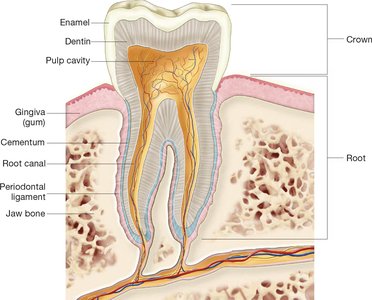
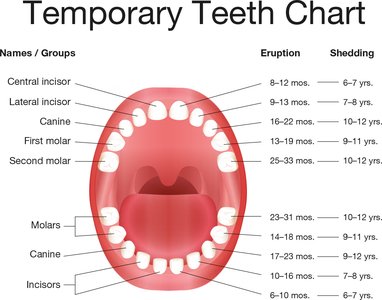
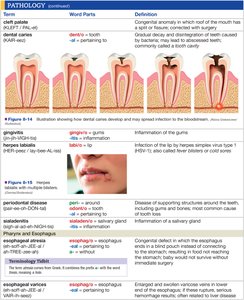
Teeth are essential for the mechanical breakdown of food. Humans have two sets: deciduous (baby) teeth and permanent teeth. Each tooth consists of a crown (visible part) and a root (embedded in the jaw).
Types of teeth: Incisors (cutting), canines/cuspids (tearing), premolars/bicuspids and molars (grinding).
Tooth structure: Enamel (hard outer layer), dentin (bulk of tooth), pulp cavity (contains nerves and blood vessels), cementum (anchors root), periodontal ligaments (hold tooth in socket).
Pharynx and Esophagus
The pharynx (throat) is a shared passageway for food and air. The epiglottis prevents food from entering the respiratory tract during swallowing. The esophagus is a muscular tube that transports food from the pharynx to the stomach via peristalsis (wave-like muscle contractions).
Stomach
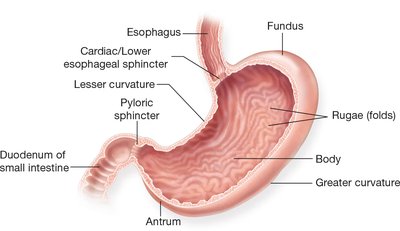
The stomach is a J-shaped organ that collects, churns, and digests food. It is divided into the fundus (upper), body (main), and antrum (lower) regions. The stomach lining contains folds called rugae that expand as the stomach fills. Gastric glands secrete hydrochloric acid and enzymes to form chyme (partially digested food).
Sphincters: Cardiac/lower esophageal sphincter (entry), pyloric sphincter (exit to small intestine).
Small Intestine
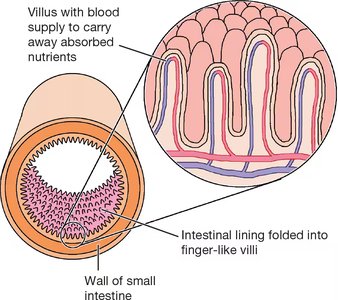
The small intestine is the primary site for digestion and absorption of nutrients. It is divided into three sections: duodenum, jejunum, and ileum. The lining contains villi and microvilli to increase surface area for absorption.
Duodenum: Receives chyme from the stomach and digestive juices from the pancreas and gallbladder.
Jejunum: Middle section, major site of nutrient absorption.
Ileum: Final section, connects to the large intestine via the ileocecal valve.
Large Intestine
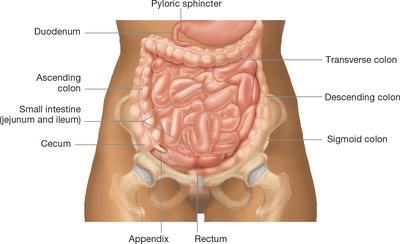
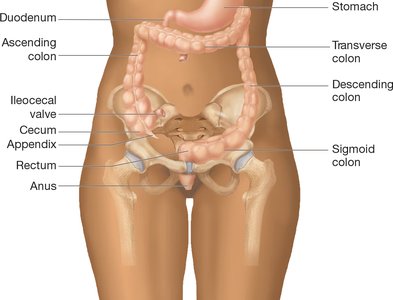
The large intestine absorbs water and forms solid waste (feces). It includes the cecum (with the appendix), colon (ascending, transverse, descending, sigmoid), rectum, and anal canal. The anal sphincter controls defecation.
Accessory Organs
Accessory organs produce and secrete substances necessary for digestion but are not part of the alimentary canal.
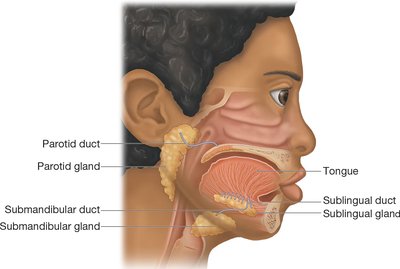
Salivary glands: Produce saliva containing amylase for carbohydrate digestion. Three pairs: parotid, submandibular, sublingual.
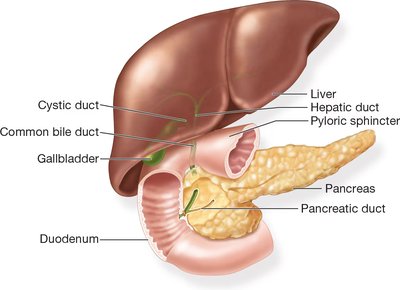
Liver: Produces bile for fat emulsification, processes nutrients, detoxifies substances.
Gallbladder: Stores and concentrates bile, releases it into the duodenum via the common bile duct.
Pancreas: Secretes digestive enzymes and buffers into the duodenum; also functions as an endocrine gland (insulin, glucagon).
Medical Terminology of the Digestive System
Common Word Parts
Medical terms for the digestive system are built from combining forms, suffixes, and prefixes. Understanding these components helps in deciphering complex terms.
Combining forms: e.g., gastr/o (stomach), enter/o (intestine), hepat/o (liver), dent/o (tooth).
Suffixes: e.g., -itis (inflammation), -ectomy (surgical removal), -logy (study of).
Prefixes: e.g., hyper- (excessive), hypo- (below), sub- (under).
Adjective Forms of Anatomical Terms
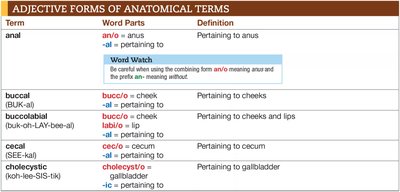
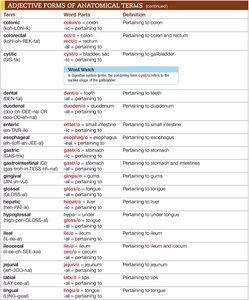
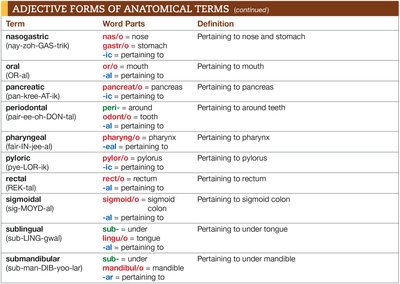
Adjective forms describe the anatomical location or relation to digestive organs. For example, oral (pertaining to the mouth), gastric (pertaining to the stomach), colonic (pertaining to the colon).
Digestive System Pathology
Common Diseases and Disorders
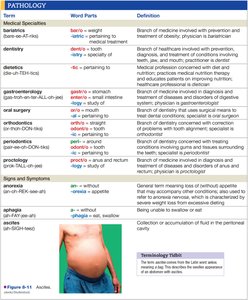
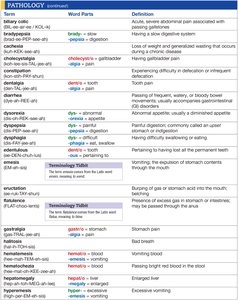
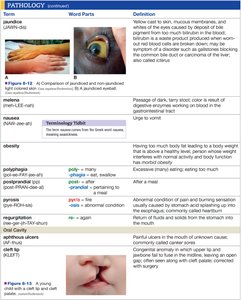
Pathological terms describe diseases, symptoms, and procedures related to the digestive system. Examples include:
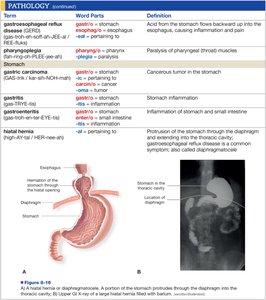
Gastritis: Inflammation of the stomach.
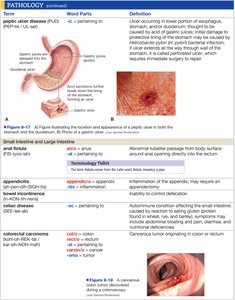
Appendicitis: Inflammation of the appendix.
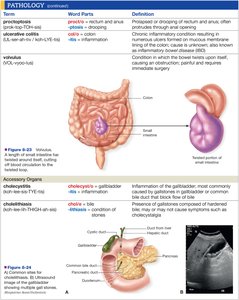
Cholecystitis: Inflammation of the gallbladder.
Hepatitis: Inflammation of the liver.
Gastroesophageal reflux disease (GERD): Acid reflux into the esophagus.
Peptic ulcer disease (PUD): Ulcers in the stomach or duodenum.
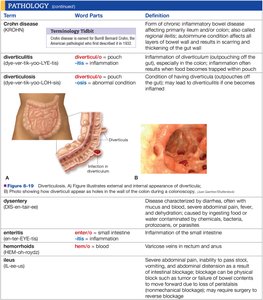
Diverticulosis: Presence of pouches in the colon wall.
Colorectal carcinoma: Cancer of the colon or rectum.
Summary Table: Digestive System Word Parts
Combining Form | Meaning |
|---|---|
gastr/o | stomach |
enter/o | small intestine |
hepat/o | liver |
col/o, colon/o | colon |
dent/o, odont/o | tooth |
or/o, stomat/o | mouth |
proct/o, rect/o | rectum and anus |
cholecyst/o | gallbladder |
pancreat/o | pancreas |
Key Formulas and Concepts
Peristalsis: Involuntary, wave-like muscle contractions that move food through the digestive tract.
Emulsification: The process by which bile breaks down large fat globules into smaller droplets for digestion.
Example: Building a Medical Term
Gastroenterology: gastr/o (stomach) + enter/o (intestine) + -logy (study of) = Study of the stomach and intestines.
Cholecystectomy: cholecyst/o (gallbladder) + -ectomy (surgical removal) = Surgical removal of the gallbladder.
