 Back
BackEndocrinology: Medical Terminology and the Endocrine System
Study Guide - Smart Notes
 Tailored notes based on your materials, expanded with key definitions, examples, and context.
Endocrinology: The Endocrine System
Introduction to Endocrinology
Endocrinology is a subspecialty of internal medicine focused on the diagnosis and treatment of disorders affecting the endocrine system. The endocrine system is composed of glands that secrete hormones directly into the bloodstream, regulating a wide range of bodily functions and maintaining homeostasis. Disruptions in hormone secretion can lead to various diseases and disorders.
Endocrinologist: A physician specializing in the endocrine system.
Homeostasis: The maintenance of a stable internal environment.
Hormones: Chemical messengers that regulate organ function.
Hypersecretion: Excessive hormone release.
Hyposecretion: Insufficient hormone release.
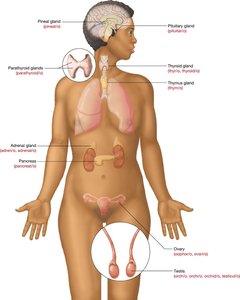
Major Endocrine Glands and Their Functions
Pineal Gland
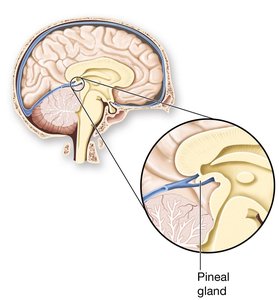
The pineal gland is a small, pine-cone-shaped structure located in the thalamus. It secretes melatonin, which helps regulate the body's circadian rhythm (sleep-wake cycle).
Pituitary Gland
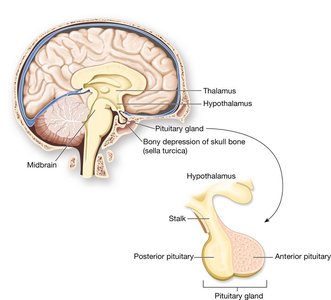
The pituitary gland, often called the "master gland," is a small structure hanging from the brain. It controls other endocrine glands through hormone secretion. It is divided into anterior and posterior lobes, each producing specific hormones.
Anterior lobe hormones: Growth hormone (GH), Thyroid-stimulating hormone (TSH), Adrenocorticotropic hormone (ACTH), Prolactin, Melanocyte-stimulating hormone (MSH), Follicle-stimulating hormone (FSH), Luteinizing hormone (LH).
Posterior lobe hormones: Antidiuretic hormone (ADH), Oxytocin.
Thyroid and Parathyroid Glands
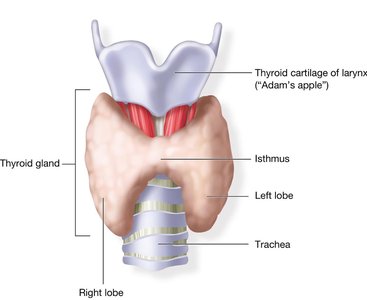
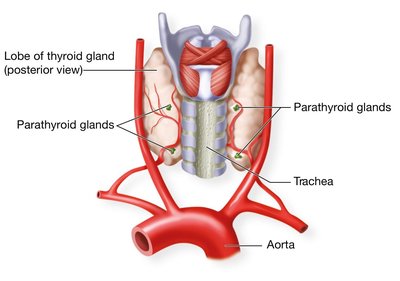
The thyroid gland consists of two lobes on either side of the trachea. It secretes thyroxine and triiodothyronine (regulate metabolism) and calcitonin (lowers blood calcium). The four parathyroid glands, located on the posterior surface of the thyroid, secrete parathyroid hormone (raises blood calcium).
Thymus Gland
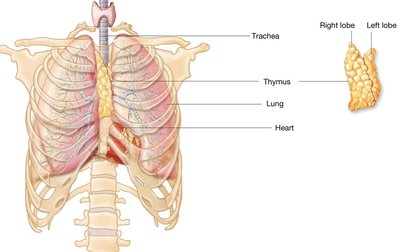
The thymus is located behind the sternum and above the heart. It secretes thymosin, which is important for immune system development. The thymus shrinks after puberty and is replaced by fatty tissue.
Adrenal Glands
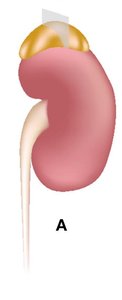
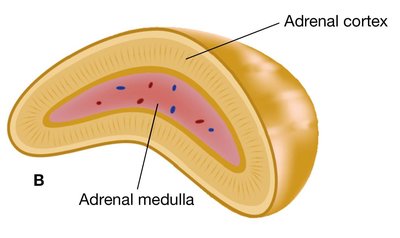
Each adrenal gland sits atop a kidney. The outer adrenal cortex secretes hormones such as aldosterone (regulates sodium and potassium), cortisol (regulates carbohydrate metabolism), and sex hormones. The inner adrenal medulla secretes epinephrine (emergency response).
Pancreas
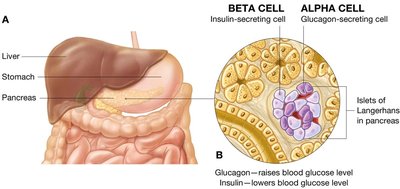
The pancreas has both endocrine and exocrine functions. The endocrine portion (islets of Langerhans) secretes insulin (lowers blood sugar) and glucagon (raises blood sugar). The exocrine portion secretes digestive enzymes.
Ovaries and Testes
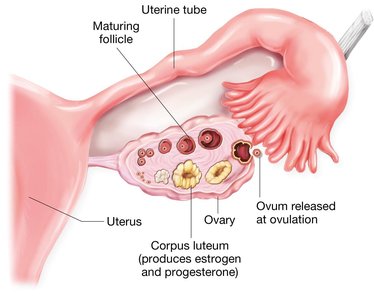
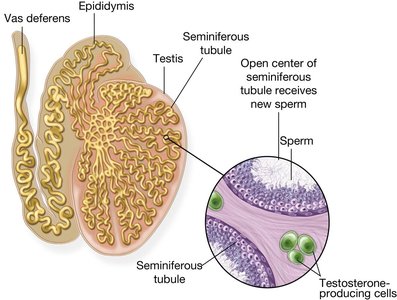
The ovaries (female) release ova and secrete estrogen (secondary sex characteristics, menstruation) and progesterone (maintains uterus for pregnancy). The testes (male) release sperm and testosterone (male secondary sex characteristics, sperm production).
Medical Terminology: Word Parts in Endocrinology
Combining Forms
Word Part | Meaning |
|---|---|
aden/o | gland |
adren/o, adrenal/o | adrenal gland |
crin/o | to secrete |
oophor/o, ovari/o | ovary |
orchi/o, testicul/o | testis |
pancreat/o | pancreas |
parathyroid/o | parathyroid gland |
pineal/o | pineal gland |
pituitar/o | pituitary gland |
thym/o | thymus gland |
thyr/o, thyroid/o | thyroid gland |
Other Combining Forms
Word Part | Meaning |
|---|---|
acr/o | extremities |
calc/o | calcium |
carcin/o | cancer |
cyt/o | cell |
gluc/o, glyc/o, glycos/o | glucose, sugar |
ket/o | ketones |
ophthalm/o | eye |
or/o | mouth |
toxic/o | poison |
Suffixes and Prefixes
Suffix | Meaning |
|---|---|
-al, -an, -ar, -ic | pertaining to |
-centesis | puncture to withdraw fluid |
-cyte | cell |
-dipsia | thirst condition |
-ectomy | surgical removal |
-emia | blood condition |
-itis | inflammation |
-logist | one who studies |
-logy | study of |
-megaly | enlarged |
-oma | tumor, mass |
-osis | abnormal condition |
-pathy | disease |
-uria | urine condition |
Prefix | Meaning |
|---|---|
endo- | inner, within |
ex- | outward |
hyper- | excessive |
hypo- | insufficient, below |
poly- | many |
Building Endocrinology Terms: Examples
adenocarcinoma: Cancerous tumor in a gland (aden/o + carcin/o + -oma).
adrenomegaly: Enlarged adrenal gland (adren/o + -megaly).
hypocalcemia: Insufficient calcium in the blood (hypo- + calc/o + -emia).
hyperglycemia: Excessive sugar in the blood (hyper- + glyc/o + -emia).
oophoritis: Inflammation of the ovary (oophor/o + -itis).
orchiopexy: Surgical fixation of the testis (orchi/o + -pexy).
pancreatectomy: Surgical removal of the pancreas (pancreat/o + -ectomy).
parathyroidectomy: Surgical removal of the parathyroid gland (parathyroid/o + -ectomy).
pinealectomy: Surgical removal of the pineal gland (pineal/o + -ectomy).
thyromegaly: Enlarged thyroid gland (thyr/o + -megaly).
hypothyroidism: State of insufficient thyroid gland secretion (hypo- + thyroid/o + -ism).
Endocrinology Pathology
Endocrine disorders result from abnormal hormone secretion or action. Below are key terms and their explanations:
Term | Explanation |
|---|---|
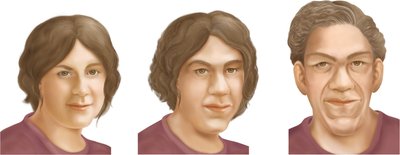
acromegaly | Chronic condition in adults with excessive growth hormone; elongation and enlargement of bones of head and extremities. |
Addison disease | Hyposecretion of adrenocortical hormones; symptoms include increased skin pigmentation, weakness, weight loss. |
adrenal feminization | Development of female secondary sexual characteristics in males due to increased estrogen secretion by adrenal cortex. |
adrenal virilism | Development of male secondary sexual characteristics in females due to increased androgen secretion by adrenal cortex. |
congenital hypothyroidism | Condition present at birth with lack of thyroid hormones; leads to poor physical and mental development. |
Cushing syndrome | Hypersecretion of adrenal cortex hormones; symptoms include weakness, edema, excessive hair growth, skin discoloration, osteoporosis. |
diabetes insipidus (DI) | Insufficient secretion of antidiuretic hormone (ADH); symptoms include polyuria and polydipsia. |
diabetes mellitus (DM) | Chronic disorder of sugar metabolism; symptoms include hyperglycemia and glycosuria. Two types: type 1 (IDDM) and type 2 (NIDDM). |
dwarfism | Excessively short stature due to lack of growth hormone. |
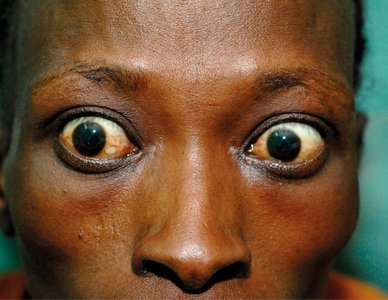
exophthalmos | Protrusion of the eyeballs, often due to hyperthyroidism (e.g., Graves disease). |
gigantism | Excessive body growth due to hypersecretion of growth hormone in children or teenagers. |
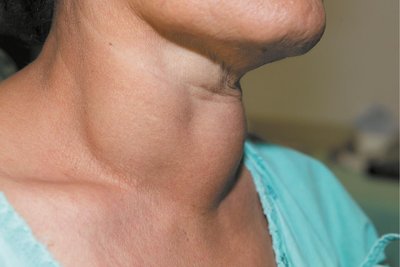
goiter | Enlargement of the thyroid gland, often due to iodine deficiency. |
Graves disease | Hypersecretion of thyroid hormones; symptoms include exophthalmos and goiter. |
Hashimoto thyroiditis | Chronic autoimmune destruction of the thyroid gland; results in hypothyroidism. |
insulin-dependent diabetes mellitus (IDDM) | Type 1 diabetes; early onset, pancreas stops producing insulin, requires insulin injections. |
ketoacidosis | Accumulation of acidic ketone bodies; serious complication of diabetes. |
myxedema | Hypothyroidism in adults; symptoms include anemia, slow speech, puffy skin, drowsiness. |
noninsulin-dependent diabetes mellitus (NIDDM) | Type 2 diabetes; later onset, cells fail to respond to insulin. |
pheochromocytoma | Benign tumor of adrenal medulla; excessive epinephrine secretion. |
tetany | Nerve irritability and muscle cramps due to hypocalcemia. |
thyrotoxicosis | Extreme hypersecretion of thyroid hormones; symptoms include rapid heart action, tremors, weight loss. |
Endocrinology Diagnostic Tests
Test | Explanation |
|---|---|
blood serum test | Measures hormone levels in the blood. |
fasting blood sugar (FBS) | Measures blood sugar after a 12-hour fast. |
glucose tolerance test (GTT) | Assesses body's ability to use glucose; used to diagnose diabetes. |
Hemoglobin A1C test | Estimates average blood glucose over three months; monitors diabetes. |
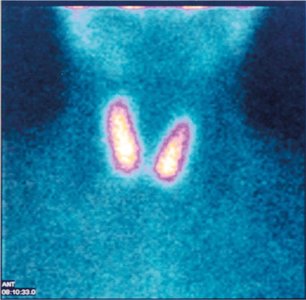
radioactive iodine uptake (RAIU) | Measures thyroid function by tracking iodine uptake. |
radioimmunoassay (RIA) | Measures hormone levels in plasma. |
thyroid function test (TFT) | Measures thyroid hormones and TSH in blood. |
thyroid scan | Imaging procedure to visualize thyroid gland size, shape, and location. |
Endocrinology Medical and Surgical Treatments
Treatment | Explanation |
|---|---|
corticosteroids | Adrenal cortex hormones with anti-inflammatory action; used for chronic inflammatory diseases. |
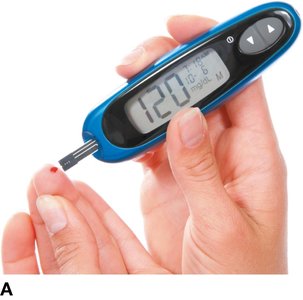
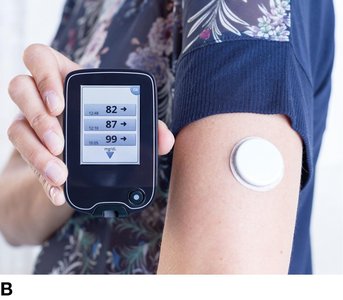
glucometer | Device for home monitoring of blood glucose. |
hormone replacement therapy (HRT) | Artificial hormone replacement for hyposecretion disorders. |
human growth hormone therapy (GH) | Treats insufficient growth hormone secretion in children. |
insulin | Medication for type 1 diabetes and severe type 2 diabetes. |
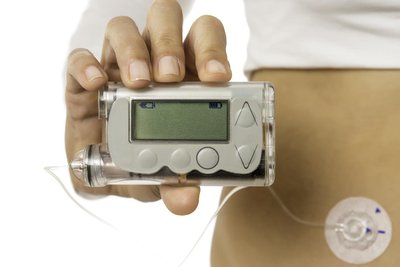
insulin pump | Device for continuous insulin delivery. |
oral hypoglycemic agents | Medications to lower blood sugar in type 2 diabetes. |

Common Endocrinology Abbreviations
Abbreviation | Meaning |
|---|---|
ACTH | adrenocorticotropic hormone |
ADH | antidiuretic hormone |
DI | diabetes insipidus |
DM | diabetes mellitus |
FBS | fasting blood sugar |
FSH | follicle-stimulating hormone |
GH | growth hormone |
GTT | glucose tolerance test |
HRT | hormone replacement therapy |
IDDM | insulin-dependent diabetes mellitus |
K+ | potassium |
LH | luteinizing hormone |
MSH | melanocyte-stimulating hormone |
Na+ | sodium |
NIDDM | non-insulin-dependent diabetes mellitus |
OXT | oxytocin |
PRL | prolactin |
PTH | parathyroid hormone |
RAIU | radioactive iodine uptake |
RIA | radioimmunoassay |
T3 | triiodothyronine |
T4 | thyroxine |
TFT | thyroid function test |
TSH | thyroid-stimulating hormone |
Summary Table: Major Endocrine Glands and Hormones
Gland | Hormones | Main Functions |
|---|---|---|
Pineal | Melatonin | Regulates circadian rhythm |
Pituitary (anterior) | GH, TSH, ACTH, PRL, MSH, FSH, LH | Growth, metabolism, reproductive function |
Pituitary (posterior) | ADH, Oxytocin | Water balance, uterine contractions |
Thyroid | Thyroxine, Triiodothyronine, Calcitonin | Metabolism, lowers blood calcium |
Parathyroid | Parathyroid hormone | Raises blood calcium |
Thymus | Thymosin | Immune system development |
Adrenal cortex | Aldosterone, Cortisol, Sex hormones | Electrolyte balance, metabolism, secondary sex characteristics |
Adrenal medulla | Epinephrine | Emergency response |
Pancreas | Insulin, Glucagon | Blood sugar regulation |
Ovaries | Estrogen, Progesterone | Female secondary sex characteristics, menstruation, pregnancy |
Testes | Testosterone | Male secondary sex characteristics, sperm production |
