 Back
BackMedical Terminology: Digestive and Respiratory Systems – Comprehensive Study Notes
Study Guide - Smart Notes
 Tailored notes based on your materials, expanded with key definitions, examples, and context.
Gastroenterology & Gastrointestinal (GI) System
Introduction to Gastroenterology
Gastroenterology is the medical specialty focused on the anatomy, physiology, and diseases of the gastrointestinal (GI) system. Gastroenterologists diagnose and treat disorders using diagnostic tests, medical and surgical procedures, and pharmacological interventions.
Gastroenterology: Gastr/o = stomach, Enter/o = intestine, -logy = study of
The GI system is a continuous pathway of organs and glands responsible for digestion, absorption, and elimination of waste.
Upper GI System Anatomy
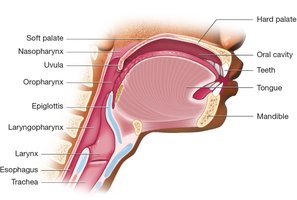
The upper GI system includes the oral cavity, pharynx, esophagus, and stomach. Each structure plays a role in the initial stages of digestion and the movement of food.
Oral Cavity: Contains teeth, gums, tongue, hard palate, and soft palate.
Pharynx: Common passageway for air and food.
Esophagus: Muscular tube connecting pharynx to stomach; peristalsis moves food downward.
Peristalsis: Involuntary, wave-like muscle contractions moving food through the digestive tract.
Salivary Glands
Salivary glands secrete saliva, which begins the process of chemical digestion and lubricates food for swallowing. There are three major pairs:
Parotid glands: Anterior to the ear
Sublingual glands: Beneath the tongue
Submandibular glands: Inferior to the mandible
The Stomach
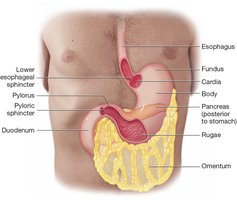
The stomach is an elongated sac divided into four regions: cardia, fundus, body, and pylorus. It serves as a reservoir for food, initiates protein digestion, and regulates the passage of chyme into the small intestine.
Lower esophageal sphincter: Prevents reflux of stomach contents
Pyloric sphincter: Controls passage of chyme into the duodenum
Rugae: Folds in the gastric mucosa that allow expansion
Small and Large Intestines
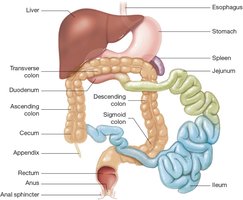
The small intestine is the primary site for digestion and absorption, divided into the duodenum, jejunum, and ileum. The large intestine absorbs water and forms feces, consisting of the cecum, colon (ascending, transverse, descending, sigmoid), rectum, and anus.
Villi: Finger-like projections in the small intestine that increase surface area for absorption
Haustra: Pouches in the colon that expand to accommodate waste
Accessory Organs: Liver, Gallbladder, Pancreas
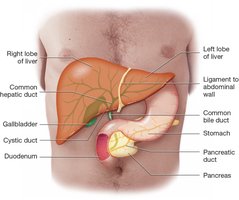
Accessory organs secrete substances essential for digestion. The liver produces bile, the gallbladder stores and concentrates bile, and the pancreas secretes digestive enzymes and hormones.
Liver: Produces bile, metabolizes nutrients, detoxifies substances
Gallbladder: Stores and concentrates bile, releases it into the duodenum
Pancreas: Secretes amylase, lipase, and proteases; also produces insulin
Digestive Processes
Digestion involves mechanical and chemical processes. Mechanical digestion includes mastication, deglutition, and peristalsis. Chemical digestion involves enzymes and acids breaking down food into absorbable molecules.
Amylase: Breaks down carbohydrates
Lipase: Breaks down fats
Pepsin: Breaks down proteins
Intrinsic factor: Essential for vitamin B12 absorption
Absorption and Elimination
Absorption is the process by which nutrients and water enter the bloodstream, primarily in the small intestine. Elimination removes undigested waste as feces through the rectum and anus.
Common Diseases and Disorders of the GI System
Diseases can affect any part of the GI tract, including:
Anorexia: Loss of appetite
Dysphagia: Difficulty swallowing
Gastroesophageal reflux disease (GERD): Chronic acid reflux
Peptic ulcer disease (PUD): Ulceration of the stomach or duodenal mucosa
Inflammatory bowel disease (IBD): Chronic inflammation (e.g., Crohn's disease, ulcerative colitis)
Hernias: Protrusion of intestine through a weak spot in the abdominal wall
Hepatitis: Inflammation of the liver, often viral
Cholelithiasis: Gallstones
Pancreatitis: Inflammation of the pancreas
Diagnostic and Laboratory Procedures
Diagnosis of GI diseases involves laboratory tests (e.g., liver function tests, fecal occult blood test), imaging (e.g., CT, MRI, ultrasound), and endoscopic procedures (e.g., colonoscopy, endoscopy).
Medical and Surgical Treatments
Treatments include medications (antacids, antibiotics, antidiarrheals, antiemetics, laxatives, proton pump inhibitors), and surgical procedures (appendectomy, cholecystectomy, bowel resection, herniorrhaphy, liver transplantation).
Pulmonology: Respiratory System
Introduction to Pulmonology
Pulmonology is the medical specialty concerned with the anatomy, physiology, and diseases of the respiratory system. Pulmonologists diagnose and treat respiratory disorders using clinical, laboratory, and imaging techniques.
Pulmon/o = lung, -logy = study of
Anatomy of the Respiratory System
The respiratory system is divided into upper and lower tracts, each with specialized structures for air conduction, filtration, and gas exchange.
Upper Respiratory System
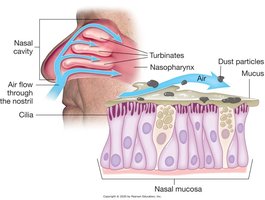
Nose and Nasal Cavity: Filters, warms, and humidifies air; lined by nasal mucosa and cilia
Turbinates: Bony projections that increase surface area and slow airflow
Pharynx: Common passageway for air and food; divided into nasopharynx, oropharynx, and laryngopharynx
Lower Respiratory System
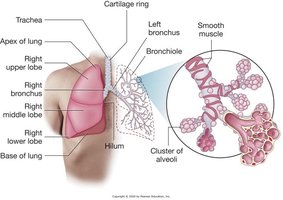
Larynx (voice box): Contains vocal cords, routes air and food appropriately
Trachea (windpipe): Supported by C-shaped cartilage rings; divides into right and left bronchi
Bronchi and Bronchioles: Conduct air into the lungs; bronchioles lack cartilage and have smooth muscle
Lungs: Right lung has three lobes, left lung has two; contain alveoli for gas exchange
Alveoli: Spherical sacs where oxygen and carbon dioxide are exchanged with capillaries; secrete surfactant to prevent collapse
Thoracic Cavity and Pleura
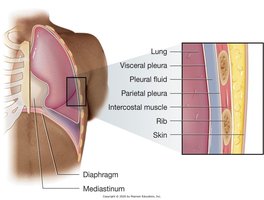
Thorax: Bony cage formed by the ribs, sternum, and spine
Mediastinum: Central compartment containing the heart, trachea, and esophagus
Diaphragm: Main muscle of respiration, separates thoracic and abdominal cavities
Pleura: Double-layered membrane surrounding each lung; pleural fluid reduces friction during breathing
Key Terms and Word Breakdowns
Nas/o- = nose
Pharyng/o- = pharynx
Laryng/o- = larynx
Trache/o- = trachea
Bronch/o- = bronchus
Pneum/o-, Pulmon/o- = lung
Alveol/o- = alveolus
Pleur/o- = pleura
Diaphragm: Main muscle of respiration
Summary Table: Major GI and Respiratory Structures
Structure | Location | Function |
|---|---|---|
Oral Cavity | Mouth | Initial digestion, mastication |
Pharynx | Throat | Passage for air and food |
Esophagus | Neck/Thorax | Transports food to stomach |
Stomach | Upper abdomen | Mixes and digests food |
Small Intestine | Abdomen | Digestion and absorption |
Large Intestine | Abdomen | Water absorption, feces formation |
Liver | Right upper abdomen | Bile production, metabolism |
Gallbladder | Under liver | Bile storage |
Pancreas | Behind stomach | Digestive enzymes, insulin |
Nasal Cavity | Nose | Filters, warms, humidifies air |
Trachea | Neck/Thorax | Air passage to bronchi |
Bronchi/Bronchioles | Lungs | Conduct air to alveoli |
Alveoli | Lungs | Gas exchange |
Pleura | Thoracic cavity | Reduces friction |
Additional info: This guide expands on the provided notes with definitions, examples, and logical groupings to ensure a comprehensive, self-contained study resource for medical terminology students.
