 Back
BackMental Health and Mental Disorders: Medical Terminology and Concepts
Study Guide - Smart Notes
 Tailored notes based on your materials, expanded with key definitions, examples, and context.
Chapter 18: Mental Health
Introduction to Mental Health
Mental health is a critical aspect of overall well-being, encompassing emotional, psychological, and social factors. The World Health Organization (WHO) defines health as a state of complete physical, mental, and social well-being, not merely the absence of disease or infirmity. Mental health specifically refers to a state in which an individual realizes their abilities, can cope with normal stresses, work productively, and contribute to their community.
Overview of Mental Disorders
A mental disorder is an abnormal condition of the brain or mind that affects thinking, feeling, behavior, and relationships. The exact cause is often unknown, but several contributing factors are recognized:
Genetics
Environmental influences (e.g., infections, chemicals, drugs)
Chemical changes in the brain
Psychological, social, and cultural conditions
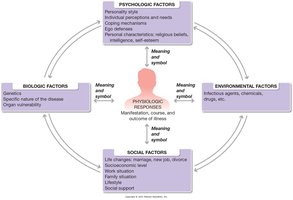
Mental illnesses are categorized as:
Any Mental Illness (AMI): All recognized mental illnesses, varying in impact.
Serious Mental Illness (SMI): A severe subset of AMI causing significant functional impairment.
Common mental disorders include:
Anxiety disorders
Attention-deficit/hyperactivity disorder (ADHD)
Autism spectrum disorder
Bipolar disorders
Depressive disorders
Feeding and eating disorders
Obsessive-compulsive disorders
Schizophrenia
Trauma and stressor-related disorders
Adjustment, dissociative, factitious, sexual and gender, somatic symptom, and tic disorders
Sleep-related problems and some dementias (e.g., Alzheimer disease)
Nearly one in five U.S. adults live with a mental illness. Major depression, bipolar disorder, and schizophrenia are among the top causes of disability in the U.S.
Symptoms of Mental Disorders
Symptoms vary by age group:
Adults: Confused thinking, persistent sadness, mood swings, excessive fear or anxiety, social withdrawal, changes in eating/sleeping, anger, delusions, hallucinations, inability to cope, suicidal thoughts, denial, unexplained physical problems, substance abuse.
Adolescents: Substance abuse, inability to cope, changes in eating/sleeping, physical complaints, defiance, intense fear of weight gain, persistent negative mood, thoughts of death, anger outbursts.
Children: Changes in school performance, poor grades, worry, hyperactivity, nightmares, disobedience, aggression, temper tantrums.
Diagnosis of Mental Disorders
The Diagnostic and Statistical Manual of Mental Disorders, 5th Edition (DSM-5) is the standard reference for diagnosing mental disorders in the U.S. It is used by psychiatrists, psychologists, social workers, and insurance companies for classification and coding.
Psychiatry: Medical specialty for diagnosing and treating mental disorders.
Psychiatrist: MD with specialized training in psychotherapy and drug therapy; may further specialize.
Psychoanalyst: Psychiatrist with training in psychoanalysis, focusing on past and present experiences.
Psychology: Study of the mind; psychologists hold advanced degrees but are not medical doctors.
Clinical Psychologist: Patient-oriented, uses psychotherapy, cannot prescribe medication or ECT, trained in psychological testing.
Common psychological tests include:
Intelligence Quotient (IQ) tests (Stanford-Binet, WAIS-R)
Rorschach Inkblot Test
Thematic Apperception Test (TAT)
Minnesota Multiphasic Personality Inventory-2 (MMPI-2)
Diagnosis is based on reported symptoms and their impact on social and functional abilities.
Treatments for Mental Disorders
Drug Therapy
Medications are used to manage symptoms of mental disorders:
Antianxiety agents: Benzodiazepines, nonbenzodiazepines
Antidepressants: SSRIs, SNRIs, TCAs, MAOIs
Antimanic agents
Antipsychotic agents: Typical and atypical
Stimulants: Used for ADHD
Psychotherapy
Psychotherapy uses psychological techniques to treat mental disorders. It involves talking, interpreting, listening, rewarding, and role-playing, and should be conducted by trained professionals.

Cognitive-behavioral therapy (CBT): Changes thinking patterns and reactions to anxiety-provoking situations; effective for anxiety disorders.
Family therapy: Involves the family to resolve conflicts.
Group therapy: Small groups with similar problems meet together.

Play therapy: Children use toys to express feelings and conflicts.

Art therapy: Children express feelings through drawings.
Hypnosis: Induced state to recall repressed events.
Psychoanalysis: Reveals and resolves unconscious conflicts.
Electroconvulsive Therapy (ECT)
ECT uses electric shock to produce convulsions, primarily for severe depression unresponsive to medication. The procedure is performed under anesthesia with muscle relaxants, and electrodes are placed on the head to deliver electrical impulses, causing a brief seizure. Typically, three sessions per week are administered for therapeutic benefit.
Selected Mental Disorders and Features
Anxiety Disorders
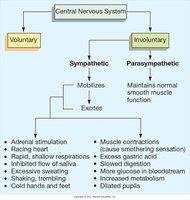
Characterized by excessive fear, worry, or anxiety. Panic disorder is a type of anxiety disorder with sudden, repeated attacks of terror, physical symptoms (sweating, chills, dizziness), and a sense of impending doom.
Attention-Deficit/Hyperactivity Disorder (ADHD)
ADHD is classified as:
Predominantly hyperactive-impulsive
Predominantly inattentive
Combined type
Autism Spectrum Disorder
Autism is characterized by self-absorption, inaccessibility, and difficulty relating to others.

Depressive Disorders
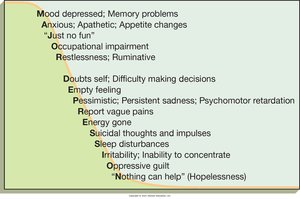
Major depression is a leading cause of disability, with symptoms including persistent sadness, loss of interest, changes in appetite or sleep, and thoughts of suicide. Depression can present differently in children, adolescents, and older adults.
Bipolar Disorders
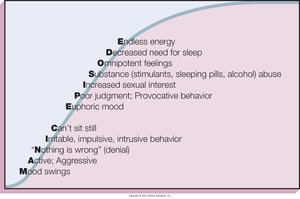
Bipolar disorder involves episodes of depression and mania (elevated mood, increased energy, decreased need for sleep, impulsive behavior).
Obsessive-Compulsive Disorder (OCD)
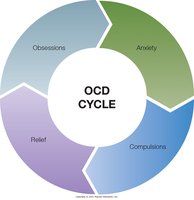
OCD is marked by persistent, unwelcome thoughts (obsessions) and repetitive behaviors (compulsions) that provide only temporary relief. DSM-5 recognizes related disorders such as excoriation (skin picking), hoarding, and body-focused repetitive behaviors.
Personality Disorders
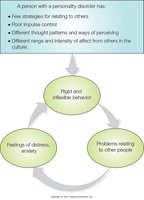
Personality disorders involve rigid and inflexible behavior, poor impulse control, and difficulties relating to others, leading to distress and problems in social functioning.
Seasonal Affective Disorder (SAD)
SAD is a type of depression related to changes in seasons, often treated with light therapy.

Other Disorders
Bulimia nervosa: Binge eating followed by purging; requires treatment to improve self-image and eating patterns.
Binge-eating disorder: Uncontrollable eating without purging, followed by guilt.
Tourette syndrome: Neurological disorder with involuntary movements and vocalizations (tics).
Medical Terminology: Key Terms
Delusion: False belief held despite evidence to the contrary (delus = to cheat, -ion = process).
Hypomania: Mild form of mania (hypo- = below, -mania = madness).
Somatic: Pertaining to the body (somat = body, -ic = pertaining to).
Drug Highlights
Drug Class | Examples |
|---|---|
Antianxiety agents | Benzodiazepines, Nonbenzodiazepines |
Antidepressants | SSRIs, SNRIs, TCAs, MAOIs |
Antimanic agents | — |
Antipsychotic agents | Typical, Atypical |
Stimulants | — |
Abbreviations and Acronyms
AMI: Any Mental Illness
SMI: Serious Mental Illness
DSM-5: Diagnostic and Statistical Manual of Mental Disorders, 5th Edition
ADHD: Attention-Deficit/Hyperactivity Disorder
OCD: Obsessive-Compulsive Disorder
ECT: Electroconvulsive Therapy
CBT: Cognitive-Behavioral Therapy
MMPI-2: Minnesota Multiphasic Personality Inventory-2
IQ: Intelligence Quotient
SAD: Seasonal Affective Disorder
Summary Table: Symptoms by Age Group
Age Group | Common Symptoms |
|---|---|
Adults | Confused thinking, sadness, mood swings, anxiety, withdrawal, changes in eating/sleeping, anger, delusions, hallucinations, substance abuse |
Adolescents | Substance abuse, coping difficulties, eating/sleeping changes, physical complaints, defiance, negative mood, thoughts of death, anger |
Children | Poor school performance, worry, hyperactivity, nightmares, disobedience, aggression, temper tantrums |
Additional info:
Depression in older adults is often underdiagnosed and may co-occur with other illnesses.
Children may not understand or express feelings of stress, anxiety, or depression and require careful observation.
