A disease in which a pathogen remains inactive for a long period of time before becoming active is termed a(n) : a. Subacute disease b. Acute disease c. Chronic disease d. Latent disease
Verified step by step guidance
1
Understand the definitions of the disease types listed in the options:
a. Subacute disease: A disease with symptoms that are less severe than acute but more sudden than chronic.
b. Acute disease: A disease with rapid onset and usually a short duration.
c. Chronic disease: A disease that develops slowly and lasts for a long time, often with continuous symptoms.
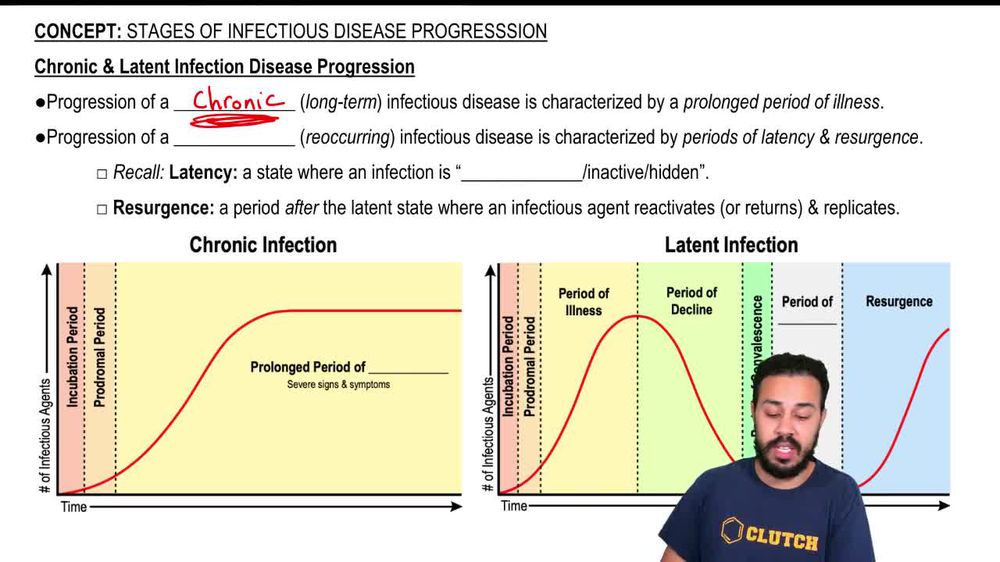
d. Latent disease: A disease in which the pathogen remains inactive or dormant for a long period before becoming active and causing symptoms.
Identify that the key phrase in the question is 'pathogen remains inactive for a long period before becoming active,' which matches the definition of a latent disease.
Verified video answer for a similar problem:
This video solution was recommended by our tutors as helpful for the problem above
Video duration:
1m
Play a video:
0 Comments
Key Concepts
Here are the essential concepts you must grasp in order to answer the question correctly.
Latent Disease
A latent disease is characterized by a pathogen that remains dormant or inactive within the host for an extended period before reactivating and causing symptoms. This dormancy allows the pathogen to evade the immune system and can lead to sudden disease flare-ups.
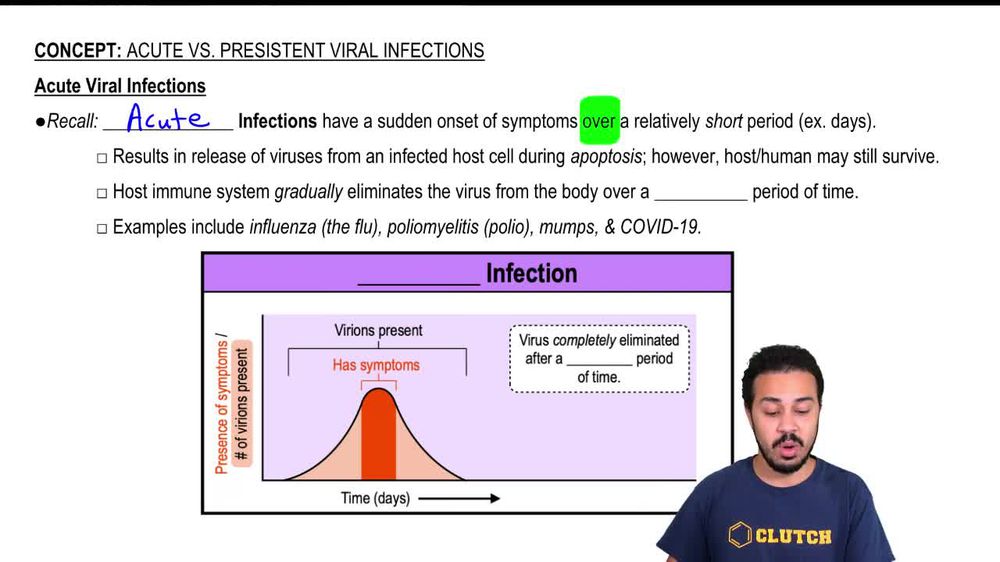
An acute disease develops rapidly and typically has a short duration with pronounced symptoms. The immune response is often quick, and the disease resolves either through recovery or death in a brief time frame.
Chronic diseases persist over a long period, often with slow progression and less severe symptoms compared to acute diseases. They may result from continuous infection or long-term damage caused by the pathogen.