
A deficiency of both B cells and T cells is most likely a(n): a. Secondary immunodeficiency b. Complex immunodeficiency c. Acquired immunodeficiency d. Primary immunodeficiency e. Induced immunodeficiency
Verified step by step guidance
1
Step 1: Understand the roles of B cells and T cells in the immune system. B cells are responsible for antibody production (humoral immunity), while T cells are involved in cell-mediated immunity.
Step 2: Recognize that a deficiency affecting both B cells and T cells indicates a problem with both arms of the adaptive immune system, which is characteristic of certain immunodeficiencies.
Step 3: Differentiate between primary and secondary immunodeficiencies. Primary immunodeficiencies are usually genetic or congenital defects present from birth, while secondary immunodeficiencies are acquired later due to external factors like infections or treatments.
Step 4: Note that a combined deficiency of B and T cells typically points to a primary immunodeficiency, often called a severe combined immunodeficiency (SCID), which is a genetic disorder.
Step 5: Based on this understanding, select the option that corresponds to a congenital or genetic deficiency affecting both B and T cells, which is a primary immunodeficiency.
Verified video answer for a similar problem:
This video solution was recommended by our tutors as helpful for the problem above
Video duration:
2m
Play a video:
0 Comments
Key Concepts
Here are the essential concepts you must grasp in order to answer the question correctly.
Primary Immunodeficiency
Primary immunodeficiencies are genetic or congenital disorders where components of the immune system, such as B cells and T cells, are absent or dysfunctional from birth. These deficiencies lead to increased susceptibility to infections and are not caused by external factors.
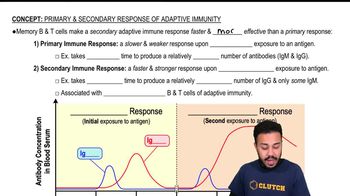
Primary and Secondary Response of Adaptive Immunity
B Cells and T Cells
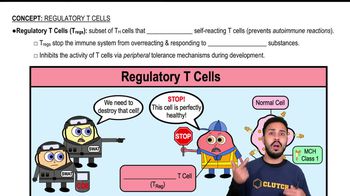
B cells and T cells are lymphocytes essential for adaptive immunity. B cells produce antibodies to neutralize pathogens, while T cells help in killing infected cells and regulating immune responses. A deficiency in both severely impairs immune defense.
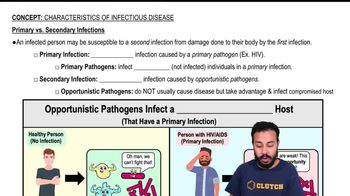
Secondary or acquired immunodeficiencies result from external factors like infections, malnutrition, or medical treatments, rather than genetic causes. Unlike primary immunodeficiencies, these develop after birth and can affect various immune components.