Mark each statement as true or false. Rewrite the false statements to make them true by changing the underlined word(s).
__________ Examination of stool samples can reveal the presence of Naegleria parasites.
Verified step by step guidance
1
Step 1: Understand the organism mentioned. Naegleria is a genus of free-living amoebae, with Naegleria fowleri being the most well-known species causing primary amoebic meningoencephalitis, a brain infection.
Step 2: Recall the typical diagnostic samples for Naegleria infections. Naegleria fowleri infections are usually diagnosed by examining cerebrospinal fluid (CSF), not stool samples.
Step 3: Evaluate the statement: 'Examination of stool samples can reveal the presence of Naegleria parasites.' Since Naegleria infects the brain and central nervous system, stool samples are not the correct specimen for detection.
Step 4: Rewrite the false statement by replacing 'stool samples' with the correct specimen type, which is 'cerebrospinal fluid samples.' The corrected statement should read: 'Examination of cerebrospinal fluid samples can reveal the presence of Naegleria parasites.'
Step 5: Summarize the key point: Naegleria parasites are detected in CSF, not stool, because their infection site is the brain, not the gastrointestinal tract.
Verified video answer for a similar problem:
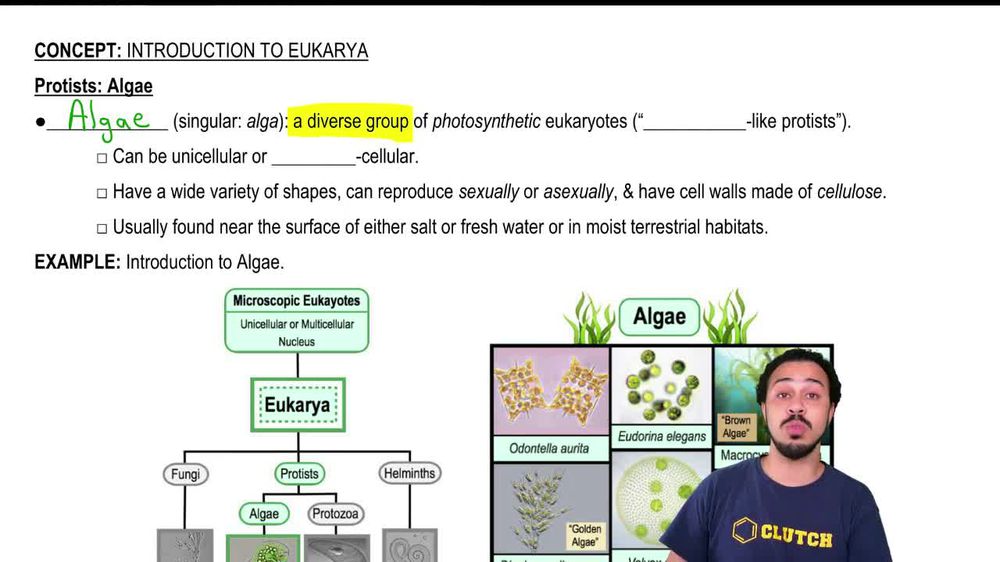
This video solution was recommended by our tutors as helpful for the problem above
Video duration:
1m
Play a video:
0 Comments
Key Concepts
Here are the essential concepts you must grasp in order to answer the question correctly.
Naegleria and Its Habitat
Naegleria is a genus of free-living amoebae commonly found in warm freshwater environments, not in the human gastrointestinal tract or stool samples. It is important to know that Naegleria primarily causes infections through the nasal passages, not via fecal contamination.
Diagnosis of Naegleria infections, such as primary amoebic meningoencephalitis, typically involves examining cerebrospinal fluid (CSF) rather than stool samples. Understanding which clinical specimens are appropriate for detecting specific pathogens is crucial in microbiology.
When correcting false statements, identify the inaccurate term and replace it with the correct one to make the statement true. This approach helps clarify misconceptions and reinforces accurate microbiological knowledge.