Back
BackA Brief History and Scope of Microbiology
Study Guide - Smart Notes
 Tailored notes based on your materials, expanded with key definitions, examples, and context.
Chapter 1: A Brief History of Microbiology
The Early Years of Microbiology
Microbiology is the study of organisms too small to be seen with the naked eye, including bacteria, archaea, fungi, protozoa, algae, viruses, and some multicellular parasites. The field began with the invention of the microscope and the first observations of microorganisms.
Antoni van Leeuwenhoek (1632–1723) is credited as the first to observe and describe microorganisms, which he called "animalcules," using handcrafted microscopes.
His discoveries laid the foundation for the field of microbiology.

What Does Life Really Look Like?
Microorganisms are highly diverse in form and function. Microbiology encompasses several subdisciplines based on the types of organisms studied:
Bacteriology: Study of bacteria
Virology: Study of viruses
Mycology: Study of fungi
Phycology: Study of algae
Protozoology: Study of protozoa
Parasitology: Study of parasites

How Can Microbes Be Classified?
Microorganisms are classified into several groups based on their cellular structure, metabolism, and genetic characteristics:
Bacteria: Prokaryotic, unicellular organisms with diverse shapes and metabolic capabilities.
Archaea: Prokaryotic, often extremophilic organisms distinct from bacteria in genetics and biochemistry.
Fungi: Eukaryotic organisms, including molds (filamentous) and yeasts (unicellular).
Protozoa: Unicellular eukaryotes, often motile, lacking cell walls.
Algae: Eukaryotic, photosynthetic organisms, ranging from unicellular to multicellular forms.
Viruses: Acellular infectious agents composed of nucleic acid and protein, requiring host cells for replication.
Parasitic worms: Multicellular eukaryotes with microscopic stages.
Bacteria and Archaea
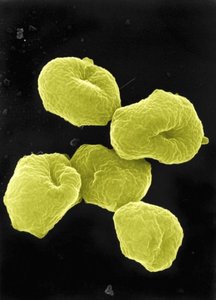
Bacteria and archaea are prokaryotes, lacking a nucleus and membrane-bound organelles. They are found in nearly every environment on Earth.
Fungi
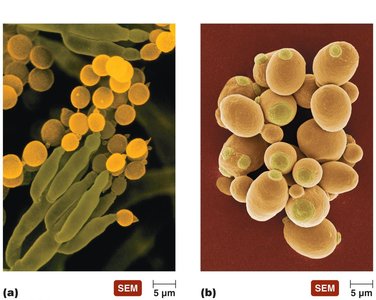
Fungi include both multicellular molds and unicellular yeasts. Molds grow as long filaments called hyphae, while yeasts are round or oval and reproduce by budding.
Protozoa
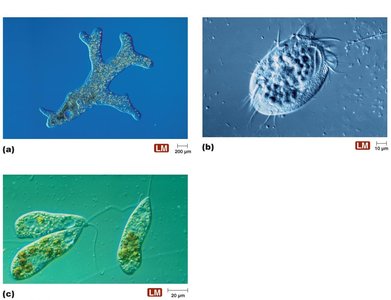
Protozoa are diverse, unicellular eukaryotes, often classified by their means of locomotion: pseudopods, cilia, or flagella.
Algae
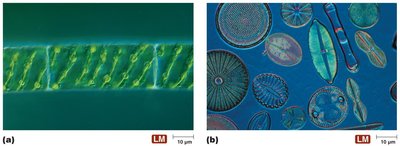
Algae are photosynthetic eukaryotes, important for producing oxygen and serving as the base of aquatic food chains. They exhibit a variety of forms, including chains and intricate cell walls.
Viruses
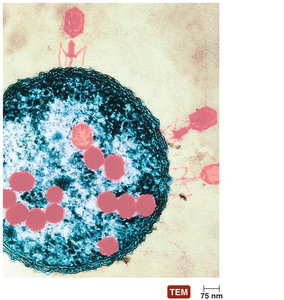
Viruses are acellular entities that infect all forms of life. They consist of genetic material (DNA or RNA) surrounded by a protein coat and sometimes a lipid envelope. They replicate only inside host cells.
Parasitic Worms
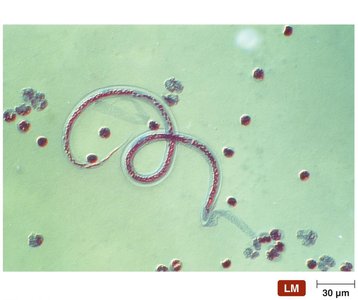
Some multicellular organisms, such as helminths (parasitic worms), have microscopic life stages that are studied in microbiology.
The Golden Age of Microbiology
The late 19th and early 20th centuries saw rapid advances in microbiology, including the refutation of spontaneous generation, the discovery of fermentation, and the identification of microbes as causes of disease.
Does Microbial Life Spontaneously Generate?
Experiments by scientists such as Francesco Redi and Louis Pasteur disproved the theory of spontaneous generation, demonstrating that life arises from pre-existing life.
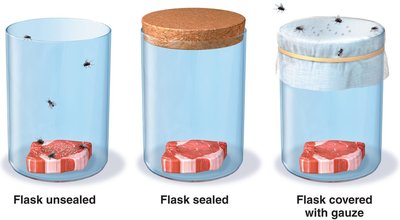
Redi's experiment: Showed that maggots on decaying meat came from fly eggs, not spontaneous generation.
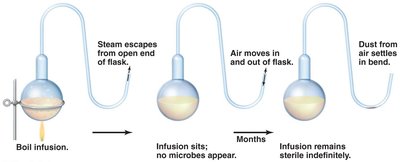
Pasteur's experiment: Used swan-necked flasks to show that boiled infusions remained sterile unless exposed to microbes from the air.
How Can We Prevent Infection and Disease?
Key figures in the prevention of infection and disease include:
Semmelweis: Introduced handwashing to reduce puerperal fever.
Lister: Developed antiseptic surgical techniques using carbolic acid.
Nightingale: Advocated for cleanliness and reform in nursing and hospital care.
Snow: Mapped cholera outbreaks, founding modern epidemiology.
Jenner: Developed the first vaccine (against smallpox), founding immunology.
Ehrlich: Searched for "magic bullets"—chemicals that selectively target pathogens (chemotherapy).
The Modern Age of Microbiology
Modern microbiology explores genetics, biotechnology, environmental roles, and medical applications of microbes.
Microbial genetics: Study of how genes function and are regulated in microbes.
Recombinant DNA technology: Manipulation of microbial genes for practical applications, such as producing human proteins in bacteria.
Gene therapy: Inserting or repairing genes in humans using microbial vectors.
Bioremediation: Use of microbes to detoxify polluted environments.
Serology and immunology: Study of immune responses and blood serum components.
Chemotherapy: Discovery and use of antimicrobial drugs, such as penicillin and sulfa drugs.
Industrial and Societal Impact of Microbes
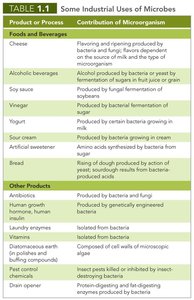
Microorganisms are essential in food production, biotechnology, and medicine. They are used to produce antibiotics, enzymes, and various foods and beverages.
Product or Process | Contribution of Microorganism |
|---|---|
Cheese | Flavoring and ripening by bacteria and fungi |
Alcoholic beverages | Fermentation by yeast or bacteria |
Antibiotics | Produced by bacteria and fungi |
Human growth hormone | Produced by genetically engineered bacteria |
Laundry enzymes | Isolated from bacteria |
Drain opener | Protein-digesting and fat-digesting enzymes from bacteria |
And more... | See textbook for full list |
Challenges and the Future of Microbiology
Microbiology continues to address emerging and reemerging infectious diseases, antibiotic resistance, the impact of climate change, and bioterrorism threats. Ongoing research is crucial for global health and safety.