 Back
BackChapter 1: Introduction to Microbiology – The Microbial World and You
Study Guide - Smart Notes
 Tailored notes based on your materials, expanded with key definitions, examples, and context.
Chapter 1: Introduction to Microbiology
The Importance of Microorganisms
Microorganisms are the most populous and diverse group of organisms on Earth. They are found in virtually every environment and play essential roles in ecological and human systems.
Recycling Essential Elements: Microbes participate in biogeochemical cycles, recycling elements like carbon, nitrogen, and sulfur.
Source of Nutrients: Many microorganisms synthesize nutrients and some carry out photosynthesis, contributing to primary production.
Societal Benefits: Microbes are used in the production of food, beverages, antibiotics, and vitamins.
Pathogenicity: Some microorganisms cause diseases in humans, plants, and animals.
Members of the Microbial World
The microbial world consists of organisms and acellular entities too small to be seen without magnification, generally less than 1 mm in size. These organisms are structurally simple and lack differentiated tissues.
Microscopic Size: Most microbes are microscopic, though some can be macroscopic.
Simplicity: Microbes are relatively simple in construction compared to multicellular organisms.
Divisions and Types of Microbes
Microbes are classified based on cellular structure and genetic characteristics.
Types of Microbial Cells
Prokaryotic Cells: Lack a true membrane-delimited nucleus. Generally smaller and simpler than eukaryotic cells.
Eukaryotic Cells: Possess a membrane-enclosed nucleus, are more complex morphologically, and are usually larger.
Classification Schemes
The three-domain system, based on ribosomal RNA gene comparisons, divides microorganisms into:
Bacteria: True bacteria.
Archaea: Distinct from bacteria, often found in extreme environments.
Eukarya: Includes eukaryotic organisms.
Domain Bacteria and Domain Archaea
Domain Bacteria
Usually single-celled.
Cell wall contains peptidoglycan.
Lack membrane-bound nucleus.
Ubiquitous, some live in extreme environments.
Cyanobacteria: Produce significant amounts of oxygen via photosynthesis.
Domain Archaea
Unique rRNA gene sequences.
Lack peptidoglycan in cell walls.
Unique membrane lipids.
Unusual metabolic characteristics.
Many live in extreme environments.
Domain Eukarya
Protists: Generally larger than bacteria and archaea.
Algae: Photosynthetic protists.
Protozoa: Motile, act as hunters or grazers.
Slime Molds: Exhibit two life cycle stages.
Water Molds: Cause plant diseases.
Fungi: Includes unicellular yeast and multicellular molds and mushrooms.
Acellular Infectious Agents
Viruses: Smallest microbes, require host cells for replication, cause a range of diseases including some cancers.
Prions: Infectious proteins, cause neurodegenerative diseases.
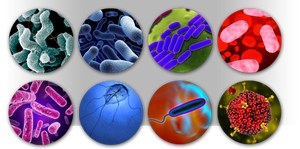
Discovery of Microorganisms
The discovery of microorganisms was pivotal in the development of microbiology as a science.
Francesco Stelluti: Observed bees and weevils (1625–1630).
Robert Hooke: Published drawings of the fungus Mucor in Micrographia (1665).
Antony van Leeuwenhoek: First to accurately observe microorganisms (1632–1723).
Louis Pasteur and the Swan-Neck Flask Experiments
Louis Pasteur's experiments disproved spontaneous generation and demonstrated that microorganisms arise from other microorganisms.
Used flasks with long, curved necks containing nutrient solutions.
Boiled solutions and left them exposed to air; no microbial growth occurred.
The Role of Microorganisms in Disease
Initially, infectious diseases were attributed to supernatural forces or imbalances in bodily humors. The connection between microbes and disease was established through improved techniques for studying microorganisms.
Koch’s Postulates and Tuberculosis
Koch’s postulates are criteria used to establish a causal relationship between a microbe and a disease.
Some organisms cannot be grown in pure culture.
Using humans to complete the postulates is unethical.
Molecular and genetic evidence can overcome these limitations.
Development of Techniques for Studying Microbial Pathogens
Discovery of agar, Petri dishes, nutrient broth, and nutrient agar.
Methods for isolating microorganisms.
Basic and Applied Aspects of Microbiology
Basic Aspects: Study of individual groups of microbes, physiology, genetics, molecular biology, taxonomy.
Applied Aspects: Practical problems in disease, water, food, and industrial microbiology.
Molecular and Genomic Methods
Modern molecular and genomic methods have led to rapid advances in microbiology.
Restriction endonucleases.
Recombinant DNA technology.
DNA sequencing methods.
Bioinformatics and genomic analysis.
Major Fields in Microbiology
Medical Microbiology: Study of diseases in humans and animals.
Public Health Microbiology: Control and spread of communicable diseases.
Immunology: How the immune system protects hosts from pathogens.
Microbial Ecology: Relationships between organisms and their environment.
Agricultural Microbiology: Impact of microbes on food production.
Food Microbiology: Microbes in food production and spoilage.
More Microbiology Fields
Industrial Microbiology: Production of antibiotics, vaccines, steroids, alcohols, vitamins, amino acids, enzymes, and biofuels.
Microbial Physiology: Study of metabolic pathways.
Microbial Genetics, Molecular Biology, Bioinformatics: Study of genetic information and regulation of cell function.
Microbes serve as model systems for genomics research.
