 Back
BackChapter 1: The Microbial World and You – Study Notes
Study Guide - Smart Notes
 Tailored notes based on your materials, expanded with key definitions, examples, and context.
The Microbial World and You
Introduction to Microbiology
Microbiology is the study of microorganisms, which are organisms too small to be seen with the unaided eye. This field encompasses a diverse group of organisms, including bacteria, fungi, protozoa, algae, viruses, and prions. Microbes play essential roles in the environment, industry, and human health.
Microbes in Our Lives
Pathogenicity: Only a small fraction of microbes cause disease in humans.
Food Spoilage: Some microbes are responsible for the spoilage of food.
Ecological Roles: Microbes form the basis of aquatic food chains, decompose organic waste, and participate in nutrient cycling (e.g., nitrogen fixation, oxygen generation via photosynthesis).
Industrial Applications: Microbes are used to produce chemicals (ethanol, acetone, vitamins), fermented foods (cheese, yogurt, bread), and products for manufacturing and medicine (e.g., insulin).
The Microbiome
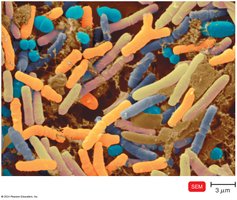
The microbiome refers to the community of microbes that live stably on and in the human body. An adult human harbors approximately 40 trillion bacterial cells, in addition to 30 trillion body cells. The microbiome is crucial for health, as it helps prevent the growth of pathogens and trains the immune system.
Normal microbiota: Microbes that are permanently present in or on the human body.
Transient microbiota: Microbes that are present temporarily.
Colonization depends on suitable nutrients and environmental conditions.
Major Microbiology Initiatives
Human Microbiome Project (2007–2016): Characterized typical microbiota in various body regions and explored links to disease.
National Microbiome Initiative (2016–): Studies the role of microbes in diverse ecosystems.
Naming and Classifying Microorganisms
Scientific Nomenclature
Carolus Linnaeus established the binomial system of nomenclature in 1735. Each organism is given a two-part Latinized name: the genus (capitalized) and the specific epithet (lowercase). Names are italicized or underlined.
Example: Escherichia coli (named for Theodor Escherich; found in the colon)
Example: Staphylococcus aureus (describes clustered, spherical, gold-colored cells)
Classification of Microorganisms
Microorganisms are classified into three domains, as proposed by Carl Woese in 1978:
Bacteria
Archaea
Eukarya (includes protists, fungi, plants, and animals)
Types of Microorganisms
Type | Key Features |
|---|---|
Bacteria | Prokaryotic, peptidoglycan cell walls, divide by binary fission, may have flagella |
Archaea | Prokaryotic, lack peptidoglycan, often extremophiles, not known to cause disease |
Fungi | Eukaryotic, chitin cell walls, absorb nutrients, unicellular (yeasts) or multicellular (molds, mushrooms) |
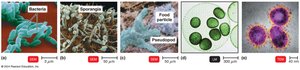
Protozoa | Eukaryotic, absorb/ingest nutrients, motile (pseudopods, cilia, flagella), some photosynthetic |
Algae | Eukaryotic, cellulose cell walls, photosynthetic, aquatic/soil habitats |
Viruses | Acellular, DNA or RNA core, protein coat, replicate only in host cells |
Multicellular Animal Parasites | Eukaryotic, multicellular, helminths (flatworms, roundworms), some microscopic stages |
Bacteria
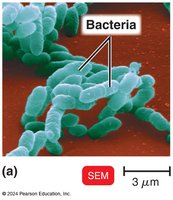
Prokaryotic, unicellular organisms
Cell walls contain peptidoglycan
Reproduce by binary fission
Obtain energy from organic/inorganic chemicals or photosynthesis
May be motile via flagella
Archaea
Prokaryotic, lack peptidoglycan in cell walls
Often found in extreme environments (methanogens, extreme halophiles, extreme thermophiles)
Not known to cause human disease
Fungi
Eukaryotic, chitin cell walls
Absorb organic chemicals for energy
Yeasts are unicellular; molds and mushrooms are multicellular
Molds consist of mycelia made of hyphae
Protozoa
Eukaryotic, absorb or ingest organic chemicals
Motile via pseudopods, cilia, or flagella
Free-living or parasitic; some are photosynthetic
Reproduce sexually or asexually
Algae
Eukaryotic, cellulose cell walls
Photosynthetic, produce oxygen and carbohydrates
Found in aquatic and soil environments
Reproduce sexually and asexually
Viruses
Acellular, consist of DNA or RNA core surrounded by a protein coat (sometimes with a lipid envelope)
Replicate only inside living host cells
Inert outside living hosts
Multicellular Animal Parasites
Eukaryotic, multicellular animals
Include helminths (parasitic flatworms and roundworms)
Some life stages are microscopic
A Brief History of Microbiology
Early Observations
1665: Robert Hooke observed "cells" in cork, initiating cell theory.
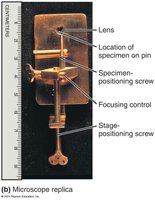
1673–1723: Anton van Leeuwenhoek observed and described microorganisms ("animalcules") using simple microscopes.
Spontaneous Generation vs. Biogenesis
Spontaneous generation: Hypothesis that life arises from nonliving matter.
Biogenesis: Hypothesis that living cells arise only from preexisting cells (Rudolf Virchow, 1858).
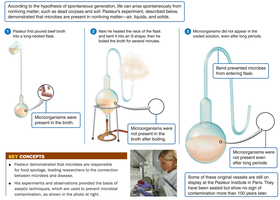
Louis Pasteur (1861) disproved spontaneous generation using S-shaped flasks, showing that microbes originate from the air, not mystical forces.
The First Golden Age of Microbiology (1857–1914)
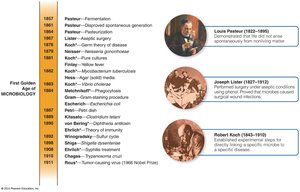
Established the relationship between microbes and disease.
Developed vaccines, aseptic techniques, and chemotherapeutic drugs.
Pasteur demonstrated fermentation and pasteurization.
Joseph Lister introduced antiseptics in surgery.
Robert Koch developed Koch's postulates to link specific microbes to specific diseases.
The Second and Third Golden Ages of Microbiology
Focus on chemotherapy, antibiotics, and molecular biology.
Discovery of penicillin by Alexander Fleming (1928).
Development of synthetic drugs and antibiotics.
Emergence of genomics and recombinant DNA technology.

Branches of Microbiology
Bacteriology, Mycology, Parasitology
Bacteriology: Study of bacteria.
Mycology: Study of fungi.
Parasitology: Study of protozoa and parasitic worms.
Immunology
Study of immunity and immune responses.
Development of vaccines and interferons for disease prevention and treatment.
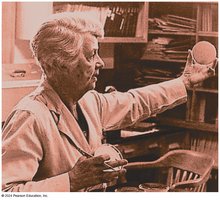
Rebecca Lancefield classified streptococci based on cell wall components (1933).
Virology
Study of viruses and viral diseases.
Key discoveries: Tobacco mosaic virus (Iwanowski, Stanley), electron microscopy for virus structure.
Molecular Genetics and Genomics
Microbial genetics: Study of inheritance in microbes.
Molecular biology: Study of genetic information in DNA.
Genomics: Study of organismal genes, enabling classification and understanding of microbiomes.
Recombinant DNA: DNA from different sources combined to produce useful proteins (e.g., human hormones in bacteria).
Microbes and Human Welfare
Beneficial Activities of Microorganisms
Recycle vital elements (carbon, nitrogen, sulfur, phosphorus) for use by plants and animals.
Sewage treatment: Microbes convert organic materials in sewage to harmless by-products.
Bioremediation: Microbes degrade pollutants (oil, mercury) and clean up the environment.

Insect Pest Control
Microbes (e.g., Bacillus thuringiensis) are used as biological pesticides, reducing the need for chemical pesticides.
Genetically modified plants can express microbial toxins for pest resistance.
Biotechnology and Recombinant DNA Technology
Use of microbes to produce foods, chemicals, and pharmaceuticals.
Recombinant DNA technology enables production of proteins, vaccines, and gene therapy.
Genetically modified bacteria protect crops and enhance agriculture.
Microbes and Human Disease
Normal Microbiota and Resistance
Normal microbiota: Microbes that inhabit the human body and prevent pathogen growth.
Produce essential growth factors (e.g., vitamins B and K).
Resistance: The body's ability to ward off disease, involving skin, stomach acid, and immune chemicals.
Biofilms
Microbes attach to surfaces and form complex communities (biofilms).
Biofilms can be beneficial (protect mucous membranes, provide food in aquatic systems) or harmful (clog pipes, cause infections, resist antibiotics).
Emerging Infectious Diseases (EIDs)
Emerging infectious diseases: New or increasing diseases, often due to evolutionary changes, antibiotic resistance, or increased human exposure.
Examples include COVID-19, Monkeypox, Zika virus, H1N1 influenza, avian influenza, antibiotic-resistant infections (MRSA, VRSA), Ebola, and Marburg virus.
Disease | Agent | Transmission/Notes |
|---|---|---|
COVID-19 | SARS-CoV-2 | Pandemic, respiratory transmission |
Monkeypox | Orthopoxvirus | Direct contact, vaccine available |
Zika virus | Zika virus | Mosquito-borne, sexual transmission, birth defects |
H1N1 influenza | Influenza virus | Pandemic, respiratory transmission |
Avian influenza | H5N1 virus | Primarily in birds, limited human transmission |
MRSA/VRSA | Staphylococcus aureus | Antibiotic resistance |
Ebola | Ebolavirus | Contact with body fluids, high mortality |
Marburg virus | Marburg virus | Hemorrhagic fever, fruit bat reservoir |
Additional info: The above notes integrate foundational concepts, historical context, and current issues in microbiology, providing a comprehensive overview suitable for exam preparation and foundational understanding in a college-level microbiology course.
