Back
BackCharacterizing and Classifying Eukaryotes: Microbiology Study Notes
Study Guide - Smart Notes
 Tailored notes based on your materials, expanded with key definitions, examples, and context.
General Characteristics of Eukaryotic Organisms
Overview of Eukaryotic Microorganisms
Eukaryotic microorganisms include protozoa, fungi, algae, slime molds, and water molds. These organisms are significant in both human health and ecological processes. Some are pathogens, while others are essential for nutrient cycling and other vital functions.
Reproduction of Eukaryotes
Eukaryotic reproduction is more complex than that of prokaryotes. Most eukaryotic DNA is organized into chromosomes within a nucleus. Eukaryotes can reproduce asexually (e.g., mitosis, budding, binary fission) and sexually (formation of gametes and zygotes). Some groups, such as algae, fungi, and certain protozoa, can reproduce both ways.
Nuclear Division: Mitosis and Meiosis
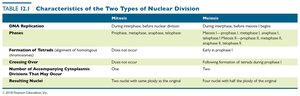
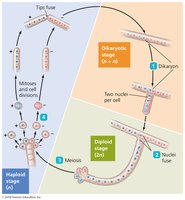
Nuclear division in eukaryotes can occur via mitosis or meiosis. The nucleus may be haploid (one genome copy) or diploid (two genome copies). Mitosis results in two nuclei identical to the parent, while meiosis produces four genetically distinct haploid nuclei.
Feature | Mitosis | Meiosis |
|---|---|---|
DNA Replication | During interphase, before nuclear division | During interphase, before meiosis begins |
Phases | Prophase, metaphase, anaphase, telophase (once) | Prophase I, metaphase I, anaphase I, telophase I; Prophase II, metaphase II, anaphase II, telophase II |
Formation of Tetrads | Does not occur | Occurs in prophase I |
Crossing Over | Does not occur | Occurs in prophase I |
Number of Nuclear Divisions | One | Two |
Resulting Nuclei | Two nuclei with same ploidy as original | Four nuclei with half the ploidy of the original |
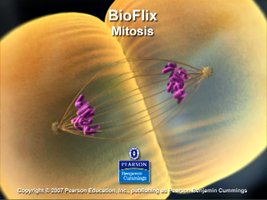
Mitosis is the process by which a eukaryotic cell divides to produce two genetically identical daughter cells, maintaining the chromosome number of the parent cell. It consists of four phases: prophase, metaphase, anaphase, and telophase.
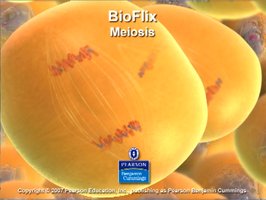
Meiosis is a two-stage nuclear division that reduces the chromosome number by half, resulting in four genetically unique haploid cells. This process is essential for sexual reproduction and genetic diversity.
Cytokinesis
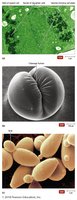
Cytokinesis is the division of the cytoplasm, typically occurring simultaneously with telophase of mitosis. In some algae and fungi, cytokinesis is delayed or absent, resulting in multinucleated cells called coenocytes.
Schizogony
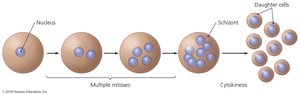
Schizogony is a special type of asexual reproduction seen in some protozoa, involving multiple rounds of nuclear division before the cell divides into many daughter cells.
Classification of Eukaryotic Organisms
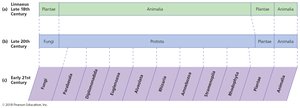
Early classification was based on structural similarities, but modern taxonomy relies more on nucleotide sequence data. The classification of eukaryotes has changed significantly over time, reflecting advances in molecular biology.
Protozoa
General Characteristics
Protozoa are a diverse group of unicellular, eukaryotic organisms that lack cell walls. They are typically motile via cilia, flagella, or pseudopods, except for apicomplexans. Most require moist environments and are found in aquatic habitats or moist soils. Only a few protozoa are pathogenic to humans.
Morphology
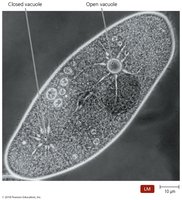
Protozoa exhibit great morphological diversity. Some have two nuclei (macronucleus and micronucleus), variable mitochondria, and contractile vacuoles for osmoregulation. Their life cycle often includes a motile feeding stage (trophozoite) and a resting stage (cyst).
Nutrition
Most protozoa are chemoheterotrophs, obtaining nutrients by ingesting bacteria, organic matter, or other protozoa. Some, like dinoflagellates and euglenoids, are photoautotrophic.
Reproduction
Protozoa primarily reproduce asexually by binary fission or schizogony. Some also reproduce sexually, forming gametocytes that fuse to form zygotes, or by conjugation.
Classification
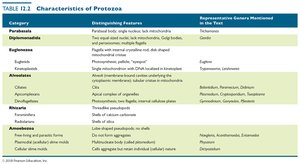
Modern classification of protozoa is based on genetic data and groups them into six major groups: Parabasala, Diplomonadida, Euglenozoa, Alveolates, Rhizaria, and Amoebozoa.
Parabasala
These protozoa lack mitochondria, have a single nucleus, and contain a parabasal body. Examples include Trichonympha and Trichomonas.
Diplomonadida
Diplomonads lack mitochondria, Golgi bodies, and peroxisomes, but have mitosomes and two equal-sized nuclei. Giardia is a prominent example.
Euglenozoa
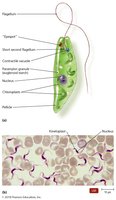
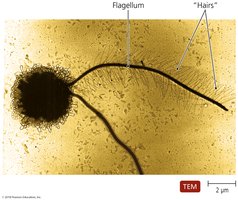
Euglenozoa have features of both plants and animals, including flagella with a crystalline rod and disk-shaped mitochondrial cristae. Euglenids are photoautotrophic, while kinetoplastids (e.g., Trypanosoma, Leishmania) are often pathogenic.
Alveolates
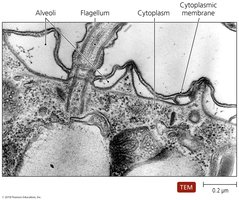
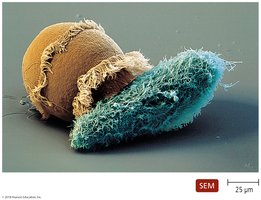
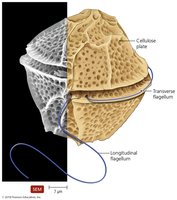
Alveolates possess membrane-bound cavities called alveoli. This group includes ciliates (motile via cilia), apicomplexans (animal pathogens), and dinoflagellates (photosynthetic, some bioluminescent or toxic).
Rhizaria
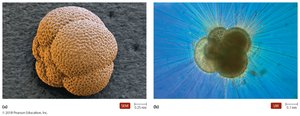
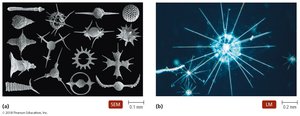
Rhizaria are amoebae with threadlike pseudopods. Foraminifera have calcium carbonate shells and are mostly fossils, while radiolarians have ornate silica shells and are part of marine plankton.
Amoebozoa
Amoebozoa are amoebae with lobe-shaped pseudopods and no shells. Some are human pathogens (e.g., Naegleria, Acanthamoeba, Entamoeba). Slime molds are also classified here.
Category | Distinguishing Features | Representative Genera |
|---|---|---|
Parabasala | Parabasal body, single nucleus, lack mitochondria | Trichonympha, Trichomonas |
Diplomonadida | Two equal-sized nuclei, mitosomes, lack Golgi bodies | Giardia |
Euglenozoa | Flagella with crystalline rod, disk-shaped mitochondrial cristae | Euglena, Trypanosoma, Leishmania |
Alveolates | Membrane-bound alveoli | Balantidium, Paramecium, Plasmodium, Cryptosporidium, Gonyaulax |
Rhizaria | Threadlike pseudopods, shells | Foraminifera, Radiolaria |
Amoebozoa | Lobe-shaped pseudopods, no shells | Naegleria, Acanthamoeba, Entamoeba |
Fungi
General Characteristics
Fungi are chemoheterotrophic eukaryotes with cell walls typically composed of chitin. They do not perform photosynthesis and lack chlorophyll. Fungi are more closely related to animals than to plants.
Significance of Fungi
Decompose dead organisms and recycle nutrients
Assist plants in absorbing water and minerals
Used in food production, religious ceremonies, and pharmaceuticals
Produce antibiotics and other drugs
Some are pathogens of plants, animals, and humans
Can spoil food products
Fungal Morphology
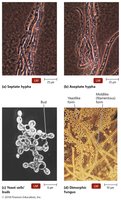
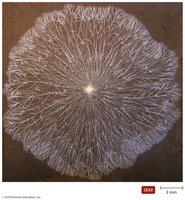
Fungi exist as molds (filamentous hyphae) or yeasts (unicellular, globular). Some are dimorphic, switching forms based on environmental conditions.
Nutrition
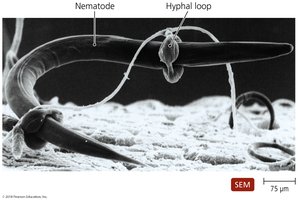
Fungi absorb nutrients from their environment. Most are saprobes, but some are parasitic or predatory. Most fungi are aerobic, though many yeasts are facultative anaerobes.
Reproduction
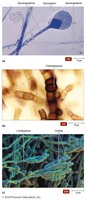
Fungi reproduce asexually (budding, asexual spores) and sexually (formation of sexual spores). Yeasts may form pseudohyphae, and filamentous fungi produce lightweight spores for dispersal.
Classification of Fungi
Fungi are classified into several divisions based on reproductive structures and genetic data:
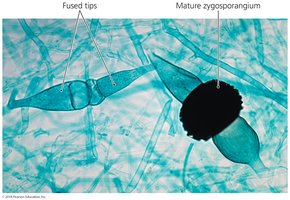
Zygomycota: Saprobes or parasites, reproduce via sporangiospores. Microsporidia are obligate intracellular parasites.
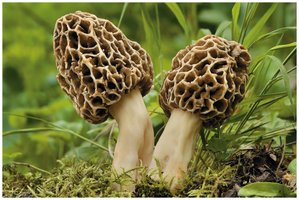
Ascomycota: Form ascospores in asci, reproduce by conidiospores. Includes Penicillium and Saccharomyces.
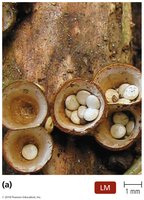
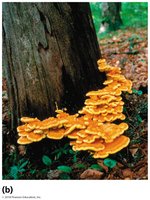
Basidiomycota: Produce basidiospores in basidiocarps (mushrooms). Many are decomposers or produce toxins.
Deuteromycetes: Fungi with unknown sexual stages, mostly reclassified as ascomycetes.
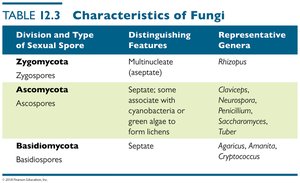
Division and Type of Sexual Spore | Distinguishing Features | Representative Genera |
|---|---|---|
Zygomycota (Zygospores) | Multinucleate (aseptate) | Rhizopus |
Ascomycota (Ascospores) | Septate; some associate with cyanobacteria or green algae to form lichens | Claviceps, Neurospora, Penicillium, Saccharomyces, Tuber |
Basidiomycota (Basidiospores) | Septate | Agaricus, Amanita, Cryptococcus |
Lichens
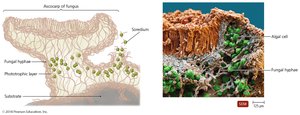
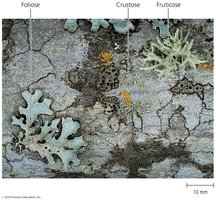
Lichens are symbiotic partnerships between fungi and photosynthetic microbes (algae or cyanobacteria). The fungus provides structure and protection, while the microbe supplies carbohydrates and oxygen. Lichens are important in soil formation and as ecological indicators.
Algae
General Characteristics
Algae are simple, eukaryotic photoautotrophs with sexual reproductive structures. They vary widely in morphology, distribution, and biochemical traits.
Distribution and Morphology
Most algae are aquatic, living in the photic zone. They possess accessory pigments for photosynthesis, allowing them to inhabit various depths. Algae can be unicellular, colonial, or multicellular.
Reproduction
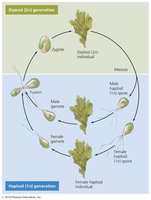
Unicellular algae reproduce asexually by mitosis and cytokinesis, and sexually by forming zygotes that undergo meiosis. Multicellular algae may reproduce asexually by fragmentation or sexually with alternation of generations.
Classification of Algae
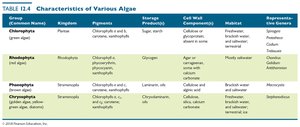
Algae are classified based on pigments, storage products, and cell wall composition. Major groups include:
Chlorophyta (green algae): Chlorophylls a and b, cellulose cell walls, mostly freshwater.
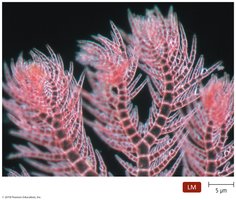
Rhodophyta (red algae): Phycoerythrin pigment, agar/carrageenan cell walls, mostly marine.
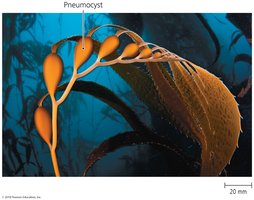
Phaeophyta (brown algae): Chlorophylls a and c, cellulose and alginic acid cell walls, mostly marine.
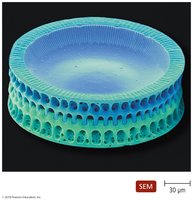
Chrysophyta (golden algae, diatoms): Chrysolaminarin storage, silica cell walls, major oxygen producers.
Group | Pigments | Storage Product | Cell Wall | Habitat | Representative Genera |
|---|---|---|---|---|---|
Chlorophyta | Chlorophyll a & b, carotene, xanthophylls | Sugar, starch | Cellulose, glycoprotein | Freshwater, some marine | Chlamydomonas, Spirogyra, Volvox, Codium, Ulva |
Rhodophyta | Chlorophyll a, phycobilins, phycoerythrin | Glycogen | Agar, carrageenan, cellulose | Mostly marine | Porphyra, Chondrus, Gelidium |
Phaeophyta | Chlorophyll a & c, carotene, xanthophylls | Laminarin, oils | Cellulose, alginic acid | Marine | Macrocystis, Laminaria, Fucus |
Chrysophyta | Chlorophyll a & c, carotene, xanthophylls | Chrysolaminarin, oils | Silica, cellulose | Freshwater, marine | Navicula, Synedra, Thalassiosira |
Water Molds
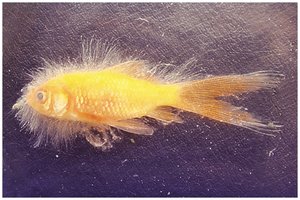
Water molds differ from true fungi by having tubular mitochondrial cristae, cellulose cell walls, biflagellate spores, and diploid bodies. They decompose dead animals and recycle nutrients, but some are plant pathogens (e.g., Phytophthora infestans caused the Irish potato famine).
Other Eukaryotes of Microbiological Interest: Parasitic Helminths and Vectors
Parasitic Helminths
Parasitic worms (helminths) have microscopic infective and diagnostic stages, making them relevant to microbiology.
Arthropod Vectors
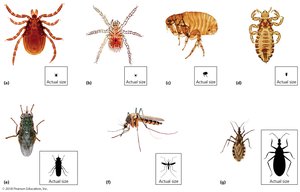
Arthropods can transmit pathogens as mechanical or biological vectors. Disease vectors include arachnids (e.g., ticks, mites) and insects (e.g., fleas, lice, flies, mosquitoes, kissing bugs).