 Back
BackCharacterizing and Classifying Prokaryotes: Structured Study Notes
Study Guide - Smart Notes
 Tailored notes based on your materials, expanded with key definitions, examples, and context.
Characterizing and Classifying Prokaryotes
General Characteristics of Prokaryotic Organisms
Prokaryotes represent the most diverse group of cellular microbes, thriving in a wide range of habitats. Only a minority are capable of colonizing humans and causing disease. Prokaryotes exist in a variety of shapes, which are important for identification and classification.
Diversity: Found in soil, water, extreme environments, and within hosts.
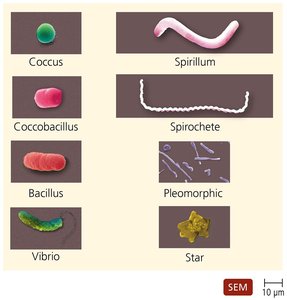
Shapes: Includes cocci (spherical), bacilli (rod-shaped), spirilla (spiral), vibrios (curved rods), spirochetes (flexible spirals), pleomorphic (variable shapes), and star-shaped forms.
Colonization: Only a few prokaryotes are pathogenic to humans.
Reproduction of Prokaryotic Cells
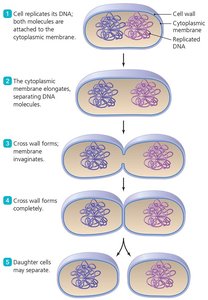
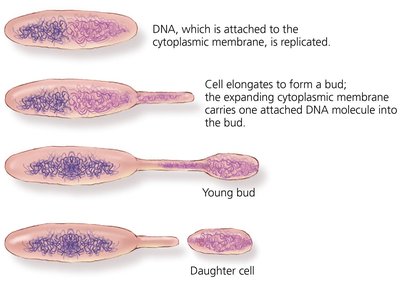
All prokaryotes reproduce asexually, primarily through binary fission, but also by budding and fragmentation. These methods ensure rapid population growth and genetic stability.
Binary Fission: Most common method; involves DNA replication, membrane elongation, and division into two daughter cells.
Budding: A new cell develops from a parent cell, eventually detaching.
Fragmentation: Some prokaryotes break into fragments, each capable of growing into a new cell.
Arrangements of Prokaryotic Cells
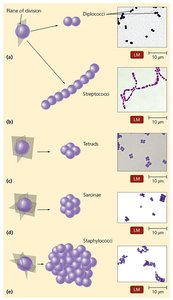
The arrangement of prokaryotic cells is determined by the planes in which cells divide and whether daughter cells remain attached. These arrangements are key for identification.
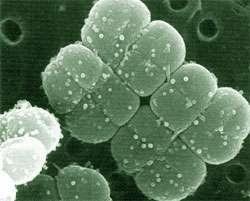
Cocci: Can form diplococci, streptococci, tetrads, sarcinae, or staphylococci.
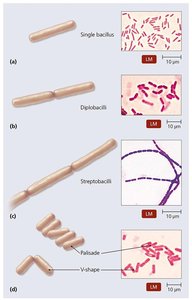
Bacilli: Can be single, diplobacilli, streptobacilli, palisades, or V-shaped.
Modern Prokaryotic Classification
Three Domains of Life
Classification of prokaryotes is now based on genetic sequence data, dividing life into three domains: Archaea, Bacteria, and Eukarya. Prokaryotes are found in the Archaea and Bacteria domains.
Archaea: Distinct from bacteria, often extremophiles.
Bacteria: Includes a vast array of species, some pathogenic.
Eukarya: Contains all eukaryotic organisms.
Survey of Archaea
General Features of Archaea
Archaea are prokaryotes with unique characteristics, including the absence of true peptidoglycan in their cell walls and branched hydrocarbon chains in their membrane lipids. They reproduce by binary fission, budding, or fragmentation and are not known to cause disease.
Cell Wall: Lacks peptidoglycan.
Membrane Lipids: Branched hydrocarbon chains.
Genetic Code: AUG codon codes for methionine.
Phyla: Crenarchaeota and Euryarchaeota.
Extremophiles
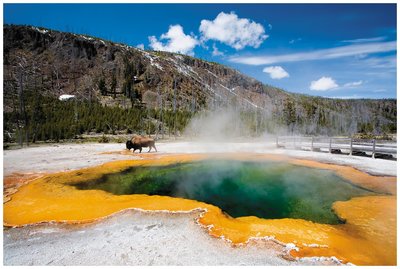
Many archaea are extremophiles, requiring extreme conditions such as high temperature, acidity, or salinity. Thermophiles and halophiles are prominent examples.
Thermophiles: Require temperatures above 45°C; hyperthermophiles need >80°C.
Halophiles: Thrive in high-salt environments.
Representative Genera: Thermococcus, Pyrodictium.
Methanogens
Methanogens are obligate anaerobes that produce methane from carbon dioxide, hydrogen, and organic acids. They play a major role in environmental methane production and are found in sediments and animal colons.
Largest group of archaea.
Environmental impact: Major source of methane.
Survey of Bacteria
Deeply Branching and Phototrophic Bacteria
Deeply branching bacteria are believed to resemble the earliest bacteria, living in habitats similar to early Earth. Phototrophic bacteria use light for energy and are divided based on pigments and electron sources.
Deeply Branching Bacteria: Deinococcus has an outer membrane like Gram-negatives but stains Gram-positive.
Phototrophic Bacteria: Contain photosynthetic lamellae; most are autotrophic.
Groups: Cyanobacteria (blue-green), green sulfur, green nonsulfur, purple sulfur, purple nonsulfur.
Cyanobacteria
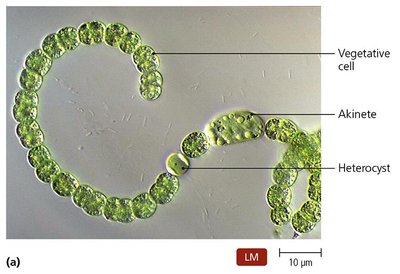
Cyanobacteria are Gram-negative phototrophs that played a crucial role in transforming Earth's atmosphere to contain oxygen. Chloroplasts in plants evolved from cyanobacteria, and some species fix nitrogen.
Atmospheric impact: Oxygen production.
Nitrogen fixation: Conversion of nitrogen gas to ammonia.
Low G + C Gram-Positive Bacteria
Low G + C Gram-positive bacteria include medically and industrially important genera such as Clostridia, Mycoplasmas, and Bacillus.
Clostridia: Rod-shaped, obligate anaerobes, many form endospores.
Mycoplasmas: Lack cell walls, smallest free-living cells, colonize mucous membranes.
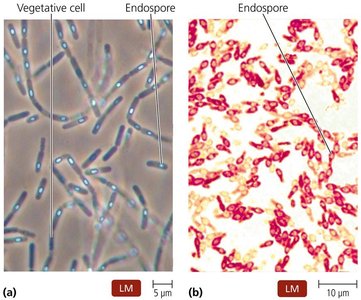
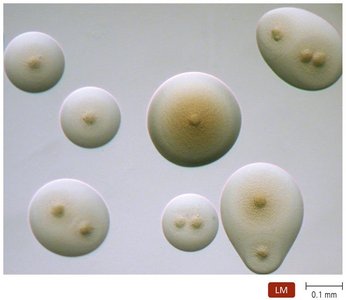
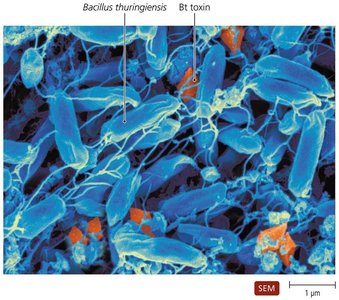
Bacillus: Common in soil, form endospores, includes Bacillus anthracis (anthrax) and Bacillus thuringiensis (Bt toxin).
High G + C Gram-Positive Bacteria
High G + C Gram-positive bacteria include Mycobacterium and actinomycetes, which are important in medicine and industry.
Mycobacterium: Aerobic rods, slow growth due to mycolic acid in cell walls.
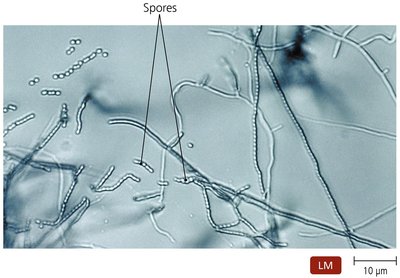
Actinomycetes: Form branching filaments, resemble fungi, genera include Actinomyces, Nocardia, Streptomyces.
Gram-Negative Proteobacteria
Proteobacteria are the largest and most diverse group of Gram-negative bacteria, divided into six classes: Alpha-, Beta-, Gamma-, Delta-, Epsilon-, and Zetaproteobacteria.
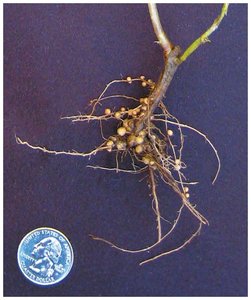
Alphaproteobacteria: Nitrogen fixers (Azospirillum, Rhizobium), pathogenic (Rickettsia, Brucella).
Betaproteobacteria: Pathogenic (Neisseria, Bordetella, Burkholderia).
Gammaproteobacteria: Includes Pseudomonas (pathogens), Legionella, Coxiella.
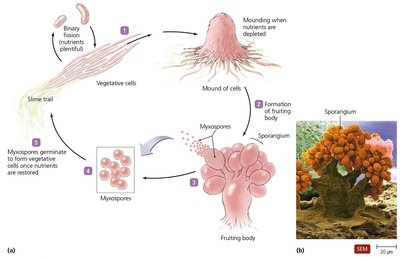
Deltaproteobacteria: Includes myxobacteria.
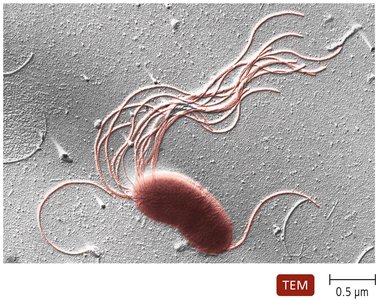
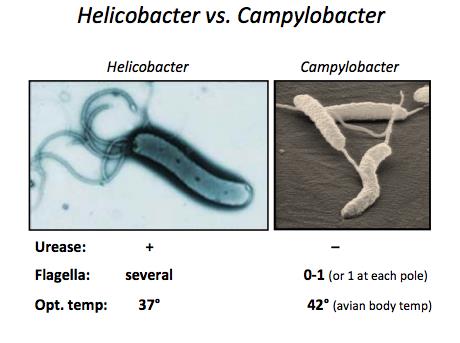
Epsilonproteobacteria: Includes Campylobacter, Helicobacter.
Zetaproteobacteria: Discovered by DNA sequencing, few cultured species.
Other Gram-Negative Bacteria
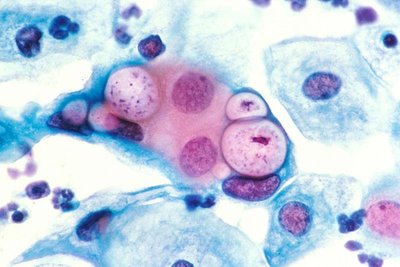
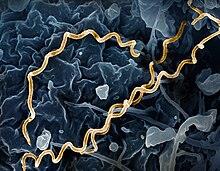
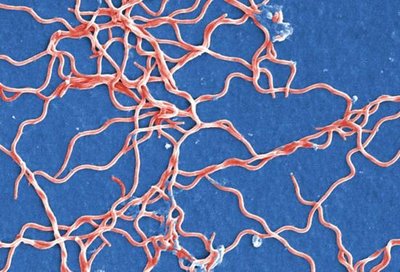
Other important Gram-negative bacteria include chlamydias and spirochetes, both of which are pathogenic to humans.
Chlamydias: Intracellular pathogens, most common sexually transmitted bacteria in the U.S.
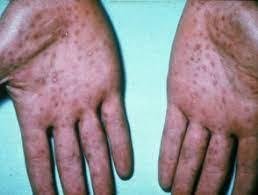
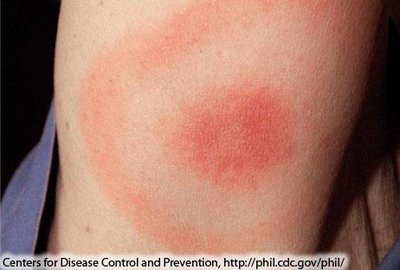
Spirochetes: Motile, corkscrew motion, includes Treponema (syphilis) and Borrelia (Lyme disease).
Summary Table: Major Groups of Prokaryotes
Group | Key Features | Examples |
|---|---|---|
Archaea | No peptidoglycan, extremophiles, methanogens | Thermococcus, Pyrodictium |
Low G + C Gram-Positive | Endospore formation, lack cell wall (Mycoplasma) | Clostridia, Bacillus, Mycoplasma |
High G + C Gram-Positive | Branching filaments, mycolic acid | Mycobacterium, Streptomyces |
Proteobacteria | Largest group, diverse metabolism | Pseudomonas, Rhizobium, Neisseria |
Other Gram-Negative | Intracellular, motile | Chlamydia, Treponema, Borrelia |
Key Terms and Concepts
Binary Fission: Asexual reproduction method in prokaryotes.
Endospore: Resistant, dormant structure formed by some bacteria.
Nitrogen Fixation: Conversion of atmospheric nitrogen to ammonia.
Extremophile: Organism thriving in extreme environmental conditions.
Gram Stain: Method to classify bacteria based on cell wall structure.
Important Equations
Binary fission growth can be modeled mathematically:
Population Growth Equation:
Where N is the final number of cells, N_0 is the initial number, and n is the number of generations.
Additional info: Academic context was added to clarify the classification, reproduction, and ecological roles of prokaryotes, as well as to provide definitions and examples for key terms.
