 Back
BackCharacterizing and Classifying Viruses, Viroids, and Prions (Chapter 13) – Study Notes
Study Guide - Smart Notes
 Tailored notes based on your materials, expanded with key definitions, examples, and context.
Characterizing and Classifying Viruses, Viroids, and Prions
Introduction
This chapter provides an overview of the fundamental properties, structure, classification, and replication of viruses, as well as a brief mention of viroids and prions. Viruses are acellular infectious agents that differ significantly from cellular life forms, and understanding their unique biology is essential for microbiology students.
Characteristics of Viruses
General Properties
Viruses are nonliving: They are acellular and lack the metabolic machinery necessary for independent life.
Genetic Material: Viruses contain either DNA or RNA, but never both.
Host Range: Infect humans, animals, plants, and bacteria.
Obligate Intracellular Parasites: Require a host cell to reproduce and carry out metabolic processes.
No independent metabolism: Cannot carry out metabolic pathways or respond to the environment independently.
No cytoplasmic membrane, cytosol, or organelles.
Exist in two states: Extracellular (virion) and intracellular (nucleic acid only).
Extracellular vs. Intracellular State
Extracellular state (Virion):
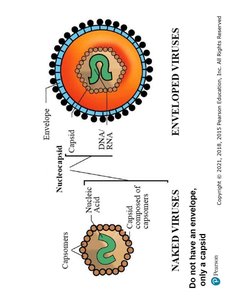
Composed of a protein coat (capsid) surrounding nucleic acid.
Capsid + nucleic acid = nucleocapsid.
Some have a phospholipid envelope for protection and host recognition.
Intracellular state:
Capsid is removed; virus exists as nucleic acid.
Structure of Virions
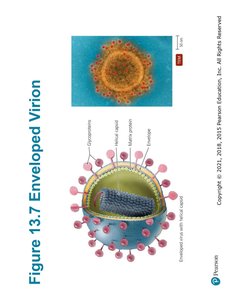
Virion: Complete virus particle, includes nucleic acid, capsid, and sometimes an envelope.
Naked viruses: Only have a capsid, no envelope.
Enveloped viruses: Have an outer lipid membrane derived from the host cell.
Genetic Material of Viruses
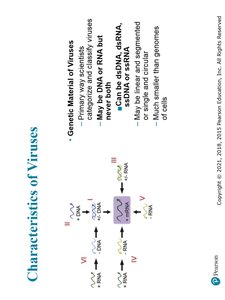
May be DNA or RNA, but never both.
Can be dsDNA, ssDNA, dsRNA, or ssRNA.
May be linear or circular, single or segmented.
Viral genomes are much smaller than those of cells.
Relative Sizes of Genomes
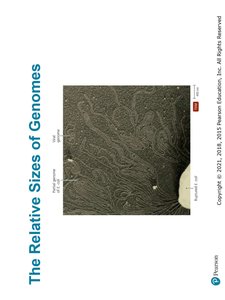
Viral genomes are significantly smaller than those of prokaryotes and eukaryotes.
Host Range and Specificity
Most viruses infect only specific host cells due to affinity between viral surface proteins and host cell receptors.
Specificity: Some viruses infect only a particular kind of cell in a single host.
Generalists: Infect many kinds of cells or multiple hosts.
All types of organisms are susceptible to some virus.
Examples of Viral Hosts
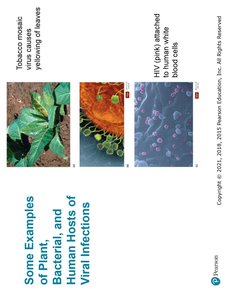
Viruses can infect plants (e.g., Tobacco mosaic virus), bacteria (bacteriophages), and animals (e.g., HIV infecting human white blood cells).
Size and Morphology of Virions
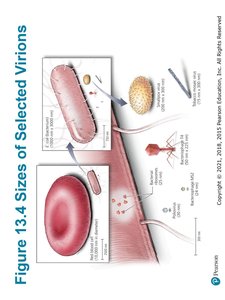
Viruses are much smaller than bacteria and eukaryotic cells, typically ranging from 20 nm to 500 nm.
Virion size and shape can be visualized using electron microscopy.
Capsid Morphology
Capsid: Protein shell that protects viral nucleic acid and aids in attachment to host cells.
Composed of protein subunits called capsomeres.
Capsomeres may be made of single or multiple types of proteins.
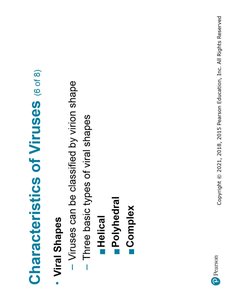
Viral Shapes
Viruses are classified by their shape:
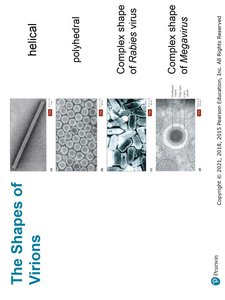
Helical: Rod-shaped, with nucleic acid coiled inside.
Polyhedral: Many-sided, often icosahedral.
Complex: Irregular shapes, often with additional structures (e.g., bacteriophages).
The Viral Envelope
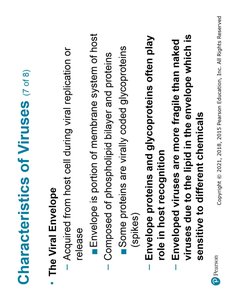
Acquired from the host cell during viral replication or release.
Composed of a phospholipid bilayer and proteins (some are virally encoded glycoproteins called spikes).
Envelope proteins and glycoproteins play a role in host recognition.
Enveloped viruses are more fragile than naked viruses due to the lipid content.
Comparison of Viruses and Cells
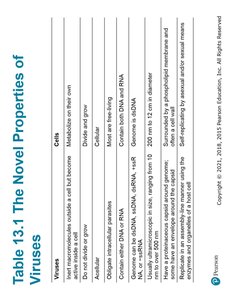
The following table summarizes the key differences between viruses and cells:
Viruses | Cells | |
|---|---|---|
Structure | Acellular, nucleic acid + protein (sometimes envelope) | Cellular, cytoplasm, organelles, plasma membrane |
Metabolism | No metabolism outside host | Metabolically active |
Reproduction | Only inside host cell | Independent (binary fission, mitosis, etc.) |
Genetic Material | DNA or RNA | DNA (in all cells) |
Size | 20–500 nm | 1–100 μm |
Response to Environment | No | Yes |
Classification of Viruses
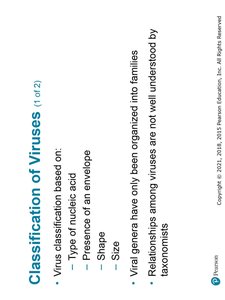
Criteria for Classification
Type of nucleic acid (DNA or RNA)
Presence or absence of an envelope
Shape and size of the virion
Families of Human Viruses
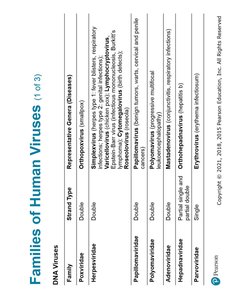
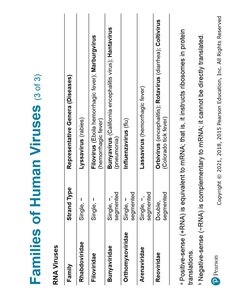
Viruses are grouped into families based on genetic material and structure. The following tables summarize major families of DNA and RNA viruses that infect humans:
Family | Strand Type | Representative Genus (Disease) |
|---|---|---|
Herpesviridae | dsDNA | Herpes simplex virus (herpes) |
Poxviridae | dsDNA | Variola virus (smallpox) |
Picornaviridae | ssRNA (+) | Enterovirus (polio) |
Orthomyxoviridae | ssRNA (-) | Influenzavirus (influenza) |
Retroviridae | ssRNA-RT | Lentivirus (HIV/AIDS) |
Reoviridae | dsRNA | Rotavirus (diarrhea) |
... (see original tables for more) |
Viral Replication
Lytic Replication Cycle
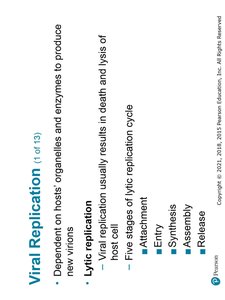
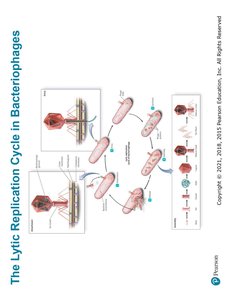
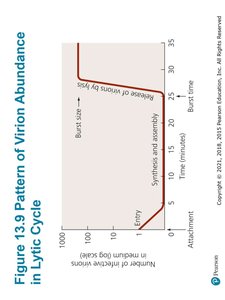
The lytic cycle is a process by which viruses reproduce within a host cell, resulting in cell lysis and release of new virions. The five stages are:
Attachment: Virus binds to host cell surface.
Entry: Viral nucleic acid enters the host cell.
Synthesis: Host machinery synthesizes viral components.
Assembly: New virions are assembled from synthesized components.
Release: Host cell lyses, releasing new virions.
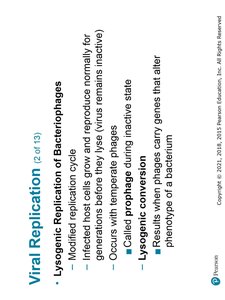
Lysogenic Replication Cycle
Modified replication cycle in which viral DNA integrates into the host genome and replicates along with it.
Virus remains inactive (prophage) until triggered to enter the lytic cycle.
Lysogenic conversion: Phages may carry genes that alter the phenotype of the host bacterium.
Replication of Animal Viruses
Similar to bacteriophage replication, but with differences due to the presence of an envelope, eukaryotic host cells, and lack of cell wall.
Attachment involves glycoprotein spikes or other molecules.
Entry and uncoating can occur by direct penetration, membrane fusion, or endocytosis.
Review Questions and Key Concepts
Viruses are acellular pathogens, along with viroids and prions.
A virion is composed of a capsid and a nucleic acid core.
Viruses range in size from approximately 20 nm to 500 nm.
The protein subunit of the capsid is called a capsomere.
Lytic replication results in the death and lysis of the host cell.
The period required to complete the lytic cycle is called the burst time.
Summary
Viruses are unique infectious agents with distinct structural and genetic properties. Their classification is based on nucleic acid type, presence of an envelope, and morphology. Understanding viral replication cycles is crucial for comprehending viral pathogenesis and control strategies.
