 Back
BackDetermining Bacterial Motility: Methods and Interpretation
Study Guide - Smart Notes
 Tailored notes based on your materials, expanded with key definitions, examples, and context.
Determining Bacterial Motility
Introduction to Bacterial Motility
Bacterial motility is a key characteristic used to differentiate and identify microorganisms. Motility is primarily achieved through specialized structures called flagella, which vary in arrangement and number among different bacterial species.
Monotrichous: Single flagellum at one end.
Lophotrichous: Tuft of flagella at one end.
Amphitrichous: Tufts of flagella at both ends.
Peritrichous: Flagella distributed around the entire cell.
Motility is important for processes such as chemotaxis, colonization, and pathogenesis.
Methods for Determining Motility
There are two primary laboratory methods for assessing bacterial motility: the wet mount technique and the motility medium (MTM) with TTC method.
Wet Mount Technique
The wet mount method involves placing a suspension of bacteria in broth onto a glass slide, covering it with a cover slip, and observing under a microscope.
Bacteria are unstained and appear transparent due to their refractive index being similar to water.
Observation requires careful focusing and adjustment of the microscope diaphragm.
This method allows direct visualization of motility but can be challenging due to the small size and transparency of bacteria.
Example: Observing Pseudomonas aeruginosa (motile) and Staphylococcus aureus (non-motile) in wet mounts.
Motility Medium (MTM) with TTC
The motility medium method uses a semi-solid agar deep containing TTC (2,3,5-triphenyltetrazolium chloride).
Bacteria are inoculated by stabbing the medium with a needle.
TTC is reduced by growing bacteria to form formazan, an insoluble red pigment.
The red color appears only where bacteria are growing, allowing visualization of motility.
Motile bacteria spread throughout the medium, while non-motile bacteria grow only along the stab line.
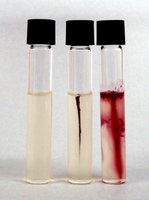
Example: Pseudomonas aeruginosa shows true motility (red color diffuses), while Staphylococcus aureus is non-motile (red color restricted to stab line). 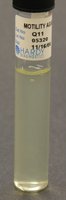
Interpreting Results
Uninoculated tube: No color change; serves as a negative control.
Non-motile bacteria: Growth and red color limited to the stab line.
Motile bacteria: Growth and red color spread throughout the medium, indicating movement away from the stab line.
Brownian Motion vs. True Motility
Brownian motion: Random movement caused by water molecules; not indicative of motility.
True motility: Directed movement by flagella; observed as purposeful swimming or tumbling.
Example: Videos or live observation can help distinguish between Brownian motion and true motility.
Laboratory Procedure Summary
Label and inoculate MTM tubes with different organisms using a sterile needle.
Incubate tubes at 37°C.
Prepare wet mounts for microscopic observation.
Interpret motility based on spread of color in MTM and movement in wet mounts.
Key Terms and Definitions
Flagella: Whip-like appendages used for bacterial movement.
TTC (2,3,5-triphenyltetrazolium chloride): A colorless dye reduced by bacteria to form red formazan.
Formazan: Red pigment indicating bacterial growth and motility.
Motility medium: Semi-solid agar used to test bacterial motility.
Summary Table: Motility Test Interpretation
Tube | Organism | Motility | Appearance |
|---|---|---|---|
1 | Uninoculated | None | No color change |
2 | Staphylococcus aureus | Non-motile | Red color only along stab line |
3 | Pseudomonas aeruginosa | Motile | Red color diffused throughout medium |
Additional info:
Motility testing is a fundamental part of microbial identification and classification (related to Ch. 3 and Ch. 4).
Some bacteria, such as Bacillus cereus, are aerobic and only grow on the surface, so they are not suitable for deep motility testing.
