 Back
BackEnzyme Regulation and Genetic Recombination in Bacteria
Study Guide - Smart Notes
 Tailored notes based on your materials, expanded with key definitions, examples, and context.
Enzyme Regulation in Bacteria
Overview of Enzyme Regulation
Enzyme regulation is essential for the precise control of metabolic reactions in living cells. Bacteria utilize multiple mechanisms to regulate enzyme synthesis and activity, ensuring metabolic efficiency and adaptability to environmental changes.
Genetic control: Regulation at the level of enzyme synthesis, primarily through transcriptional control.
Feedback inhibition: Regulation at the level of enzyme activity, often involving the end product of a pathway.
Genetic Control of Enzyme Activity
Genetic control involves the regulation of mRNA transcription required for enzyme synthesis. In prokaryotes, this is achieved through the action of regulatory proteins that interact with DNA to modulate RNA polymerase activity.
Operon: A cluster of genes transcribed as a single polycistronic mRNA, regulated collectively by a regulatory protein.
Regulon: A set of genes controlled by the same regulatory protein but transcribed as separate monocistronic units.
Regulatory proteins can function as repressors (negative control) or activators (positive control).
Repressors and Negative Control
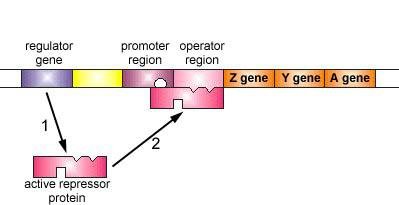
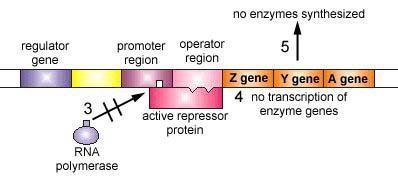
Repressors are proteins that bind to the operator region of DNA, blocking transcription by preventing RNA polymerase from accessing the coding sequence.
This mechanism is termed negative control.
A Repressible Operon in the Absence of a Corepressor
In the absence of a corepressor, the repressor protein is inactive and cannot bind to the operator, allowing transcription of the operon.
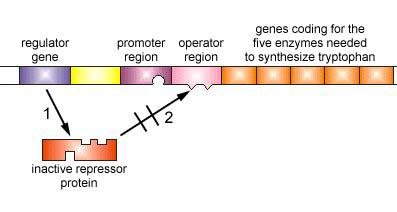
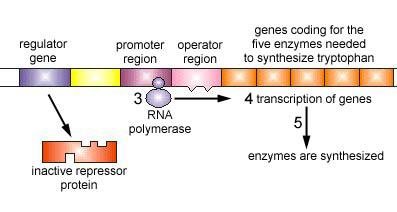
Co-repressors and Repressible Operons
Some repressors require a corepressor molecule to become active. The corepressor binds to the repressor, enabling it to bind the operator and block transcription.
Example: Tryptophan acts as a corepressor in the tryptophan operon.
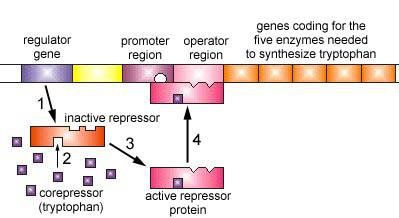
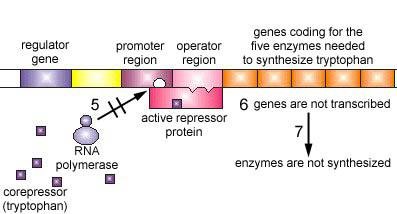
Inducers and Inducible Operons
Inducible operons are regulated by repressors that are active by default. The binding of an inducer molecule inactivates the repressor, permitting transcription.
Example: The lac operon, where lactose acts as an inducer.
Activators and Positive Control
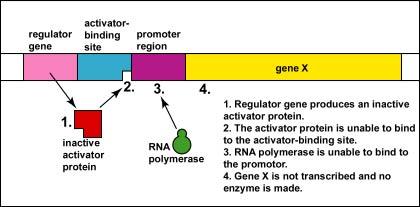
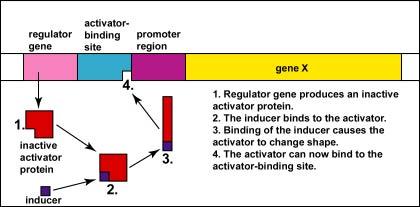
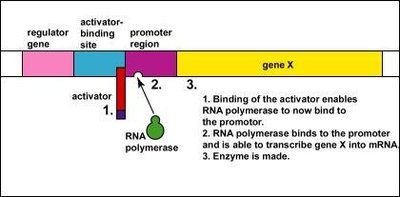
Activators are regulatory proteins that enhance transcription. They bind to an activator-binding site adjacent to the promoter, facilitating RNA polymerase binding and gene transcription. Activators are often allosteric proteins that require an inducer to bind DNA.
Translational Control in Bacteria
Bacteria can also regulate enzyme synthesis at the translational level using antisense RNA. This RNA is complementary to the mRNA of the enzyme, preventing translation and thus enzyme production.
Feedback Inhibition
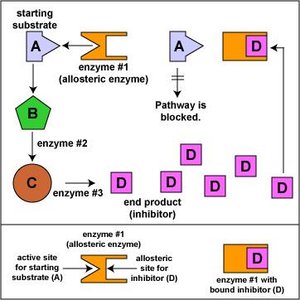
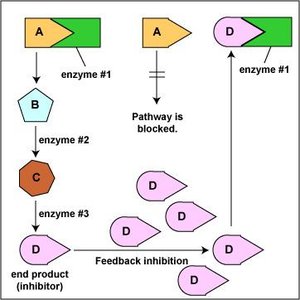
Feedback inhibition is a form of enzyme regulation where the end product of a metabolic pathway inhibits an enzyme involved earlier in the pathway. This can occur via noncompetitive or competitive inhibition.
Noncompetitive Inhibition
The inhibitor (end product) binds to an allosteric site on the enzyme, altering the active site and preventing substrate binding. This turns off the metabolic pathway.
Competitive Inhibition
The inhibitor competes with the substrate for the enzyme's active site, blocking substrate binding and halting product synthesis.
Genetic Recombination in Bacteria
Overview of Genetic Recombination
Genetic recombination is the process by which DNA is transferred from one organism to another, resulting in genetic diversity. In bacteria, recombination can occur via transformation, transduction, or conjugation.
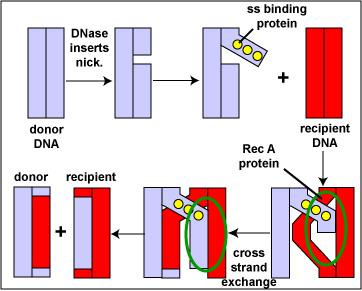
Homologous recombination: Exchange of similar DNA sequences, mediated by RecA proteins.
Mechanisms of Genetic Recombination
Transformation
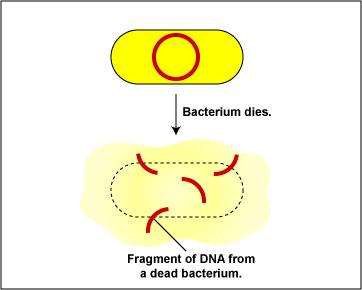
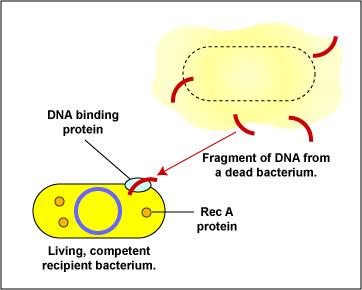
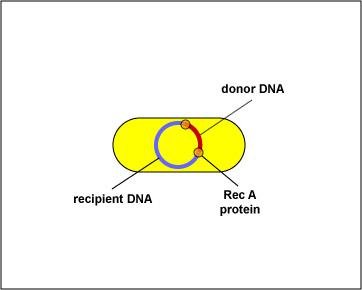
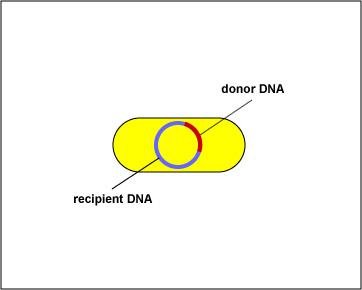
Transformation involves the uptake of free DNA fragments from the environment by a competent bacterium. The DNA is integrated into the recipient's genome via RecA-mediated recombination.
Transduction
Transduction is the transfer of bacterial DNA by bacteriophages (viruses that infect bacteria). It can be generalized (random DNA fragments) or specialized (specific DNA segments).
Generalized transduction: Any bacterial gene can be transferred.
Specialized transduction: Only specific genes near the prophage insertion site are transferred.
Conjugation
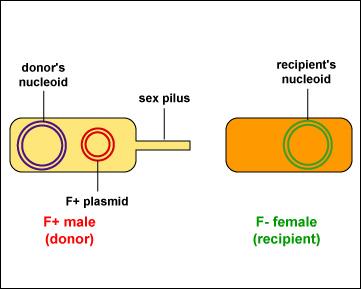
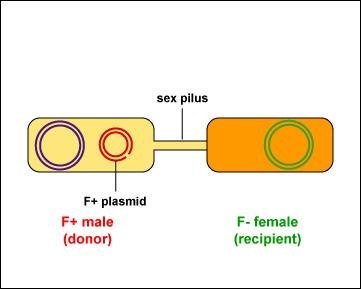
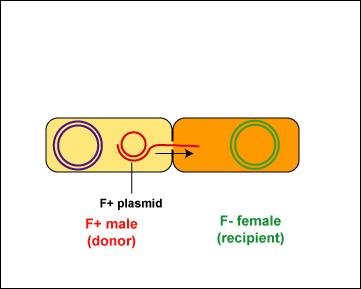
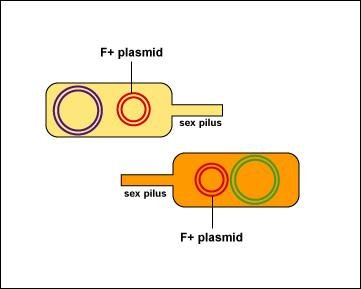
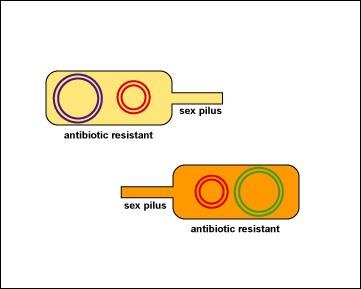
Conjugation is the direct transfer of DNA from a living donor bacterium to a recipient, often mediated by a sex pilus in Gram-negative bacteria.
F+ conjugation: Transfer of F+ plasmid (fertility factor) from donor to recipient, converting the recipient into a donor.
Hfr conjugation: F+ plasmid integrates into the chromosome, allowing transfer of chromosomal genes to the recipient.
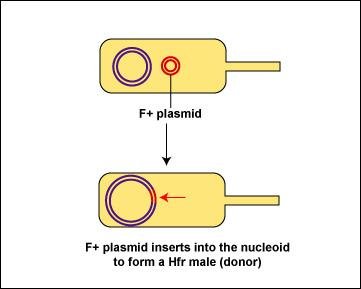
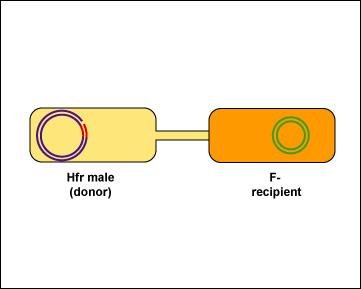
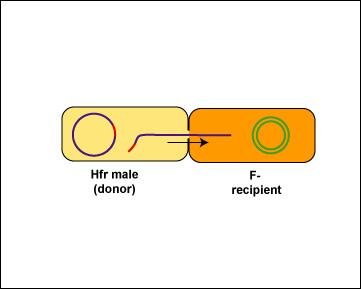
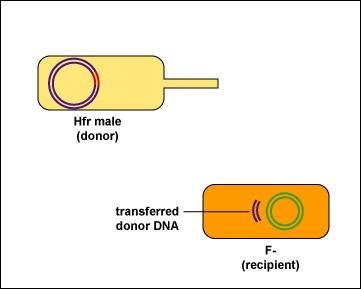
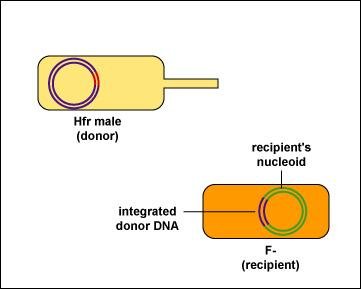
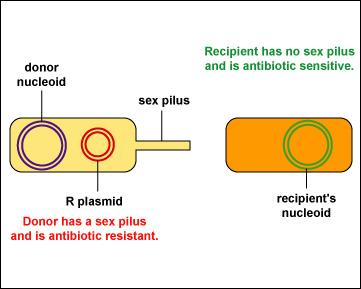
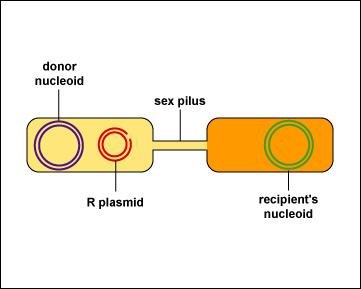
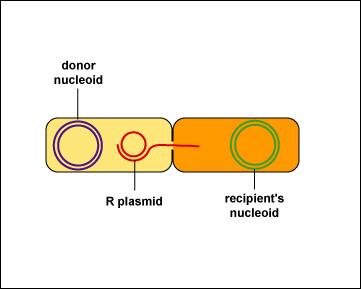
Resistance plasmid (R-plasmid) conjugation: Transfer of plasmids carrying antibiotic resistance genes, contributing to the spread of resistance among bacteria.
Recombinant DNA Technology
Restriction Endonucleases
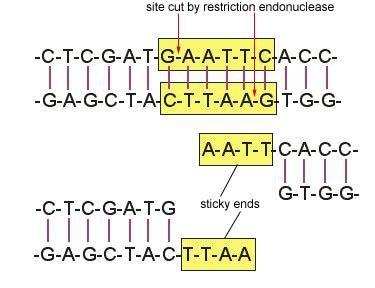
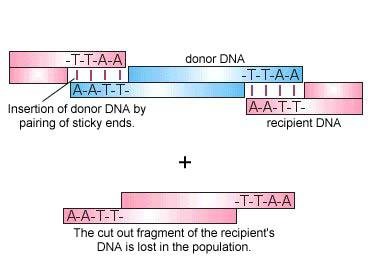
Restriction endonucleases are enzymes that recognize specific palindromic DNA sequences and cleave both DNA strands at these sites, generating fragments with 'sticky ends.' These enzymes are essential tools in molecular cloning and genetic engineering.
DNA Ligase
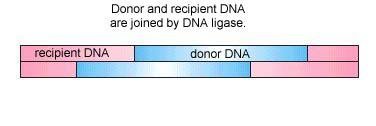
DNA ligase catalyzes the formation of phosphodiester bonds between adjacent nucleotides, joining DNA fragments together. This enzyme is crucial for sealing nicks in DNA and for constructing recombinant DNA molecules.
Integration of DNA by Endonuclease and Ligase
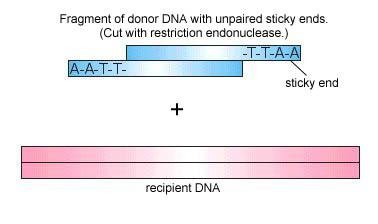
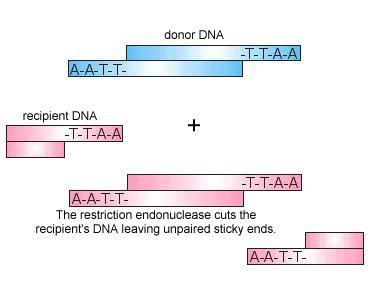
Recombinant DNA technology involves cutting donor and recipient DNA with the same restriction enzyme, allowing sticky ends to pair. DNA ligase then covalently links the fragments, creating a stable recombinant DNA molecule.
Additional info: Recombinant DNA technology is foundational for genetic engineering, allowing for the creation of genetically modified organisms, production of pharmaceuticals, and advancement of molecular biology research.
