Back
BackEukaryotic Cells: Structure, Function, and Classification
Study Guide - Smart Notes
 Tailored notes based on your materials, expanded with key definitions, examples, and context.
Overview of Eukaryotic Cells
Basic Description and Differences from Prokaryotes
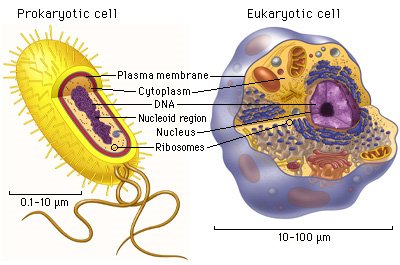
Eukaryotic cells are complex, membrane-bound structures that contain a true nucleus and various organelles. They differ from prokaryotic cells, which lack a nucleus and membrane-bound organelles. Both cell types share fundamental features such as a plasma membrane, cytosol, DNA, and ribosomes, but eukaryotes exhibit greater compartmentalization and complexity.
Plasma membrane: Surrounds the cell, controlling entry and exit of substances.
Cytosol: Gel-like substance where cellular processes occur.
Genetic information: Encoded in DNA; eukaryotes store DNA in a nucleus, prokaryotes in a nucleoid region.
Ribosomes: Sites of protein synthesis; eukaryotic ribosomes are larger (80S) than prokaryotic (70S).
Endosymbiotic Theory
Origin of Mitochondria and Chloroplasts
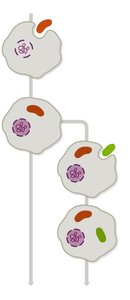
The endosymbiotic theory explains the origin of mitochondria and chloroplasts in eukaryotic cells. It proposes that these organelles evolved from prokaryotic cells that were engulfed by ancestral eukaryotes, forming a symbiotic relationship.
Mitochondria: Derived from engulfed non-photosynthetic prokaryotes.
Chloroplasts: Derived from engulfed photosynthetic prokaryotes (e.g., cyanobacteria).
Evidence: Both organelles contain their own DNA, ribosomes, and replicate independently by binary fission.
Cell Division: Mitosis, Meiosis, and Binary Fission
Comparing Types of Cell Division
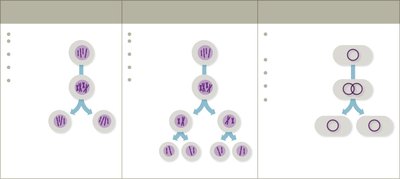
Eukaryotic cells divide by mitosis (asexual) and meiosis (sexual), while prokaryotes use binary fission. These processes differ in their outcomes and genetic consequences.
Mitosis: Produces two genetically identical diploid cells; used for growth and repair.
Meiosis: Produces four genetically unique haploid cells; essential for sexual reproduction.
Binary fission: Prokaryotic process yielding two identical cells.
Eukaryotic Cell Transport Mechanisms
Endocytosis and Exocytosis
Eukaryotic cells use specialized transport mechanisms to move substances across their membranes. Endocytosis imports materials, while exocytosis exports them.
Endocytosis: Includes pinocytosis (cell drinking), phagocytosis (cell eating), and receptor-mediated endocytosis.
Exocytosis: Vesicles fuse with the plasma membrane to release contents outside the cell.
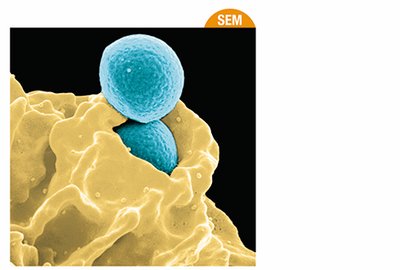
Classification of Eukaryotes
Four Kingdoms of Eukaryotes
Eukaryotes are classified into four kingdoms: Animalia, Fungi, Plantae, and Protista. Each kingdom exhibits unique structural and functional characteristics.
Animalia: Includes multicellular animals and parasitic helminths.
Fungi: Absorb nutrients, grow as hyphae, and reproduce via spores.
Plantae: Multicellular, photosynthetic organisms with cell walls.
Protista: Diverse group, often described as a catchall kingdom.
Parasitic Helminths
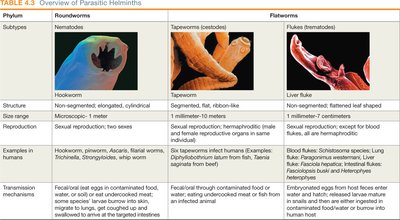
Helminths are parasitic worms classified into two main groups: roundworms (nematodes) and flatworms (cestodes and trematodes).
Roundworms: Non-segmented, cylindrical; include hookworm and pinworm.
Tapeworms: Segmented, flat, ribbon-like; include Taenia species.
Flukes: Non-segmented, leaf-shaped; include Schistosoma species.
Phylum | Subtypes | Structure | Size | Reproduction | Examples in Humans | Transmission Mechanism |
|---|---|---|---|---|---|---|
Roundworms | Nematodes | Non-segmented, elongated, cylindrical | Microscopic - 1 meter | Sexual reproduction; two sexes | Pinworm, Ascaris, filarial worms | Fecal/oral, contaminated food, insect bites |
Tapeworms | Cestodes | Segmented, flat, ribbon-like | 1 millimeter - 10 meters | Sexual reproduction; hermaphroditic | Taenia, Diphyllobothrium | Ingesting contaminated food, undercooked meat |
Flukes | Trematodes | Non-segmented, flattened leaf-shaped | 1 millimeter - 7 centimeters | Sexual reproduction; hermaphroditic or two sexes | Schistosoma, lung fluke | Contaminated water, undercooked fish |
Fungal Growth and Spores
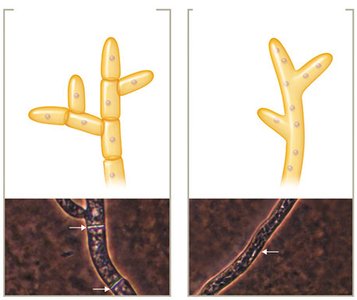
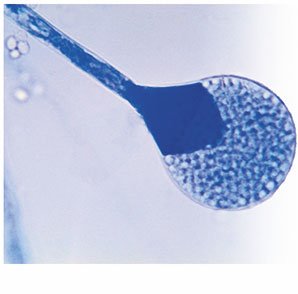
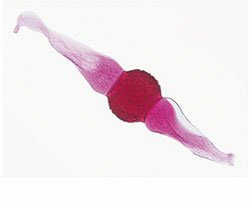
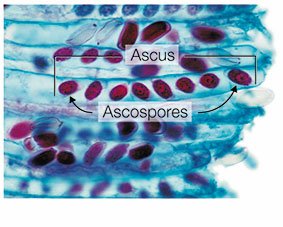
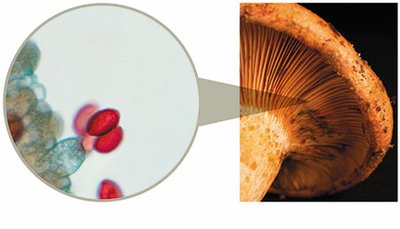
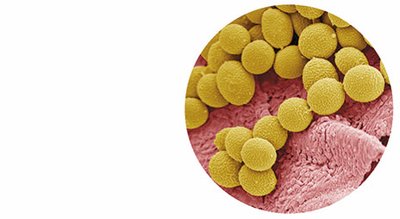
Fungi grow as hyphae, which may be septate (with cross-walls) or aseptate (without cross-walls). They reproduce via asexual and sexual spores.
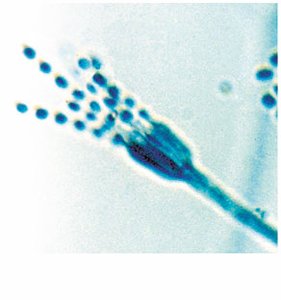
Asexual spores: Conidiospores and sporangiospores arise from mitosis.
Sexual spores: Zygospores, ascospores, and basidiospores arise from meiosis.
Mycoses: Fungal Diseases
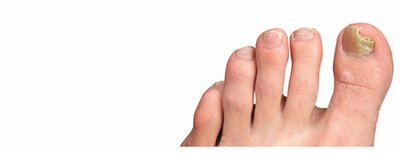
Mycoses are diseases caused by fungi. Dermatophytes are true pathogens that infect skin, hair, and nails, causing "tinea" infections.
Tinea unguium: Fungal infection of nails, leading to brittleness and discoloration.
Tinea pedis: Athlete's foot, causing itching, burning, and scaling skin.
Protists and Protozoans
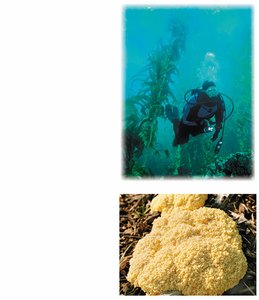
Protists are a diverse group of eukaryotes, including unicellular, multicellular, and multinucleated masses. They may be autotrophic or heterotrophic, reproduce sexually or asexually, and may or may not have cell walls.
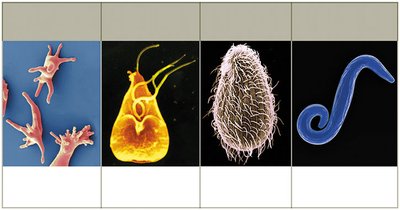
Protozoans: Motile heterotrophs classified by their mode of movement: amoeboid (pseudopods), flagellated, ciliated, and spore-forming.
Extracellular Structures
Plasma Membrane and Cell Wall
All eukaryotic cells have a plasma membrane, but only some have a cell wall. Eukaryotic cell walls lack peptidoglycan and vary among kingdoms.
Fungi: Cell wall contains chitin, glycoproteins, and mixed glycans.
Plants: Cell wall contains cellulose.
Protists: May or may not have a cell wall.
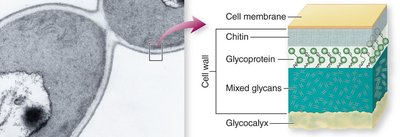
Glycocalyx
The glycocalyx is a sticky, carbohydrate-rich layer found on most eukaryotic cells. It plays roles in cell protection, adhesion, and communication.
Composition: Carbohydrates, glycoproteins, glycolipids.
Functions: Protection, cell recognition, and interaction with the environment.

Flagella and Cilia
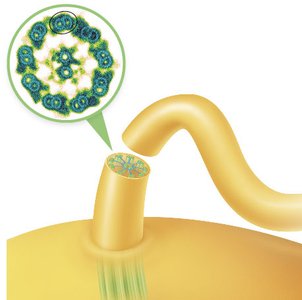
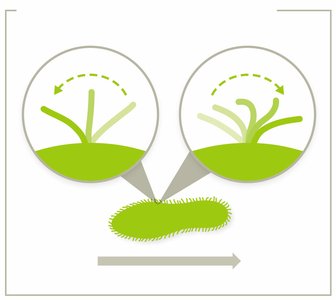
Eukaryotic flagella are made of tubulin and exhibit a "9+2" microtubule arrangement. Cilia are similar but shorter and more numerous, providing movement via oar-like strokes.
Flagella: Anchored by basal bodies; move in a wave-like motion.
Cilia: Provide rapid, coordinated movement.
Intracellular Structures
Ribosomes
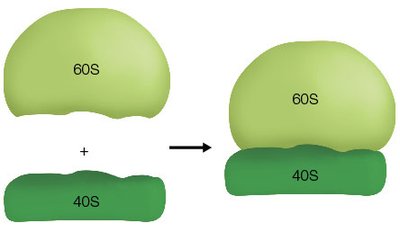
Eukaryotic ribosomes are essential for protein synthesis and are composed of protein and rRNA. They can be free in the cytoplasm or bound to the endoplasmic reticulum.
Structure: 80S ribosome (60S large subunit + 40S small subunit).
Cytoskeleton
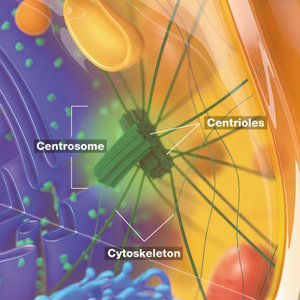
The cytoskeleton provides structural support, facilitates movement, and organizes cell contents. It consists of microtubules, intermediate filaments, and microfilaments.
Microtubules: Made of tubulin; arise from centrosome; form spindle apparatus.
Intermediate filaments: Provide tensile strength.
Microfilaments: Made of actin; involved in muscle contraction and cell movement.
Nucleus
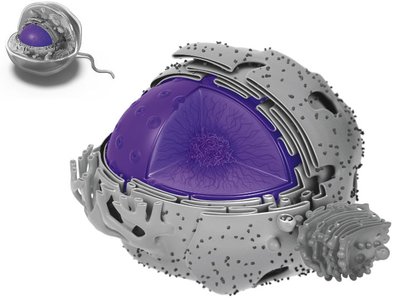
The nucleus houses DNA, organized as chromatin, and contains the nucleolus for ribosome synthesis. It is surrounded by a double membrane (nuclear envelope) with pores for transport.
Nucleoplasm: Fluid inside the nucleus.
Nucleolus: Site of ribosome assembly.
Endoplasmic Reticulum and Golgi Apparatus
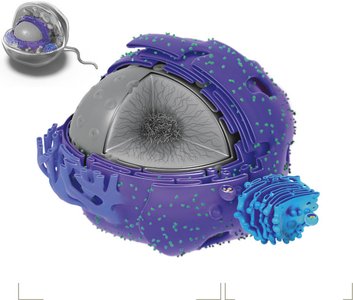
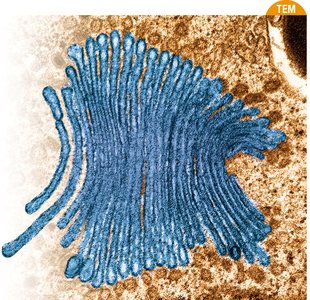
The endoplasmic reticulum (ER) is involved in protein and lipid synthesis. The Golgi apparatus modifies, sorts, and distributes cellular products.
Rough ER: Studded with ribosomes; synthesizes proteins.
Smooth ER: Synthesizes lipids and detoxifies substances.
Golgi apparatus: Processes and packages proteins and lipids.
Vesicles and Vacuoles
Vesicles are small, membrane-bound sacs used for transport, secretion, and digestion. Vacuoles are larger sacs formed by the fusion of multiple vesicles.
Transport vesicles: Move substances within the cell.
Secretory vesicles: Release materials outside the cell.
Lysosomes: Contain hydrolytic enzymes for digestion.
Peroxisomes: Break down fats and amino acids by oxidation.
Vacuoles: Store nutrients, waste, and water.
Mitochondria and Chloroplasts
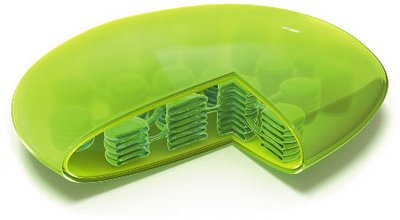
Mitochondria and chloroplasts are energy-harvesting organelles. Mitochondria generate ATP via cellular respiration, while chloroplasts harvest energy from sunlight via photosynthesis.
Mitochondria: Double-membraned; contain their own DNA and ribosomes.
Chloroplasts: Contain thylakoids, stroma, and pigments for photosynthesis.
Similarity to bacteria: Both replicate independently and have prokaryote-like features.