Back
BackFundamentals of Microbial Growth and Decontamination
Study Guide - Smart Notes
 Tailored notes based on your materials, expanded with key definitions, examples, and context.
Fundamentals of Microbial Growth and Decontamination
Microbial Growth Basics
Microbial growth refers to the increase in the number of cells in a population, primarily through cell division. Understanding microbial growth is essential for laboratory studies, clinical diagnostics, and industrial applications.
Laboratory vs. Natural Growth: In the lab, microbes are often grown as pure cultures, while in nature, they exist in complex communities, often forming biofilms.
Biofilms: Structured communities of microbes attached to surfaces, significant in healthcare due to their resistance to treatment and role in persistent infections.
Cell Division Mechanisms: Most bacteria divide by binary fission, but some use budding or spore formation.
Generation Time: The time required for a cell to divide, varying by species and environmental conditions.
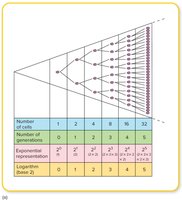
Binary Fission, Budding, and Spore Formation
Bacteria primarily reproduce asexually through binary fission, but alternative methods exist.
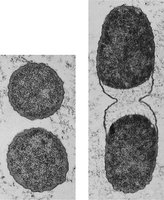
Binary Fission: Chromosome replicates, cell elongates, septum forms, and two identical daughter cells result.
Budding: Cell elongates, forms a bud, duplicates chromosome, and separates. Seen in some bacteria and fungi.
Spore Formation: Some bacteria (e.g., Streptomyces) and fungi form spores for survival, not reproduction in bacteria.
Generation Time and Population Growth
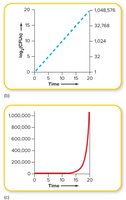
Generation time is a key measure of microbial growth rate. Bacterial populations grow exponentially under optimal conditions.
Exponential Growth: Each generation doubles the population:
Generation Time Formula:
Example: E. coli generation time is about 20 minutes under optimal conditions.
Bacterial Growth Curve in Closed Batch Culture
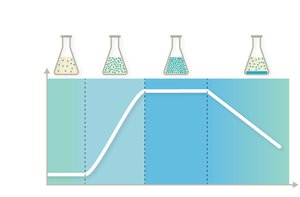
Bacterial populations in closed systems exhibit four distinct growth phases:
Lag Phase: Cells adapt to new environment; little division.
Log (Exponential) Phase: Rapid cell division and population growth.
Stationary Phase: Nutrient depletion and waste accumulation balance cell division and death.
Death Phase: Cells die exponentially as resources are exhausted.
Continuous Culture and Industrial Applications
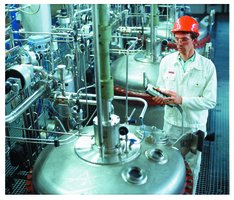
In industrial microbiology, chemostats maintain cultures in a specific growth phase by continuously adding nutrients and removing waste.
Practical Importance of the Growth Curve
Antimicrobial agents are most effective during the log phase.
Growth phases correlate with stages of infection and transmission risk.
Prokaryotic Growth Requirements
Environmental Factors Affecting Growth
Microbes adapt to specific environmental conditions, including temperature, pH, salinity, oxygen, and nutrient availability.
Temperature
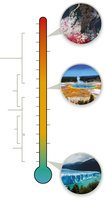
Minimum, Optimum, Maximum: Each microbe has a range for growth.
Classification:
Psychrophiles: -20–10°C
Psychrotrophs: 0–30°C
Mesophiles: 10–50°C (most pathogens)
Thermophiles: 40–75°C
Extreme Thermophiles: 65–120°C
pH
Acidophiles: pH 1–5
Neutralophiles: pH 5–8 (majority of microbes)
Alkaliphiles: pH 9–11
Salinity
Halophiles: Thrive in high-salt environments (up to 35%)
Facultative Halophiles: Tolerate higher salt but do not require it
Osmotic Stress: High salt causes plasmolysis in non-halophiles
Oxygen Requirements
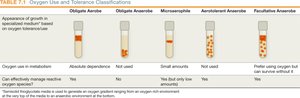
Obligate Aerobes: Require oxygen
Microaerophiles: Require low oxygen
Facultative Anaerobes: Grow with or without oxygen
Aerotolerant Anaerobes: Tolerate but do not use oxygen
Obligate Anaerobes: Cannot tolerate oxygen
Type | Oxygen Use | Growth Pattern |
|---|---|---|
Obligate Aerobe | Yes | Top of tube |
Obligate Anaerobe | No | Bottom of tube |
Microaerophile | Low | Just below surface |
Aerotolerant Anaerobe | No | Evenly throughout |
Facultative Anaerobe | Yes/No | Throughout, more at top |
Reactive Oxygen Species (ROS) and Detoxification
ROS are harmful byproducts of oxygen metabolism.
Enzymes such as superoxide dismutase, catalase, and peroxidases detoxify ROS.
Essential Nutrients and Growth Factors
Macronutrients: Required in large amounts (C, H, O, N, P, S, K, etc.)
Micronutrients: Required in trace amounts (Fe, Zn, Cu, etc.)
Heterotrophs: Require organic carbon sources
Autotrophs: Fix inorganic carbon (CO2)
Growth Factors: Essential organic molecules that some microbes cannot synthesize (e.g., vitamins, amino acids)
Fastidious Organisms: Require multiple growth factors and complex media
Energy Sources
Phototrophs: Use light energy
Chemotrophs: Use chemical compounds for energy
Growing, Isolating, and Counting Microbes
Culture Media Types
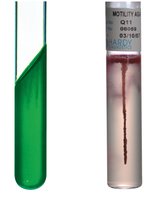
Physical State: Liquid (broth), solid (agar plates), semisolid (motility testing)
Chemical Composition: Defined (precisely known), complex (not fully defined, e.g., blood, extracts)
Function: Selective (favors certain microbes), differential (distinguishes between microbes), or both
Differential and Selective Media
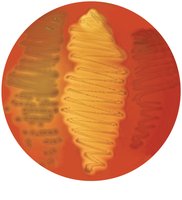
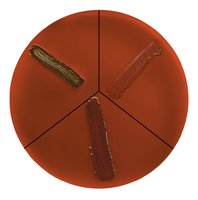
Blood Agar: Differentiates based on hemolysis (alpha, beta, gamma)
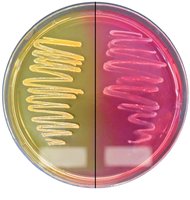
Mannitol Salt Agar (MSA): Selects for salt-tolerant bacteria, differentiates based on mannitol fermentation
Eosin Methylene Blue Agar (EMB): Selects against Gram-positive bacteria, differentiates lactose fermenters
Anaerobic Culture Techniques
Use of thioglycolate media, anaerobic jars, and chambers to exclude oxygen.
Aseptic Techniques and Clinical Sample Collection
Prevent contamination during sample collection and handling.
Use sterile materials and proper protocols.
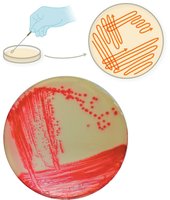
Streak Plate Technique
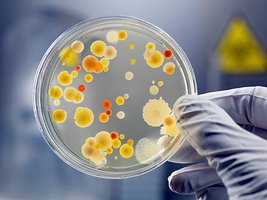
Used to isolate pure colonies from mixed cultures.
Involves spreading cells over agar surface to separate individual cells.
Methods for Counting Microbes
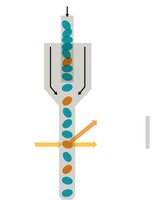
Direct Methods: Manual cell counts (hemocytometer), automated counters (Coulter counter, flow cytometer), viable plate counts (CFU/mL)
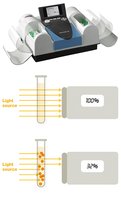
Indirect Methods: Turbidity (spectrophotometry), dry weight, metabolic activity
Methods for Identifying Microbes
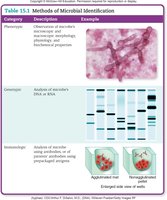
Physical Analysis: Microscopy and staining for morphology
Biochemical Analysis: Enzyme activity, metabolic tests
Chemical Analysis: Cell wall and membrane composition
Immunologic Methods: Antibody/antigen detection (e.g., ELISA)
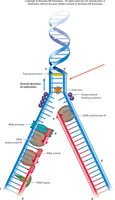
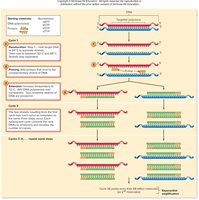
Genotypic Methods: DNA-based identification (PCR, gene probes, electrophoresis)
Controlling Microbial Growth
Definitions and Concepts
Decontamination: Reduces microbial load to safe levels
Sterilization: Eliminates all microbes, including endospores
Disinfection: Reduces microbial numbers on surfaces
Microbiostatic: Inhibits growth
Microbiocidal: Kills microbes
Disinfectant: Used on inanimate objects
Antiseptic: Used on living tissue
Physical Methods: Temperature, Radiation, Filtration
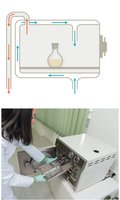
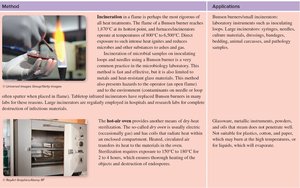
Heat: Refrigeration slows growth; boiling, autoclaving, and dry heat sterilize or disinfect
Decimal Reduction Time (D value): Time to kill 90% of microbes at a set temperature
Thermal Death Time: Shortest time to kill all microbes at a set temperature
Thermal Death Point: Lowest temperature to kill all microbes in 10 minutes

Radiation
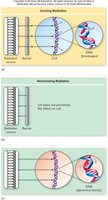
Ionizing Radiation: Gamma rays/X-rays, penetrate and sterilize
Nonionizing Radiation: UV light, causes DNA mutations, used for surface disinfection

Filtration
HEPA filters for air, membrane filters for liquids
Removes microbes, including some viruses
Chemical Methods: Germicides
Alcohols: Intermediate-level, denature proteins, disrupt membranes
Aldehydes: High/intermediate-level, inactivate proteins and nucleic acids
Phenols: Intermediate-level, disrupt cell walls and proteins
Halogens: Oxidize cell components (e.g., chlorine, iodine)
Peroxygens: High-level, strong oxidizers (e.g., hydrogen peroxide)
Ethylene Oxide: Sterilant gas for heat-sensitive materials
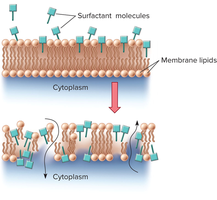
Detergents: Amphipathic molecules, disrupt membranes
Germicide Selection and Microbial Resistance
Selection depends on item use, agent reactivity, concentration, exposure time, and target microbe.
Some microbes (e.g., Mycobacteria, endospores, prions) require specialized control methods.
Visual Summary