 Back
BackGeneral Microbiology (BIO 220) – Syllabus and Course Structure Study Notes
Study Guide - Smart Notes
 Tailored notes based on your materials, expanded with key definitions, examples, and context.
Course Overview
Introduction to General Microbiology
This course provides a comprehensive introduction to the fundamental principles of microbiology, focusing on the biology of bacteria, archaea, eukaryotes, and viruses. Students will explore microbial cell structure, function, genetics, metabolism, and the interactions between microbes and humans, including aspects of pathology and immunology. Laboratory components emphasize essential microbiological techniques such as culturing, microscopy, staining, and identification of microorganisms.
Course Structure and Requirements
Textbooks and Materials
Required Textbook: Microbiology: An Introduction by Tortora, Funke, and Case (13th Edition, Pearson)
Mastering Microbiology with Pearson eText Access Code (required for online assignments and resources)
Labster Labs: Online laboratory simulations for practical microbiology skills
Course Learning Outcomes
Differentiate microbial characteristics using appropriate terminology for bacteria, archaea, eukaryotes, and viruses
Describe microbial cellular functions in energy, growth, and genetics
Explain chemical and physical control methods of microbial growth
Distinguish beneficial and harmful interactions between microbes and humans, including pathology and immunology
Demonstrate proper lab safety and aseptic technique in microbiological procedures
Apply scientific reasoning to interpret data from microbiological techniques
Grading and Evaluation
Grading Scale
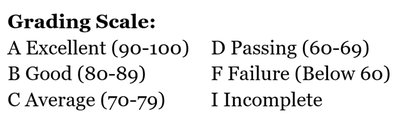
The following grading scale is used to evaluate student performance:
Grade | Description | Score Range |
|---|---|---|
A | Excellent | 90-100 |
B | Good | 80-89 |
C | Average | 70-79 |
D | Passing | 60-69 |
F | Failure | Below 60 |
I | Incomplete | - |
Course Evaluation Components
4 Lecture Exams (100 points each): 400 points
Cumulative Final Exam: 150 points
Assignments/Participation: 150 points
Quizzes/Attendance: 100 points
2 Lab Practicals (100 points each): 200 points
Total: 1000 points
Course Schedule
Tentative Weekly Topics and Assignments
Ch. 1: The Microbial World and You
Ch. 3: Observing Microorganisms Through a Microscope
Ch. 4: Functional Anatomy of Prokaryotic and Eukaryotic Cells
Ch. 5: Microbial Metabolism
Ch. 6: Microbial Growth
Ch. 7: The Control of Microbial Growth
Ch. 8: Microbial Genetics
Ch. 9: Biotechnology & DNA Technology
Ch. 13: Viruses, Viroids, and Prions
Ch. 14: Principles of Disease and Epidemiology
Ch. 15: Microbial Mechanisms of Pathogenicity
Laboratory assignments include biosafety, microscopy, bacterial cell structures, Gram staining, aseptic technique, fermentation, bacterial growth curves, and genetic transfer.
Academic Policies
Attendance Policy
Regular attendance is required for success in this course.
Students unable to attend regularly should withdraw to avoid negative academic consequences.
There are no make-up exams except for college-sponsored activities with prior approval.
Academic Misconduct
Academic misconduct includes all acts of dishonesty in academic matters. Examples include:
Abetting
Artificial Intelligence (AI)
Cheating
Fabrication
Misrepresentation
Plagiarism

Cheating on exams or assignments will result in an 'F' for the assignment and disciplinary action according to the BSCC Student Code of Conduct.
Electronic Devices Policy
Electronic devices may be limited during class to prevent interference with learning.
Use of unauthorized devices or aids during quizzes and exams is considered cheating.
Disability Services
Students with documented disabilities are entitled to reasonable accommodations. It is the student's responsibility to provide appropriate documentation to the college.
Key Microbiology Topics Covered
Microbial diversity: bacteria, archaea, eukaryotes, viruses
Cell structure and function
Microbial metabolism and growth
Genetics and biotechnology
Control of microbial growth
Pathogenicity, immunology, and disease principles
Laboratory techniques: microscopy, staining, culturing, identification
Additional info: This syllabus aligns closely with standard college-level microbiology courses and covers all foundational topics necessary for further study in health sciences, biology, and related fields.
