Back
BackInteractions Between Microbes and Humans: Pathogenesis, Transmission, and Epidemiology
Study Guide - Smart Notes
 Tailored notes based on your materials, expanded with key definitions, examples, and context.
Interactions Between Microbes and Humans
The Human Microbiome
The human microbiome refers to the sum total of all microbes found on and in a normal human. These microbes are critically important to the health and functioning of their host. Microbiome research is reshaping our understanding of normal biota, revealing that humans and other mammals have evolved in intimate contact with their microbes.
Colonization: The long-term presence of resident microbiota on the host without causing disease.
Infection: Occurs when microbes bypass host defenses, enter tissues, and multiply.
Disease: A deviation from health resulting from infection that damages or disrupts tissues and organs.
Infectious disease: A pathologic state caused directly by microorganisms or their products.
Acquisition and Role of Normal Microbiota
The human body provides a variety of environmental niches, supporting a wide range of microbes. Microbial antagonism describes the phenomenon where normal biota prevent colonization by incoming microbes through competition for attachment sites and by creating a hostile environment for invaders. In healthy individuals, normal biota are beneficial or commensal.
Pathogenicity and Virulence
A pathogen is a microbe whose relationship with its host is parasitic, resulting in infection and disease. Pathogenicity is the organism’s potential to cause disease, while virulence refers to the relative severity of the disease caused. Virulence factors are characteristics or structures that enable a microbe to establish itself in the host and cause damage.
True pathogens: Cause disease in healthy individuals.
Opportunistic pathogens: Cause disease when host defenses are compromised or when present in an unusual location.
Pathogenesis: Steps in Microbial Infection
Step One: Portals of Entry
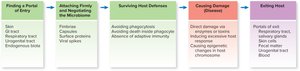
The portal of entry is the route a microbe takes to enter host tissues. Pathogens may be exogenous (originating outside the body) or endogenous (originating from within the host). Most pathogens are adapted to specific portals, and infection may not occur if they enter through the wrong portal.
Examples: Mycobacterium tuberculosis can enter via respiratory or gastrointestinal tracts; Streptococcus and Staphylococcus can enter through multiple portals.
Step Two: Infectious Dose
The infectious dose (ID) is the minimum number of microbes required to cause infection. Microbes with a lower ID are generally more virulent.
Examples: Q fever (1 cell), tuberculosis (10 cells), cholera (1,000,000,000 cells).
Step Three: Adhesion to Host Cells
Adhesion is the process by which microbes gain a stable foothold on host tissues, usually through specific interactions between microbial and host molecules. Firm attachment is essential for infection, as the body has mechanisms to flush out invaders.
Bacteria, fungi, and protozoa: Fimbriae, surface proteins, capsules.
Viruses: Specialized receptors.
Parasitic worms: Suckers, hooks, barbs.
Step Four: Surviving Host Defenses
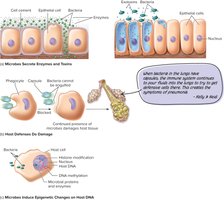
Microbes must evade host immune responses to establish infection. Phagocytes are immune cells that engulf and destroy pathogens. Microbes may use antiphagocytic factors such as leukocidins (which kill phagocytes), capsules (which inhibit engulfment), or survive inside phagocytes.
Step Five: Causing Disease
Microbes cause damage to the host in several ways:
Directly, through enzymes or toxins (exotoxins and endotoxins).
Indirectly, by inducing excessive or inappropriate host immune responses.
By causing epigenetic changes in host cells.
Bacterial Toxins
Toxins are specific chemical products of microbes that are poisonous to other organisms. They are classified by their target:
Neurotoxins: Affect the nervous system.
Enterotoxins: Affect the intestines.
Hemotoxins: Lyse red blood cells.
Nephrotoxins: Damage the kidneys.
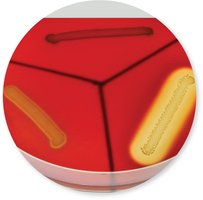
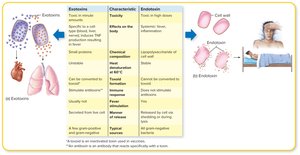
Exotoxins are secreted by bacteria and can cause cell damage, such as hemolysins that lyse red blood cells.
Endotoxins are components of the outer membrane of Gram-negative bacteria (lipopolysaccharide, LPS) and can cause systemic effects such as fever, inflammation, and shock.
Signs and Symptoms of Disease
Sign: Objective evidence of disease (e.g., fever, rash).
Symptom: Subjective evidence as sensed by the patient (e.g., pain, fatigue).
Syndrome: A disease identified by a specific complex of signs and symptoms.
Signs of inflammation include edema, granulomas, abscesses, and lymphadenitis. Signs of infection in the blood include leukocytosis, leukopenia, septicemia, bacteremia, and viremia.
Asymptomatic Infections
Some infections produce no noticeable symptoms but the microbe is still active in host tissues. These are called asymptomatic or subclinical infections.
Portals of Exit
The portal of exit is the specific route by which pathogens leave the host, often through secretions, excretions, or sloughed tissue. The portal of exit is usually the same as the portal of entry.
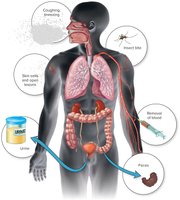
Summary: Steps in Microbial Pathogenesis
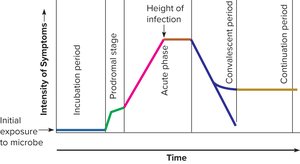
Course of an Infection
Stages of Infection
Incubation period: Time from initial contact to appearance of symptoms; agent is multiplying but not yet causing symptoms.
Prodromal stage: Early, vague symptoms (e.g., malaise, aches).
Acute phase: Pathogen multiplies at high levels, causing prominent symptoms.
Convalescent period: Symptoms decline as the immune response controls the infection.
Continuation phase: In some infections, the organism or symptoms persist after recovery.
Long-Term Effects
Latency: Dormant state of microbes (e.g., herpes, tuberculosis).
Sequelae: Long-term or permanent damage (e.g., deafness after meningitis, paralysis after polio).
Reservoirs and Transmission of Infectious Agents
Reservoirs
A reservoir is the primary habitat from which a pathogen originates. It can be living (humans, animals) or nonliving (soil, water, air). The transmitter is the individual or object from which an infection is acquired.

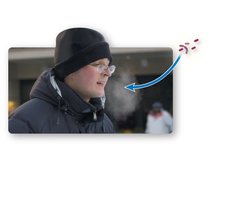
Carrier States
A carrier is an individual who harbors a pathogen and can spread it to others without showing symptoms. Carrier states can be chronic, intermittent, or asymptomatic.




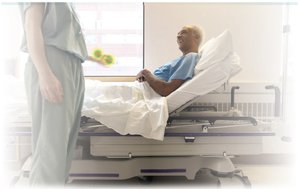
Animals and Nonliving Reservoirs
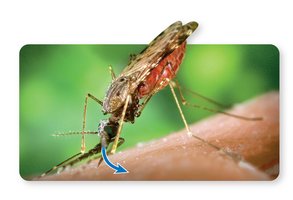
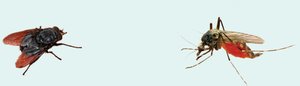
Arthropods (fleas, mosquitoes, ticks) are common animal reservoirs.
Larger animals (mammals, birds, reptiles) can also be reservoirs.
Nonliving reservoirs include soil, water, and surfaces in the built environment.
Transmission of Infectious Agents
Communicable vs. Noncommunicable Diseases
Communicable disease: Can be transmitted from one host to another.
Contagious disease: Highly communicable, especially by direct contact.
Noncommunicable disease: Not transmitted from host to host; may arise from endogenous microbiota or environmental sources.
Modes of Transmission
Horizontal transmission: Disease spread among individuals in a population.
Vertical transmission: Disease transmitted from parent to offspring (via ovum, sperm, placenta, or milk).
Direct contact: Physical interaction between hosts.
Indirect transmission: Via objects (fomites), food, water, or air.
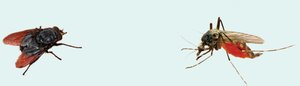
Vector transmission: Arthropods transfer pathogens to humans.

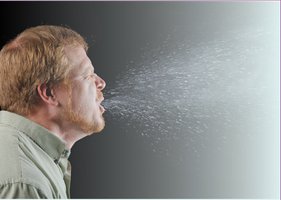


Healthcare-Associated Infections (HAIs)
Overview of HAIs
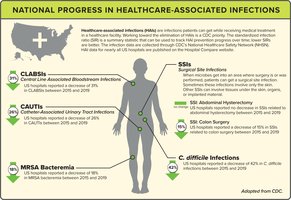
Healthcare-associated infections (HAIs) are acquired during hospital or healthcare facility stays. Factors contributing to HAIs include compromised patients, collection points for pathogens, and frequent use of invasive devices. Common HAIs include pneumonia, gastrointestinal illness, urinary tract infections, bloodstream infections, and surgical site infections.
Common pathogens: Clostridioides difficile, Staphylococcus aureus, Klebsiella spp., Escherichia coli, Enterococcus spp.
Control of HAIs
Infection control officers implement proper practices and procedures.
Universal precautions treat all secretions as potentially infectious.
Training for healthcare workers is essential to prevent transmission.
Epidemiology and Herd Immunity
Epidemiology Terms
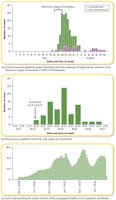
Index case: First case that brings an epidemic to official attention.
Endemic: Disease with steady frequency in a locale.
Sporadic: Occasional, irregular cases.
Epidemic: Increased prevalence beyond expected levels.
Pandemic: Epidemic spread across continents.
Herd Immunity
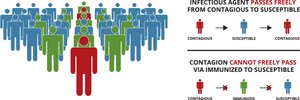
Herd immunity occurs when a significant portion of a population is immune, limiting disease spread. Vaccination is critical for achieving herd immunity, but factors such as vaccine hesitancy, rapid mutation of pathogens, and inability to vaccinate certain groups can hinder its effectiveness.