 Back
BackIntroduction to Microbiology: History, Types, and Importance of Microorganisms
Study Guide - Smart Notes
 Tailored notes based on your materials, expanded with key definitions, examples, and context.
Are All Microbes Bad?
Understanding Microbes
Microbes are microscopic organisms that exist everywhere, including on and inside the human body. While some microbes are pathogenic and cause diseases, many are beneficial and essential for life.
Pathogenic microbes: Cause diseases in humans, animals, and plants.
Opportunistic pathogens: Normally harmless but can cause disease under certain conditions.
Beneficial microbes: Decompose organic waste, produce oxygen, and contribute to food and chemical production.

Microbes in Our Lives
Roles and Applications of Microorganisms
Microorganisms play diverse roles in ecosystems and human society:
Decompose organic waste, recycling nutrients in the environment.
Act as producers via photosynthesis, forming the base of many food chains.
Produce industrial chemicals (e.g., ethanol, acetone).
Are essential in the production of fermented foods (e.g., vinegar, cheese, bread).
Produce enzymes and pharmaceuticals (e.g., cellulase, insulin).
Taxonomy: Scientific Naming of Microorganisms
Linnaean System of Nomenclature
Taxonomy is the science of classifying organisms. Carl Linnaeus established the binomial nomenclature system in 1735, giving each organism a two-part Latinized name: genus and species.
Genus: Capitalized (e.g., Homo).
Species: Lowercase (e.g., sapiens).
Names are italicized or underlined (e.g., Escherichia coli).
After first use, abbreviate genus (e.g., E. coli).
Example: Staphylococcus aureus becomes S. aureus after first mention.
Types of Microorganisms
Major Groups of Microbes
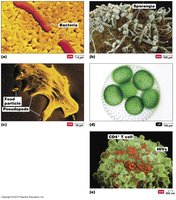
Microorganisms are classified into several major groups based on their cellular structure, metabolism, and ecological roles.
Bacteria: Prokaryotes with peptidoglycan cell walls, reproduce by binary fission, diverse metabolism.
Archaea: Prokaryotes, extremophiles, unique cell wall composition.
Fungi: Eukaryotes, cell walls of chitin, decomposers, can be unicellular (yeasts) or multicellular (molds, mushrooms).
Protozoa: Unicellular eukaryotes, motile, absorb or ingest nutrients, some are pathogenic.
Algae: Photosynthetic eukaryotes, mostly unicellular, cell walls of cellulose, produce oxygen.
Viruses: Acellular, DNA or RNA core, protein coat, replicate only in host cells.
Helminths: Multicellular animal parasites (flatworms, roundworms), microscopic life stages.
Bacteria
Bacteria are single-celled prokaryotes with diverse shapes and metabolic capabilities.
Cell wall contains peptidoglycan.
Reproduce by binary fission.
Can metabolize organic or inorganic compounds, or perform photosynthesis.
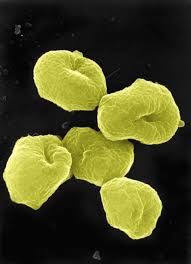
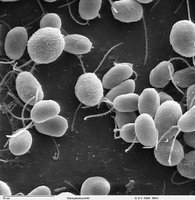
Archaea
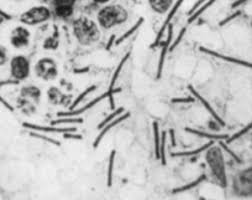
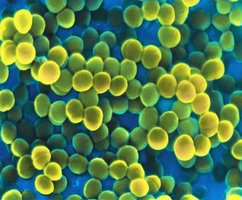
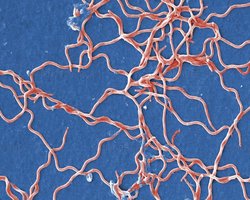
Archaea are prokaryotes closely related to bacteria but with unique genetic and biochemical features. They often inhabit extreme environments.
Cell walls lack peptidoglycan; contain unique compounds.
Include extremophiles: extreme halophiles (salt lovers), methanogens (produce methane), and extreme thermophiles (heat lovers).
Fungi
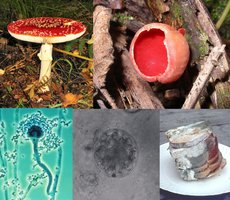
Fungi are eukaryotic organisms that decompose organic matter. They can be unicellular (yeasts) or multicellular (molds, mushrooms).
Cell walls made of chitin.
Form hyphae, which create a network called mycelium.
Saprophytes: obtain nutrients by decomposing organic material.
Protozoa/Protists
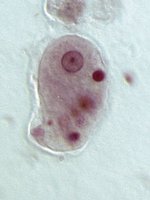
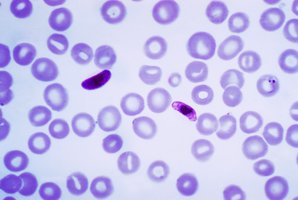
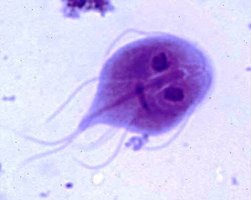
Protozoa are unicellular eukaryotes that absorb or ingest nutrients. Many are motile and some are pathogenic.
Move using flagella, pseudopods, or cilia.
Some cause diseases in humans and animals.
Algae
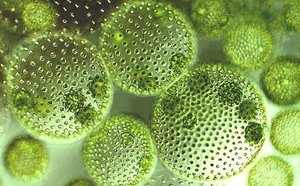
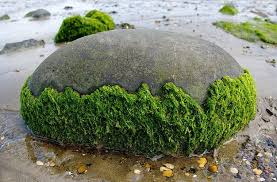
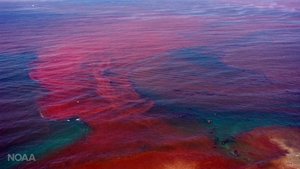
Algae are photosynthetic eukaryotes, mostly unicellular, that produce oxygen and serve as primary producers in aquatic environments.
Cell walls composed of cellulose.
Some species cause harmful algal blooms (e.g., red tides).
Viruses
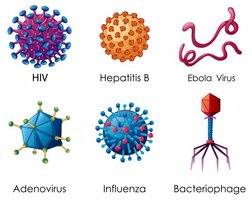
Viruses are acellular infectious agents consisting of genetic material (DNA or RNA) surrounded by a protein coat, sometimes with a lipid envelope. They require host cells to replicate.
Obligate intracellular parasites.
Cause a wide range of diseases in all forms of life.
Helminths
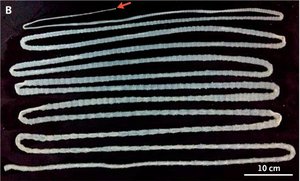
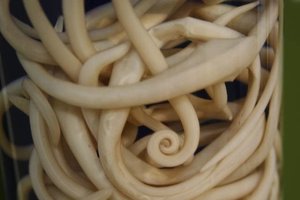
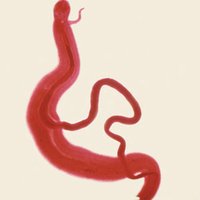
Helminths are multicellular parasitic worms, including flatworms and roundworms. Their life cycles often involve microscopic stages and intermediate hosts.
Include tapeworms, roundworms, and flukes.
Some are significant human pathogens.
Classification of Microorganisms
Three Domains of Life
Microorganisms are classified into three domains based on genetic and biochemical differences:
Bacteria: True bacteria, prokaryotic.
Archaea: Prokaryotes distinct from bacteria, often extremophiles.
Eukarya: Eukaryotic organisms, including plants, animals, fungi, and protists.
History of Microbiology
Early Discoveries
The field of microbiology began with the discovery of microorganisms and the development of the cell theory.
Robert Hooke (1665): First described cells in cork.
Antonie van Leeuwenhoek (1673-1723): Built the first microscope, observed bacteria.
Rudolf Virchow (1858): Proposed that all cells arise from pre-existing cells (Cell Theory).
Spontaneous Generation vs. Biogenesis
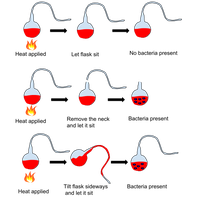
Historically, scientists debated whether life could arise spontaneously from non-living matter (spontaneous generation) or only from pre-existing life (biogenesis).
Spontaneous Generation (Abiogenesis): Proposed by Aristotle, believed for centuries.
Biogenesis: Supported by experiments from Redi, Spallanzani, and Pasteur.
Key experiments:
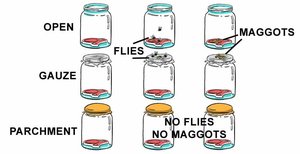
Francesco Redi (1668): Showed that maggots do not arise from meat without flies.
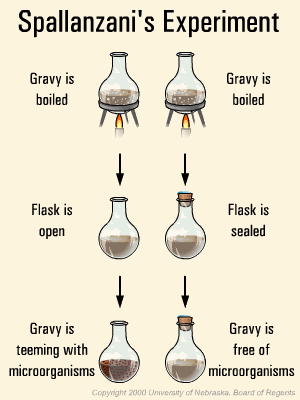
Lazzaro Spallanzani (1767): Demonstrated that boiled and sealed broth remains free of microorganisms.
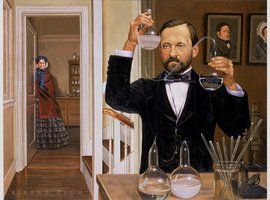
Louis Pasteur (1864): Used swan-neck flasks to show that air does not generate microbes.
Miasma Theory of Disease
Before the germ theory, it was believed that diseases were caused by 'miasma' or bad air, especially from decaying matter. The term 'malaria' means 'bad air.'
The Golden Age of Microbiology (1857-1914)
This era saw rapid advances in understanding microbes, disease, immunity, and antimicrobial treatments.
Pasteur: Demonstrated microbial fermentation and spoilage; developed pasteurization (heating to kill harmful microbes).
Pasteurization: Application of high heat for a short time to kill pathogens in beverages.
The Germ Theory of Disease
The germ theory states that specific diseases are caused by specific microorganisms.
Agostino Bassi (1835): Showed a fungus caused silkworm disease.
Pasteur (1865): Identified protozoan cause of another silkworm disease.
Ignaz Semmelweis (1840s): Advocated handwashing to prevent puerperal fever.
John Snow (1850s): Traced cholera outbreak to contaminated water, founding epidemiology.
Joseph Lister (1860s): Used phenol to disinfect surgical wounds.
Robert Koch – Father of Modern Bacteriology
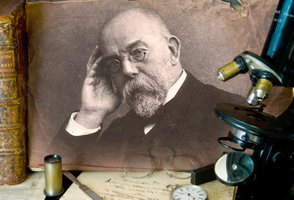
Robert Koch proved that specific microbes cause specific diseases and established experimental criteria known as Koch's postulates.
Proved Bacillus anthracis causes anthrax.
Developed methods for isolating and identifying pathogens.
The Great Potato Famine
Reverend Miles Berkeley identified the fungus Phytophthora infestans as the cause of the Irish Potato Famine, establishing the importance of fungi in plant pathology.
John Snow and the Broad Street Pump
John Snow is considered the father of modern epidemiology for tracing the source of a cholera outbreak to a contaminated water pump in London (1854).
Edward Jenner – The First Vaccinations
Edward Jenner developed the first vaccine by inoculating a person with cowpox virus, providing immunity to smallpox. The term 'vaccination' comes from 'vacca,' meaning cow.
The Birth of Modern Chemotherapy
Chemotherapy refers to the treatment of diseases with chemicals. Early chemotherapeutic agents included synthetic drugs and antibiotics.
Quinine: Used to treat malaria.
Paul Ehrlich (1910): Developed salvarsan, a synthetic drug for syphilis.
Sulfonamides (1930s): First widely used synthetic antibiotics.
Alexander Fleming and the Discovery of Antibiotics
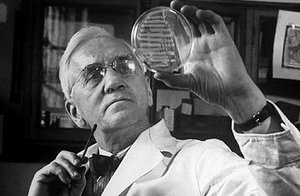
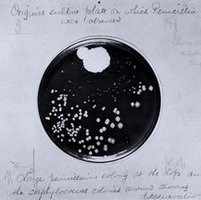
Alexander Fleming discovered penicillin in 1928, the first true antibiotic, produced by the fungus Penicillium. Penicillin was mass-produced in the 1940s, revolutionizing medicine.
Margaret Pittman and the HIB Vaccine
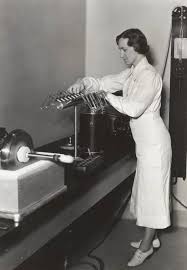
Margaret Pittman identified different strains of Haemophilus influenzae, leading to the development of the HIB vaccine, which prevents meningitis in children.
Rebecca Lancefield
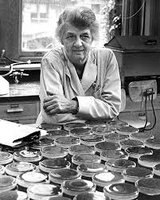
Rebecca Lancefield developed a classification system for streptococcal bacteria based on cell surface antigens, aiding in diagnosis and treatment of strep infections.
The Microbiome – Microbial Neighborhoods
Functions and Importance of the Human Microbiome
The microbiome consists of all microorganisms living in or on the human body. It varies by body site and plays crucial roles in health:
Produces growth factors and vitamins (e.g., Vitamin K).
Converts nutrients for host use.
Protects against pathogenic microbes.
Additional info: Research on the gut microbiome is rapidly expanding, revealing its impact on immunity, metabolism, and disease prevention.
