 Back
BackIntroduction to Microbiology: The Microbial World and You
Study Guide - Smart Notes
 Tailored notes based on your materials, expanded with key definitions, examples, and context.
Introduction to Microbiology
What is Microbiology?
Microbiology is the scientific study of microbes, which are organisms and infectious agents too small to be seen with the naked eye. The field encompasses both living microorganisms (such as bacteria, fungi, protozoa, and microscopic algae) and non-living infectious agents (such as viruses and prions).
Microorganisms: Living, cellular entities (e.g., bacteria, fungi, protozoa, algae).
Microbes: Includes both living microorganisms and non-living infectious agents (e.g., viruses, prions).
Cell: The smallest, most basic unit of life.
Organism: Any individual form of life, unicellular or multicellular.
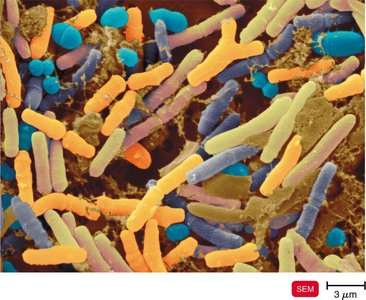
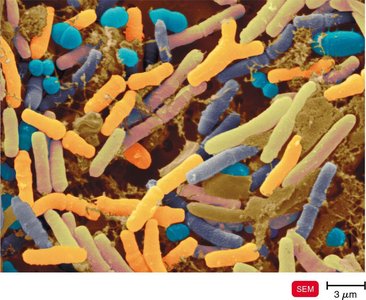
Microbial Ubiquity and Beneficence
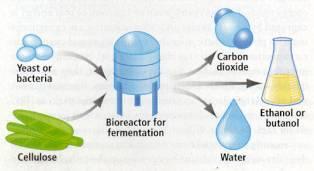
Microorganisms are ubiquitous, existing in soil, water, on skin and hair, in the gastrointestinal tract, and even on food. Most microbes are beneficial, playing essential roles in decomposition, nutrient cycling, and industrial processes.
Pathogen: A disease-causing organism.
Pathogenesis: The manner in which a disease develops.
Virulence: The degree of pathogenicity of a microorganism.
Beneficence: Microbes decompose organic waste, fix carbon, produce industrial chemicals, fermented foods, and products used in manufacturing and disease treatment.
The Microbiome
Normal Microbiota and Transient Microbiota
The human body harbors trillions of microbial cells, collectively known as the microbiome. These microbes help maintain health, aid digestion, synthesize vitamins, prevent pathogenic growth, and may train the immune system.
Normal microbiota: Acquired microorganisms on or in a healthy human being.
Transient microbiota: Microbes that colonize the body fleetingly.
Colonization occurs only at sites providing nutrients and suitable environments.
Taxonomy and Classification
Scientific Nomenclature
Taxonomy is the branch of science that classifies, identifies, and names organisms. Linnaeus established the system of scientific nomenclature, where each organism has two names: the genus and specific epithet.
Genus: Capitalized, italicized or underlined.
Specific epithet: Lowercase, italicized or underlined.
Names may be descriptive, honor a scientist, or identify habitat.
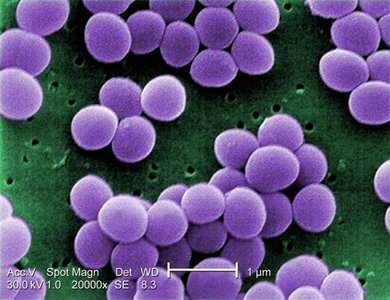
Example: Staphylococcus aureus (clustered spherical cells, gold-colored colonies).
Example: Escherichia coli (honors Theodor Escherich, found in the colon).
Levels of Classification
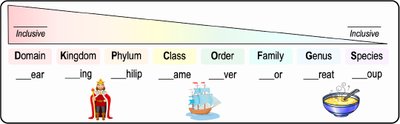
Organisms are classified into eight hierarchical categories, from most inclusive to least inclusive: Domain, Kingdom, Phylum, Class, Order, Family, Genus, Species.
Level | Description |
|---|---|
Domain | Most inclusive |
Kingdom | Major groups within domains |
Phylum | Groups within kingdoms |
Class | Groups within phyla |
Order | Groups within classes |
Family | Groups within orders |
Genus | Groups within families |
Species | Least inclusive, individual organisms |
Classification of Living Things
Three Domains of Life
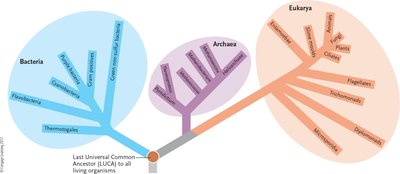
Life is classified into three domains based on similarities in rRNA sequence: Bacteria, Archaea, and Eukarya.
Bacteria: Prokaryotic, peptidoglycan cell walls, reproduce by binary fission.
Archaea: Prokaryotic, lack peptidoglycan, live in extreme environments.
Eukarya: Eukaryotic, contain a nucleus, includes animals, plants, fungi, and protists.
Prokaryotes vs. Eukaryotes
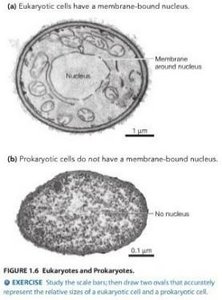
Prokaryotic cells lack a nucleus and are represented by Bacteria and Archaea. Eukaryotic cells contain a nucleus and include animals, plants, fungi, and protists.
Prokaryotes: No nucleus, simple structure.
Eukaryotes: Membrane-bound nucleus, complex structure.
Major Groups of Microorganisms
Bacteria
Bacteria are prokaryotes with peptidoglycan cell walls. They reproduce by binary fission and can use organic chemicals, inorganic chemicals, or photosynthesis for energy.
Bacteriology: Study of bacteria.
Archaea
Archaea are prokaryotic organisms that lack peptidoglycan and often live in extreme environments, such as high salinity or temperature.
Methanogens: Produce methane.
Extreme halophiles: Salt-loving.
Extreme thermophiles: Heat-loving.
Fungi
Fungi are eukaryotes with chitin cell walls. They use organic chemicals for energy. Molds and mushrooms are multicellular, consisting of masses of mycelia composed of hyphae, while yeasts are unicellular.
Mycology: Study of fungi.
Protozoa
Protozoa are eukaryotes that absorb or ingest organic chemicals. They may be motile via pseudopods, cilia, or flagella.
Protozoology: Study of protozoa.
Algae
Algae are eukaryotes with cellulose cell walls. They use photosynthesis for energy and produce molecular oxygen and organic compounds.
Phycology: Study of algae.
Viruses
Viruses are acellular entities consisting of a DNA or RNA core surrounded by a protein coat, which may be enclosed in a lipid envelope. Viruses replicate only within living host cells.
Virology: Study of viruses.
Prions
Prions are infectious proteins that do not contain nucleic acids. They cause spongiform encephalopathies.
Multicellular Animal Parasites
Helminths are multicellular eukaryotic parasites, including flatworms and roundworms, with microscopic stages in their life cycles.
History of Microbiology
Early Observations and Cell Theory
Robert Hooke first observed cells in 1665, leading to the development of Cell Theory: all living things are composed of cells and come from preexisting cells. Anton van Leeuwenhoek observed protozoa and bacteria, calling them "animalicules."
Spontaneous Generation vs. Biogenesis
The hypothesis of spontaneous generation posited that living organisms arise from nonliving matter. Biogenesis, the alternative hypothesis, states that living organisms arise from preexisting life.
Francisco Redi: Demonstrated that maggots do not arise spontaneously.
John Needham: Supported spontaneous generation with broth experiments.
Lazzaro Spallanzani: Disproved spontaneous generation with sealed, heated broth.
Louis Pasteur: Demonstrated biogenesis with swan-necked flask experiments.
The Golden Age of Microbiology
Between 1857 and 1914, discoveries included the relationship between microbes and disease, immunity, and antimicrobial drugs. Pasteur showed microbes are responsible for fermentation and food spoilage, leading to pasteurization and aseptic techniques.
The Germ Theory of Disease
Ignaz Semmelweis: Advocated handwashing to prevent puerperal sepsis.
Joseph Lister: Used disinfectants to prevent surgical infections.
Robert Koch: Developed Koch's postulates to prove specific microbes cause specific diseases.
Vaccination and Chemotherapy
Edward Jenner: Developed vaccination using cowpox to protect against smallpox.
Paul Ehrlich: Developed synthetic drug salvarsan for syphilis.
Alexander Fleming: Discovered penicillin, the first antibiotic.
Scope and Applications of Microbiology
Microbial Ecology and Bioremediation
Microbial ecology studies the relationship between microorganisms and their environment. Microbes recycle vital elements and degrade pollutants.
Bioremediation: Use of microbes to degrade or detoxify pollutants.
Sewage treatment: Microbes convert organic materials into by-products such as carbon dioxide.
Biofilms
Biofilms are masses of microbes attached to solid surfaces, such as rocks, pipes, teeth, and medical implants. Biofilms can cause infections and are often resistant to antibiotics.
Emerging Infectious Diseases (EIDs)
EIDs are new diseases or diseases increasing in incidence. Examples include Zika virus, avian influenza, MRSA, Ebola, Marburg virus, MERS, and COVID-19.
Zika virus: Spread by Aedes mosquitoes, causes birth defects.
Avian influenza: Primarily affects waterfowl and poultry.
MRSA: Methicillin-resistant Staphylococcus aureus.
Ebola and Marburg viruses: Cause hemorrhagic fevers.
MERS and COVID-19: Caused by coronaviruses, significant global impact.
Summary Table: Major Groups of Microorganisms
Group | Cell Type | Cell Wall | Energy Source | Reproduction |
|---|---|---|---|---|
Bacteria | Prokaryote | Peptidoglycan | Organic/Inorganic/Photosynthesis | Binary fission |
Archaea | Prokaryote | No peptidoglycan | Varied | Binary fission |
Fungi | Eukaryote | Chitin | Organic chemicals | Sexual/Asexual |
Protozoa | Eukaryote | No cell wall | Organic chemicals | Sexual/Asexual |
Algae | Eukaryote | Cellulose | Photosynthesis | Sexual/Asexual |
Viruses | Acellular | Protein coat | Host cell machinery | Replication in host |
Prions | Acellular | None | None | Protein misfolding |
Helminths | Eukaryote | None | Organic chemicals | Complex life cycle |
Practice Questions
Which of these is a microbe but NOT a microorganism? (Answer: SARS-CoV-2, a virus)
Louis Pasteur designed swan-necked flasks to: (Answer: Trap microorganisms from the air in the neck of the flask)
Conclusion
Microbiology is a diverse and impactful scientific discipline, essential for understanding life, disease, and the environment. Its scope includes medicine, agriculture, food science, ecology, genetics, biochemistry, immunology, and biotechnology.
