 Back
BackIntroduction to Microbiology: The Microbial World and You
Study Guide - Smart Notes
 Tailored notes based on your materials, expanded with key definitions, examples, and context.
Introduction to Microbiology
Microbes in Our Lives
Microbiology is the study of microorganisms, which are organisms too small to be seen with the unaided eye. Microbes include bacteria, fungi, protozoa, microscopic algae, viruses, and prions. They play essential roles in various ecosystems and human health.
Key Point 1: Microbes affect our lives in numerous ways, including causing disease, food spoilage, and supporting food chains in aquatic environments.
Key Point 2: Microbes decompose organic waste, incorporate nitrogen gas into organic compounds, and generate oxygen through photosynthesis.
Key Point 3: Microbes produce chemical products (ethanol, acetone, vitamins), fermented foods (cheese, yogurt, bread), and products used in manufacturing and disease treatment (cellulose, insulin).
Example: Escherichia coli is a bacterium found in the human intestine, playing a role in digestion and vitamin production.
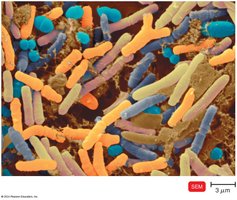
The Microbiome
Normal Microbiota and Transient Microbiota
The human body hosts trillions of microbes, collectively known as the microbiome. These microbes help maintain health, prevent pathogenic growth, and may train the immune system.
Normal microbiota: Microorganisms acquired before birth that colonize the body indefinitely or transiently.
Transient microbiota: Microbes that colonize the body fleetingly.
Colonization: Occurs only at sites providing nutrients and suitable environments.
Example: The Human Microbiome Project (2007–2016) aimed to determine the typical microbiota of various body areas and their relationship to disease.
Naming and Classifying Microorganisms
Scientific Nomenclature and Domains
Microorganisms are named using a binomial system established by Carolus Linnaeus, consisting of a genus and a specific epithet. Scientific names are italicized or underlined, with the genus capitalized and the species lowercase.
Key Point 1: Scientific names may be descriptive or honor a scientist (e.g., Escherichia coli honors Theodor Escherich).
Key Point 2: After first use, names may be abbreviated (e.g., E. coli).
Key Point 3: Three domains of life: Bacteria, Archaea, and Eukarya (including protists, fungi, plants, and animals).
Types of Microorganisms
Major Groups and Their Characteristics
Microorganisms are classified into several groups based on cellular structure and function.
Bacteria: Prokaryotic, unicellular, peptidoglycan cell walls, divide by binary fission, may have flagella.
Archaea: Prokaryotic, lack peptidoglycan, often live in extreme environments, include methanogens, halophiles, thermophiles.
Fungi: Eukaryotic, chitin cell walls, absorb organic chemicals, yeasts (unicellular), molds/mushrooms (multicellular).
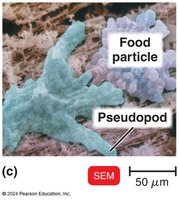
Protozoa: Eukaryotic, absorb/ingest organic chemicals, motile via pseudopods, cilia, or flagella, reproduce sexually/asexually.
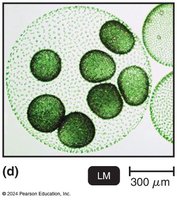
Algae: Eukaryotic, cellulose cell walls, photosynthetic, produce oxygen and carbohydrates.
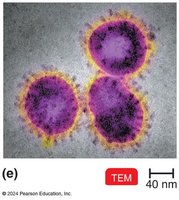
Viruses: Acellular, DNA or RNA core, protein coat, replicate only in living host cells.
Multicellular Animal Parasites: Eukaryotic, multicellular, include helminths (flatworms, roundworms).
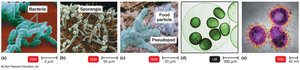
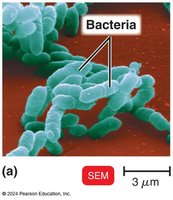
Bacteria
Prokaryotes: Lack a nucleus, have peptidoglycan cell walls.
Nutrition: Derive energy from organic/inorganic chemicals or photosynthesis.
Motility: May use flagella for movement.
Archaea
Prokaryotes: Lack peptidoglycan, may lack cell wall entirely.
Habitats: Extreme environments (methanogens, halophiles, thermophiles).
Pathogenicity: Not known to cause disease in humans.
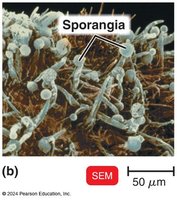
Fungi
Eukaryotes: Distinct nucleus, chitin cell walls.
Energy: Absorb organic chemicals.
Structure: Yeasts (unicellular), molds/mushrooms (multicellular).
Mycelia: Composed of hyphae (filaments).
Protozoa
Eukaryotes: Absorb/ingest organic chemicals.
Motility: Pseudopods, cilia, flagella.
Habitat: Free-living or parasitic.
Reproduction: Sexual or asexual.
Algae
Eukaryotes: Cellulose cell walls.
Energy: Photosynthesis.
Habitat: Freshwater, saltwater, soil.
Reproduction: Sexual and asexual.
Viruses
Acellular: DNA or RNA core, protein coat, sometimes lipid envelope.
Replication: Only in living host cells.
Inert: Outside living hosts.
Disproving Spontaneous Generation
Spontaneous Generation vs. Biogenesis
Historically, scientists debated whether life could arise spontaneously from nonliving matter (spontaneous generation) or only from preexisting life (biogenesis).
Key Point 1: Francesco Redi, John Needham, and Lazzaro Spallanzani conducted experiments to test these hypotheses.
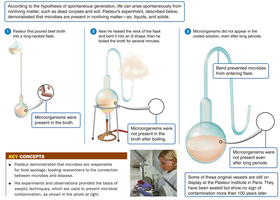
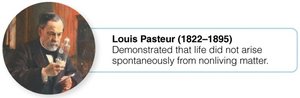
Key Point 2: Louis Pasteur's experiments with swan-neck flasks demonstrated that microbes do not arise spontaneously, supporting biogenesis.
Example: Pasteur boiled broth in a flask with a curved neck, preventing airborne microbes from entering, and observed no microbial growth.
A Brief History of Microbiology
Milestones and Key Figures
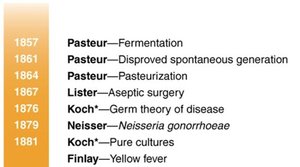
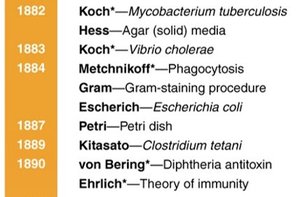
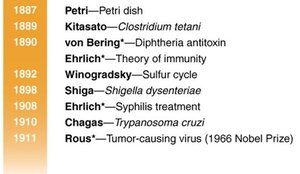
The development of microbiology involved many discoveries, including the relationship between microbes and disease, improved microscopy, and the development of vaccines and chemotherapeutic drugs.
Robert Hooke: Observed cells in 1665, marking the beginning of cell theory.
Anton van Leeuwenhoek: First observed microbes (animalcules) with magnifying lenses.
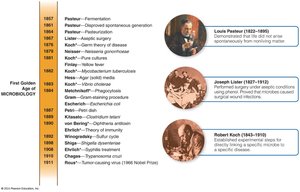
Louis Pasteur: Demonstrated fermentation, pasteurization, and disproved spontaneous generation.
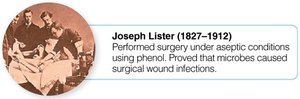
Joseph Lister: Introduced aseptic surgery using phenol.
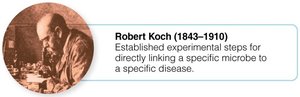
Robert Koch: Established Koch's postulates, linking specific microbes to specific diseases.
Edward Jenner: Developed vaccination for smallpox.
Paul Ehrlich: Developed the first synthetic drug for syphilis.
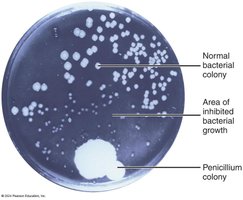
Alexander Fleming: Discovered penicillin, the first antibiotic.
The Discovery of Penicillin
Key Point: Alexander Fleming observed that the fungus Penicillium produced a substance that killed bacteria, leading to the development of antibiotics.
Example: Penicillin was mass-produced and revolutionized the treatment of bacterial infections.
Branches of Microbiology
Bacteriology, Mycology, Parasitology, Immunology, Virology
Microbiology encompasses several specialized fields:
Bacteriology: Study of bacteria.
Mycology: Study of fungi.
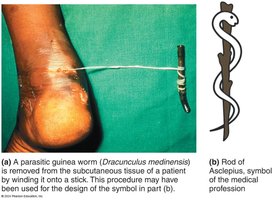
Parasitology: Study of protozoa and parasitic worms.
Immunology: Study of immunity, including vaccines and interferons.
Virology: Study of viruses.
Microbial Genetics and Molecular Biology
Genomics and Recombinant DNA
Advances in genetics and molecular biology have enabled the study of microbial genes, classification, and manipulation for biotechnology.
Genomics: Study of an organism's genes.
Recombinant DNA: DNA made from two different sources, enabling production of human proteins in microbes.
Example: Paul Berg inserted animal DNA into bacterial DNA, leading to the production of animal proteins.

Microbes and Human Disease
Normal Microbiota, Resistance, and Biofilms
Microbes normally present in and on the human body are called normal microbiota. They prevent pathogen growth and produce growth factors. Resistance is the body's ability to ward off disease, aided by skin, stomach acid, and immune chemicals.
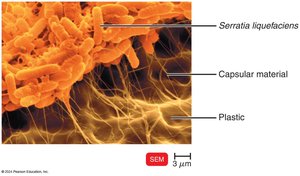
Biofilms: Microbes attach to surfaces and grow into complex masses, which can be beneficial (protect mucous membranes, provide food) or harmful (clog pipes, cause infections).
Antibiotic Resistance: Bacteria in biofilms are often resistant to antibiotics.
Example: Biofilms on medical implants can cause persistent infections.
Group | Cell Type | Cell Wall | Energy Source | Reproduction |
|---|---|---|---|---|
Bacteria | Prokaryotic | Peptidoglycan | Organic/Inorganic/Photosynthesis | Binary fission |
Archaea | Prokaryotic | None/Varied | Varied | Binary fission |
Fungi | Eukaryotic | Chitin | Organic chemicals | Sexual/Asexual |
Protozoa | Eukaryotic | None | Organic chemicals | Sexual/Asexual |
Algae | Eukaryotic | Cellulose | Photosynthesis | Sexual/Asexual |
Viruses | Acellular | None | Host cell machinery | Host-dependent |
Animal Parasites | Eukaryotic | None | Varied | Complex life cycles |
Additional info: Table summarizes the classification and characteristics of major groups of microorganisms for comparative study.
