 Back
BackIntroduction to Microbiology: The Microbial World, Cell Structure, and Classification
Study Guide - Smart Notes
 Tailored notes based on your materials, expanded with key definitions, examples, and context.
The Microbial World
Why Study Microbiology?
Microbiology is the study of microorganisms, or microbes, which are integral to the human environment and health. Understanding microbes provides insight into the life processes of all forms and is essential for comprehending infectious diseases and host-microbe interactions.
Microorganisms are everywhere and impact human health, industry, and ecology.
Microbiology helps us understand how infectious agents establish infection and how the body defends itself.
Applications include disease prevention, biotechnology, and environmental science.
A Brief History of Microbiology
The field of microbiology has evolved through key discoveries and theories.
Robert Hooke and Anton van Leeuwenhoek first described microbes using microscopes in the 17th century.
Linnaeus classified living organisms; Schleiden & Schwann developed the cell theory.
Pasteur disproved spontaneous generation and established the germ theory of disease.
Koch's Postulates provided a framework for identifying causative agents of disease.
Contributions from Lister, Semmelweis, Jenner, Beijernick, Watson & Crick, Fleming, and others advanced immunology, virology, and chemotherapy.
Types of Microbes
Five Basic Types of Microbes
Microbes are classified into five major groups based on their cellular structure and function.
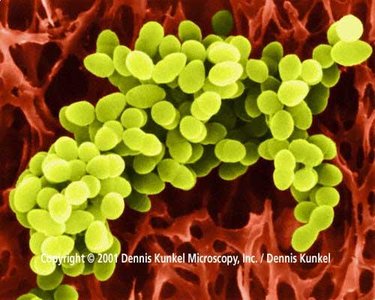
Bacteria: Unicellular, microscopic, prokaryotic organisms that reproduce by binary fission. Example: Staphylococcus aureus.
Fungi: Includes yeasts (unicellular, reproduce by budding) and molds (filamentous, reproduce by spores).
Viruses: Submicroscopic, acellular infectious particles with DNA or RNA genomes; replicate only inside host cells.
Protozoa: Unicellular, microscopic, eukaryotic organisms lacking a cell wall.
Algae: Eukaryotic microorganisms capable of photosynthesis.
Viruses: Unique Characteristics
Viruses are acellular and possess both living and nonliving characteristics, making them distinct from prokaryotes and eukaryotes.
Cannot be classified as prokaryotic or eukaryotic.
Require host cells for replication.
Microbial Cell Structure and Function
The Cell: Basic Unit of Life
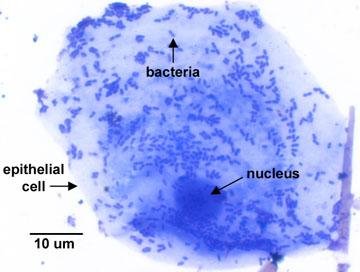
All living cells are divided into two groups based on their cellular structures: prokaryotic and eukaryotic.
Eukaryotic cells: Found in animals, plants, fungi, protozoans, and algae.
Prokaryotic cells: Found only in bacteria and archaea.
Prokaryotes vs. Eukaryotes
Prokaryotic cells are generally smaller and simpler than eukaryotic cells, with a higher surface-to-volume ratio for efficient nutrient diffusion. Eukaryotic cells require specialized organelles for metabolism and transport.
Both cell types carry out essential life processes.
Eukaryotic Cell Structure
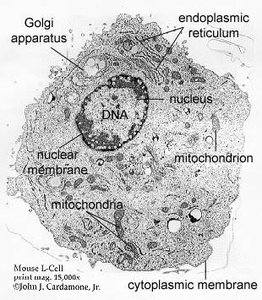
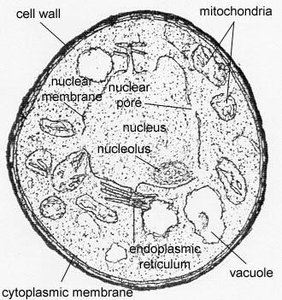
Eukaryotic cells contain membrane-bound organelles and a nucleus with linear chromosomes.
Nuclear membrane with pores connects to the endoplasmic reticulum.
Contains nucleolus and DNA associated with histone proteins.
Cell division occurs via mitosis and meiosis.
Prokaryotic Cell Structure
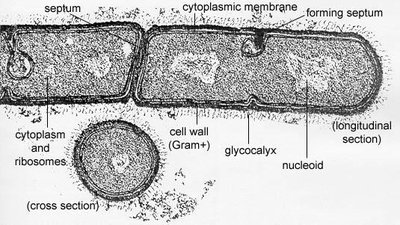
Prokaryotic cells lack membrane-bound organelles and have a nucleoid with circular DNA.
No nuclear membrane or nucleolus.
Cell division occurs by binary fission.
Usually haploid; no mitosis or meiosis.
Cell Membrane Structure
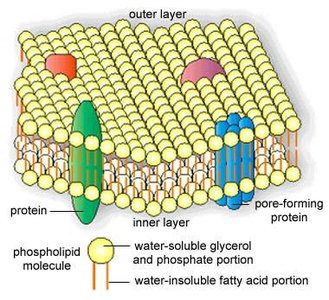
The cytoplasmic membrane is a fluid phospholipid bilayer. Eukaryotic membranes contain sterols and are capable of endocytosis and exocytosis, while prokaryotic membranes usually lack sterols and cannot perform these processes.
Cytoplasmic Structures
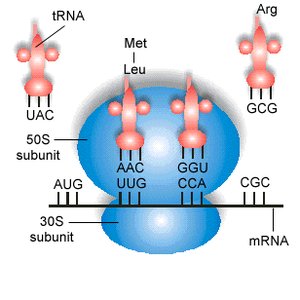
Key differences exist in ribosome structure and organelles between prokaryotes and eukaryotes.
Eukaryotic ribosomes: 80S (60S + 40S subunits).
Prokaryotic ribosomes: 70S (50S + 30S subunits).
Eukaryotes have internal organelles (mitochondria, chloroplasts, etc.), cytoskeleton, and mitotic spindle.
Prokaryotes lack internal organelles and mitotic spindle; may have actin-like proteins for cell shape.
Electron Transport Chains
Location of electron transport systems differs:
Eukaryotes: Inner membrane of mitochondria.
Prokaryotes: Cytoplasmic membrane.
Cell Wall Composition
Cell wall structure varies among domains:
Eukaryotes: Plant, algae, and fungi cell walls contain cellulose or chitin; never peptidoglycan.
Prokaryotes: Bacterial cell walls contain peptidoglycan; archaeal cell walls contain protein, complex carbohydrates, or unique molecules.
Locomotion
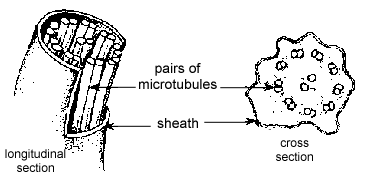
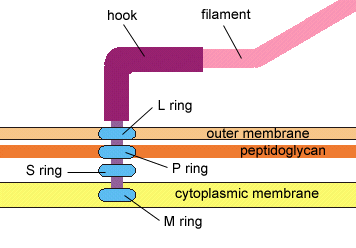
Cellular locomotion is achieved through flagella or cilia in eukaryotes, and flagella in prokaryotes.
Eukaryotic flagella: Distinct arrangement of sliding microtubules (2X9+2).
Prokaryotic flagella: Single, rotating fibril not surrounded by a membrane; no cilia.
Microbial Classification: Domains and Kingdoms
The Three Domain System
The Three Domain System, proposed by Woese, classifies life based on rRNA sequence differences, membrane lipid structure, and antibiotic sensitivity.
Domains: Archaea, Bacteria, Eukarya.
rRNA structure is highly conserved and useful for evolutionary comparisons.
Each domain represents a distinct evolutionary lineage.
Domain Characteristics
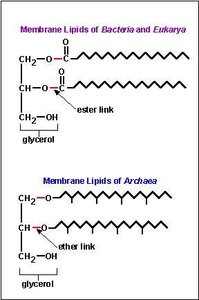
Archaea: Prokaryotic, unique membrane lipids (branched hydrocarbons, ether linkages), no peptidoglycan, often live in extreme environments.
Bacteria: Prokaryotic, unbranched fatty acids (ester linkages), peptidoglycan cell walls, sensitive to antibacterial antibiotics.
Eukarya: Eukaryotic, unbranched fatty acids (ester linkages), cell walls (if present) lack peptidoglycan, sensitive to antibiotics affecting eukaryotes.
Kingdoms of Life
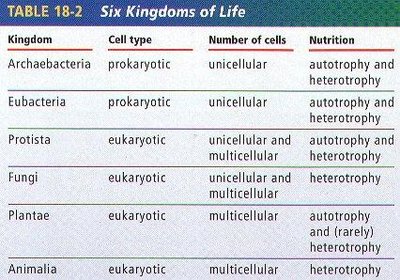
The Eukarya domain is subdivided into four kingdoms: Protista, Fungi, Plantae, and Animalia. Each kingdom is characterized by cell type, number of cells, and nutritional mode.
Protista: Simple, mostly unicellular eukaryotes (slime molds, algae, protozoans).
Fungi: Unicellular or multicellular eukaryotes with cell walls, absorb nutrients (yeasts, molds).
Plantae: Multicellular eukaryotes with cell walls, photosynthetic (mosses, ferns, flowering plants).
Animalia: Multicellular eukaryotes without cell walls, ingest nutrients (sponges, insects, vertebrates).
Kingdom | Cell type | Number of cells | Nutrition |
|---|---|---|---|
Archaebacteria | prokaryotic | unicellular | autotrophy and heterotrophy |
Eubacteria | prokaryotic | unicellular | autotrophy and heterotrophy |
Protista | eukaryotic | unicellular and multicellular | autotrophy and heterotrophy |
Fungi | eukaryotic | unicellular and multicellular | heterotrophy |
Plantae | eukaryotic | multicellular | autotrophy and (rarely) heterotrophy |
Animalia | eukaryotic | multicellular | heterotrophy |
Summary Table: Membrane Lipids
Membrane lipid structure is a key distinguishing feature among domains.
Bacteria and Eukarya: Membranes composed of unbranched fatty acid chains attached to glycerol by ester linkages.
Archaea: Membranes composed of branched hydrocarbon chains attached to glycerol by ether linkages.
Conclusion
This guide provides an overview of the microbial world, cell structure, and classification systems. Understanding these foundational concepts is essential for further study in microbiology, including microbial metabolism, genetics, and pathogenesis.
