 Back
BackChapter 8 - Microbial Genetics: Structure, Function, and Mutation
Study Guide - Smart Notes
 Tailored notes based on your materials, expanded with key definitions, examples, and context.
Microbial Genetics
Introduction to Genetics
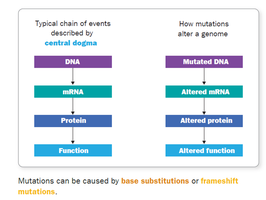
Genetics is the science of heredity, focusing on the study of genes, their replication, expression, and inheritance. In microbiology, understanding genetics is crucial for explaining how microorganisms function, adapt, and evolve. The central dogma of molecular biology describes the flow of genetic information from DNA to RNA to protein, which determines cellular function.
Gene: A segment of DNA that encodes a functional product, usually a protein.
Genome: The complete set of genetic information in a cell.
Chromosome: Structure containing DNA that carries hereditary information.
The Central Dogma and Genetic Flow
The central dogma outlines the typical chain of events in gene expression: DNA is transcribed into mRNA, which is then translated into protein. Mutations can disrupt this flow, leading to altered proteins and functions.
Key Points:
DNA is the blueprint for a cell’s proteins, including enzymes.
Genetic information can be transferred vertically (parent to offspring) or horizontally (between cells of the same generation).
Gene expression is regulated by operons, which can be inducible or repressible.
Structure and Function of Genetic Material
DNA and Chromosomes
Bacterial DNA is typically organized as a single, circular chromosome, which is highly compacted through supercoiling. Chromosomes contain both coding (genes) and noncoding regions (such as short tandem repeats, STRs).
Genotype: The genetic makeup of an organism.
Phenotype: The observable characteristics resulting from gene expression.
DNA Structure
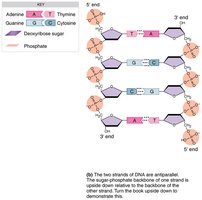
DNA is a double helix composed of nucleotides, each containing a deoxyribose sugar, a phosphate group, and a nitrogenous base (A, T, C, G). The two strands are antiparallel and held together by hydrogen bonds between complementary bases (A-T, C-G).
DNA Replication
Mechanism of Replication
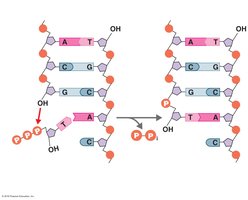
DNA replication is semiconservative, meaning each new DNA molecule contains one original and one new strand. The process involves several enzymes:
Helicase: Unwinds the DNA double helix.
DNA polymerase: Synthesizes new DNA strands by adding nucleotides in the 5' to 3' direction.
Primase: Synthesizes RNA primers to initiate DNA synthesis.
Ligase: Joins Okazaki fragments on the lagging strand.
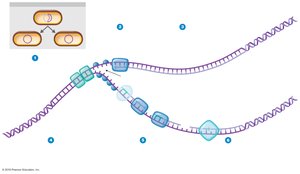
Replication is bidirectional in bacteria, with two replication forks moving away from the origin until they meet. Proofreading by DNA polymerase ensures high fidelity.
Energy for Replication
The energy required for DNA synthesis comes from the hydrolysis of nucleoside triphosphates (e.g., ATP), releasing pyrophosphate.
Gene Expression: Transcription and Translation
Transcription
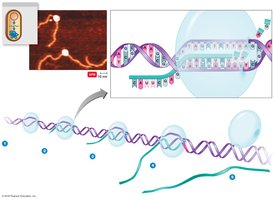
Transcription is the synthesis of a complementary mRNA strand from a DNA template. In prokaryotes, RNA polymerase binds to the promoter, synthesizes RNA in the 5' to 3' direction, and stops at the terminator sequence.
Translation
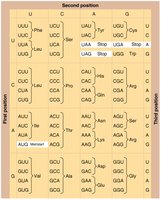
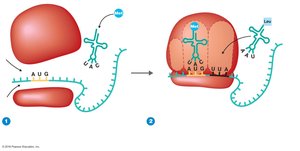
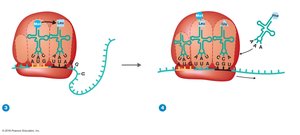
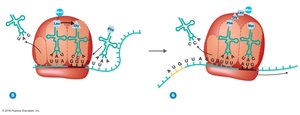
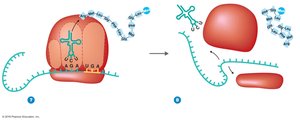
Translation is the process by which mRNA is decoded to synthesize proteins. It occurs in three stages: initiation, elongation, and termination. Codons (triplets of nucleotides) specify amino acids, and tRNA molecules bring the appropriate amino acids to the ribosome.
Start codon: AUG (methionine)
Stop codons: UAA, UAG, UGA
Degeneracy: Multiple codons can code for the same amino acid.
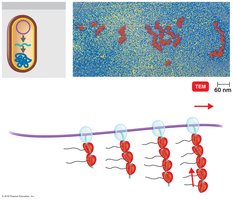
Simultaneous Transcription and Translation in Bacteria
In prokaryotes, translation can begin before transcription is complete, allowing rapid protein synthesis.
Transcription in Eukaryotes
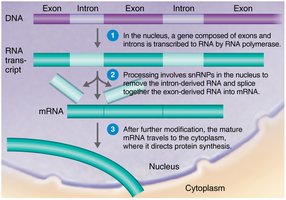
In eukaryotes, transcription occurs in the nucleus and translation in the cytoplasm. Genes contain exons (coding regions) and introns (noncoding regions). Introns are removed, and exons are spliced together by snRNPs before mRNA is exported to the cytoplasm.
Genetic Variation: Mutations
Types of Mutations
Mutations are permanent changes in the DNA sequence. They can be neutral, beneficial, or harmful. Mutagens are agents that cause mutations, while spontaneous mutations occur naturally.
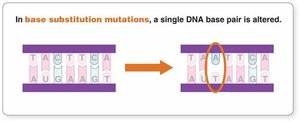
Base substitution (point mutation): A single base is changed, which may result in a different amino acid (missense), a stop codon (nonsense), or no effect (silent).
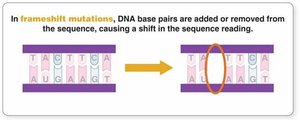
Frameshift mutation: Insertion or deletion of nucleotides shifts the reading frame, often resulting in nonfunctional proteins.
Effects of Mutations
Mutation Type | Description | Effect |
|---|---|---|
Missense | Base substitution changes one amino acid | May alter protein function |
Nonsense | Base substitution creates a stop codon | Premature termination of protein |
Frameshift | Insertion/deletion shifts reading frame | Usually nonfunctional protein |
Gene Regulation: Operons
Inducible and Repressible Operons
Operons are clusters of genes regulated together. Inducible operons are usually off but can be turned on by inducers, while repressible operons are usually on but can be turned off by corepressors.
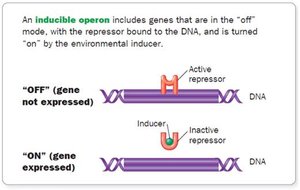
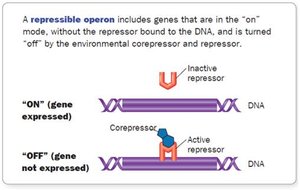
Inducible operon: Example is the lac operon, which is activated in the presence of lactose.
Repressible operon: Example is the trp operon, which is inhibited when tryptophan is abundant.
Genetic Transfer and Recombination
Vertical and Horizontal Gene Transfer
Genetic information can be transferred vertically (from parent to offspring) or horizontally (between cells of the same generation), contributing to genetic diversity and evolution in microbial populations.
Summary Table: Key Concepts in Microbial Genetics
Concept | Description |
|---|---|
Gene | Segment of DNA encoding a functional product |
Genome | All genetic information in a cell |
Mutation | Permanent change in DNA sequence |
Operon | Cluster of genes regulated together |
Transcription | Synthesis of RNA from DNA |
Translation | Synthesis of protein from mRNA |
