 Back
BackMicrobial Genetics: Structure, Function, and Regulation
Study Guide - Smart Notes
 Tailored notes based on your materials, expanded with key definitions, examples, and context.
Genetics in Microbiology
Heredity Basics
Genetics is the study of genes, their functions, and how variations arise in genomes. The genome is the entire collection of genetic material in a cell or virus. The genotype refers to the genetic makeup, while the phenotype is the observable physical and physiological traits determined by the genotype. Understanding heredity is fundamental to microbiology, as it explains how traits are passed and how genetic variation occurs.
Organization of Genetic Material
Cells and viruses organize their genetic material differently. Eukaryotic cells have numerous linear chromosomes housed in the nucleus, organized by histone proteins. Prokaryotic cells typically have 1–3 circular chromosomes located in the nucleoid region, organized by histone-like proteins. Many microorganisms also possess plasmids, small circular DNA molecules that replicate independently and often confer survival advantages such as antibiotic resistance.
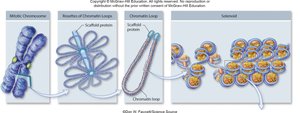
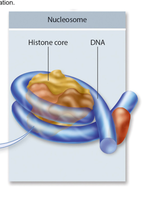
Structural Features of DNA and RNA
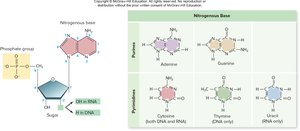
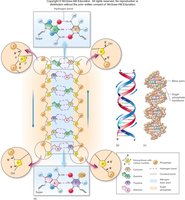
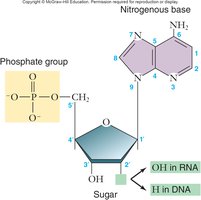
Both DNA and RNA are nucleic acids built from nucleotides, which consist of a phosphate group, a sugar (deoxyribose in DNA, ribose in RNA), and a nitrogenous base. DNA is double-stranded and forms a double helix, while RNA is usually single-stranded and can fold into complex structures. The directionality of nucleotides (5' to 3') is crucial for the formation of phosphodiester bonds and for processes such as replication and transcription.
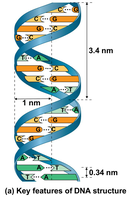
DNA and RNA: Nitrogenous Bases
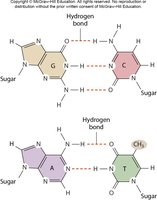
Nitrogenous bases are classified as purines (adenine, guanine) and pyrimidines (cytosine, thymine, uracil). In DNA, adenine pairs with thymine (2 hydrogen bonds), and guanine pairs with cytosine (3 hydrogen bonds). In RNA, uracil replaces thymine.
Central Dogma of Molecular Biology
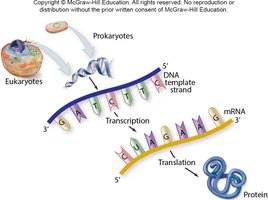
The flow of genetic information follows the central dogma: DNA directs the production of RNA, and RNA directs the assembly of proteins. This process is essential for cell structure and function.
DNA Replication
Mechanism and Enzymes
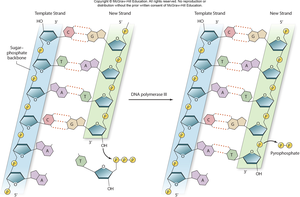
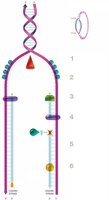
DNA replication is the process by which a cell copies its genome before division. It involves unwinding the DNA, copying each strand, and rewinding the new and parent strands. The process is highly accurate due to complementary base-pairing and proofreading by DNA polymerases. Key enzymes include helicase (unwinds DNA), primase (lays down RNA primers), DNA polymerase III (builds new DNA), DNA polymerase I (replaces RNA primers), ligase (joins DNA fragments), and gyrase/topoisomerase (relieves tension).
Leading and Lagging Strands
Due to the antiparallel nature of DNA, replication occurs differently on each strand. The leading strand is synthesized continuously toward the replication fork, while the lagging strand is synthesized discontinuously in fragments called Okazaki fragments, which are later joined by ligase.
Differences in Prokaryotic and Eukaryotic Replication
Prokaryotes typically have a single origin of replication, while eukaryotes have multiple origins. Eukaryotic replication is slower and involves more protein factors.
Protein Synthesis (Gene Expression)
Transcription
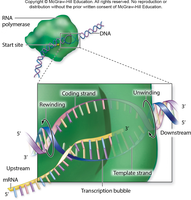
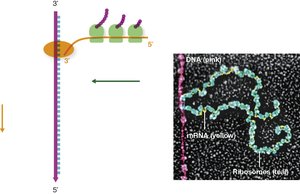
Transcription is the process of synthesizing RNA from a DNA template. It occurs in three steps: initiation (RNA polymerase binds to promoter), elongation (RNA polymerase synthesizes RNA), and termination (RNA polymerase releases the RNA transcript). In eukaryotes, transcription occurs in the nucleus; in prokaryotes, it occurs in the cytoplasm.
RNA Types and Functions
Three main types of RNA are involved in protein synthesis: messenger RNA (mRNA) carries codons, transfer RNA (tRNA) brings amino acids to the ribosome, and ribosomal RNA (rRNA) forms the core of ribosomes. Other small RNAs regulate gene expression.
Translation
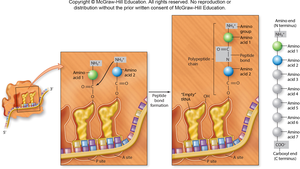
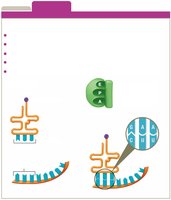
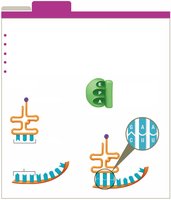
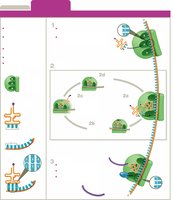
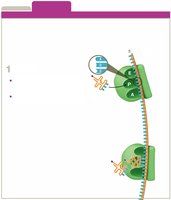
Translation is the process by which ribosomes decode mRNA to build proteins. It consists of initiation (ribosome binds mRNA and start codon), elongation (tRNAs bring amino acids, peptide bonds form), and termination (ribosome reaches stop codon and releases protein). The genetic code is redundant and exhibits wobble, allowing some mutations without altering protein function.
Post-Translational Modifications
Proteins often require modifications after translation, such as trimming, addition of organic/inorganic factors, or phosphorylation, to become functional.
Regulation of Protein Synthesis
Gene Regulation
Cells regulate protein synthesis at pre-transcriptional and post-transcriptional levels. Constitutive genes are always expressed, while facultative genes are expressed in response to environmental changes. Regulation involves transcription factors, operons, epigenetic modifications, and quorum sensing.
Operons
Operons are collections of genes controlled by a shared regulatory element, common in prokaryotes. Inducible operons (e.g., lac operon) are activated under specific conditions, while repressible operons (e.g., arg operon) are turned off when their product is abundant.
Epigenetic Regulation
Epigenetic modifications, such as DNA methylation, alter gene expression without changing the DNA sequence. These modifications play roles in development, disease, and adaptation.
Quorum Sensing
Bacteria use quorum sensing to regulate gene expression in response to population density, important for biofilm formation and survival.
Post-Transcriptional Regulation
Small noncoding RNAs and riboswitches can limit protein synthesis by affecting mRNA stability or translation efficiency.
Mutations and Genetic Variation
Types of Mutations
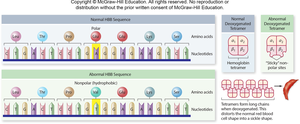
Mutations are changes in the nucleotide sequence and are the driving force of evolution. They can be spontaneous (random errors) or induced (caused by mutagens). Main types include substitutions, insertions, and deletions. Effects include silent, missense, nonsense, and frameshift mutations.
Mutation Effects
Silent mutations: No change in protein sequence.
Missense mutations: Change in amino acid, may affect protein function.
Nonsense mutations: Introduce stop codon, resulting in incomplete protein.
Frameshift mutations: Insertions/deletions shift reading frame, often producing nonfunctional proteins.
Mutagenesis and Carcinogenesis
Mutagens increase mutation rates; carcinogens are mutagens that promote cancer. The Ames test is used to identify mutagenic compounds by measuring mutation rates in bacteria.
DNA Repair Mechanisms
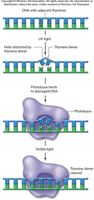
DNA polymerases proofread and repair errors during replication. Excision repair mechanisms fix damaged or mismatched nucleotides, especially those caused by UV-induced thymine dimers.
Genetic Variation Without Sexual Reproduction
Horizontal and Vertical Gene Transfer
Vertical gene transfer passes genetic information to the next generation via cell division. Horizontal gene transfer allows genetic information to be shared between cells independently of division, increasing genetic diversity.
Mechanisms of Horizontal Gene Transfer
Conjugation: Transfer of plasmids via pili, often conferring antibiotic resistance.
Transformation: Uptake of DNA from the environment by competent cells.
Transduction: Introduction of new genetic material by viruses (bacteriophages).
Transposons: "Jumping genes" that move within the genome, contributing to genetic variation.
Clinical Relevance
Genetic Disorders and Mutations
Mutations in specific genes, such as the CFTR gene in cystic fibrosis, can lead to disease. The severity of genetic disorders depends on the type and location of mutations. Understanding genetic regulation and mutation effects is crucial for developing therapies and managing infections, especially in cases involving biofilms and antibiotic resistance.
Summary Table: DNA vs RNA
Feature | DNA | RNA |
|---|---|---|
Strands | Double | Single |
Sugar | Deoxyribose | Ribose |
Bases | A, T, G, C | A, U, G, C |
Location | Nucleus (eukaryotes), nucleoid (prokaryotes) | Cytoplasm, nucleus |
Function | Genetic storage | Protein synthesis, regulation |
Summary Table: Types of Mutations
Type | Description | Effect |
|---|---|---|
Silent | Base change, no amino acid change | Neutral |
Missense | Base change, wrong amino acid | Variable |
Nonsense | Base change, stop codon | Usually detrimental |
Frameshift | Insertion/deletion, reading frame shift | Often nonfunctional protein |
