 Back
BackMicrobial Genetics: Structure, Replication, Expression, and Regulation
Study Guide - Smart Notes
 Tailored notes based on your materials, expanded with key definitions, examples, and context.
Microbial Genetics
Genetics and Genomes
The study of genetics involves understanding inheritance and inheritable traits as expressed in an organism’s genetic material. The genome is the entire genetic complement of an organism, including its genes and nucleotide sequences.
Genetics: Study of inheritance and expression of traits.
Genome: All genetic material, including genes and non-coding sequences.
The Structure of Nucleic Acids
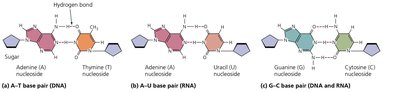
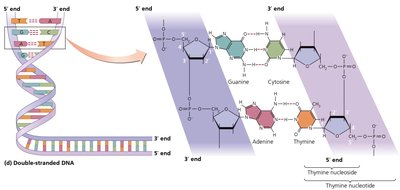
Nucleic acids are polymers of nucleotides, each consisting of a phosphate group, a pentose sugar, and a nitrogenous base. DNA and RNA differ in their nitrogenous bases and sugars.
Nucleotide: Phosphate (hydrophilic), pentose sugar (hydrophilic), nitrogenous base (hydrophobic).
Base Pairing: Adenine pairs with Thymine (DNA) or Uracil (RNA); Guanine pairs with Cytosine.
Antiparallel Structure: DNA strands run in opposite directions (5’ to 3’ and 3’ to 5’).
Length: Expressed in base pairs (bp).
Prokaryotic Genomes
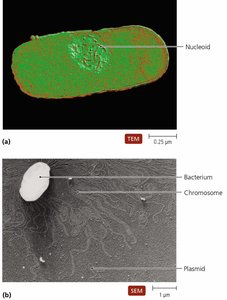
Prokaryotic genomes are typically housed in circular chromosomes located in the nucleoid. Prokaryotes are haploid, possessing a single chromosome copy. Some prokaryotes also contain plasmids, which are small, circular DNA molecules that replicate independently and can confer survival advantages.
Chromosome: Main DNA molecule, circular, in nucleoid.
Plasmids: Non-essential, confer advantages (e.g., resistance, virulence).
Archaea: DNA with histones.
Eukaryotic Genomes
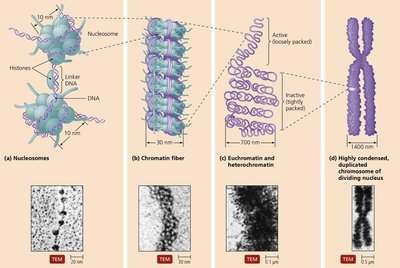
Eukaryotic genomes are typically linear and located in the nucleus. Eukaryotes are often diploid and their DNA is associated with histones, forming nucleosomes and chromatin fibers. Chromatin can be loosely packed (euchromatin) or tightly packed (heterochromatin).
Nuclear Chromosomes: Linear, multiple per cell, diploid.
Histones: DNA packaging into nucleosomes.
Euchromatin vs. Heterochromatin: Active vs. inactive chromatin.
Extranuclear Chromosomes
Mitochondria and chloroplasts contain their own DNA, resembling prokaryotic chromosomes. Some fungi, algae, and protozoa carry plasmids.
Mitochondrial/Chloroplast DNA: Codes for a small fraction of proteins and RNA.
Plasmids in Eukaryotes: Example: Saccharomyces cerevisiae with 2-um circle plasmid.
Comparison of Microbial Genomes
Feature | Bacteria | Archaea | Eukarya |
|---|---|---|---|
Number of Chromosomes | Single (haploid) or more | One (haploid) | Two or more, typically diploid |
Plasmids Present? | In some cells; often multiple | In some cells | In some fungi, algae, protozoa |
Type of Nucleic Acid | Circular/linear dsDNA | Circular dsDNA | Linear dsDNA (nucleus), circular dsDNA (mitochondria/plasmids) |
Location of DNA | Nucleoid, plasmids | Nucleoid, plasmids | Nucleus, mitochondria, chloroplasts, plasmids |
Histones Present? | No (some nonhistone proteins) | Yes | Yes (nuclear chromosomes) |
DNA Replication
Semiconservative Replication
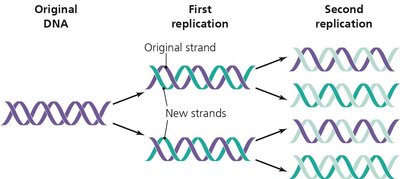
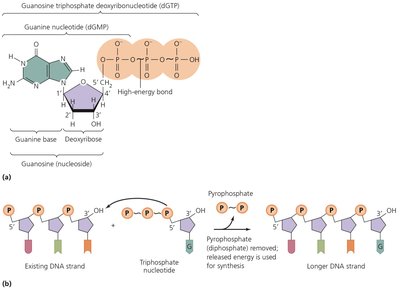
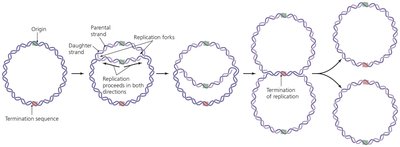
DNA replication is semiconservative, meaning each new DNA molecule consists of one original strand and one new strand. The process requires triphosphate deoxyribonucleotides, which serve as both monomers and energy sources.
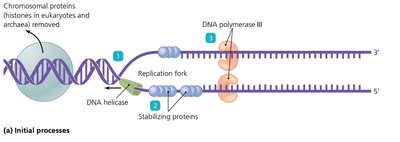
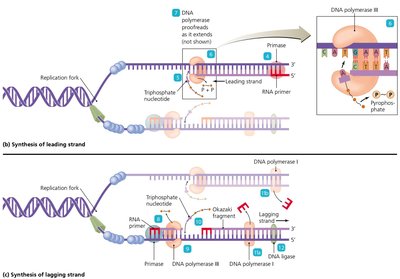
Key Enzymes: DNA helicase, stabilizing proteins, DNA polymerase III.
Direction: DNA polymerase synthesizes DNA only in the 5’ to 3’ direction.
Leading vs. Lagging Strand: Leading strand synthesized continuously; lagging strand synthesized discontinuously (Okazaki fragments).
Bidirectional Replication in Prokaryotes
Replication proceeds bidirectionally from a single origin, creating two replication forks. Gyrases and topoisomerases remove supercoils in DNA.
DNA Methylation
Methylation of DNA serves several functions: control of genetic expression, initiation of replication, protection against viral infection, and DNA repair.
Eukaryotic DNA Replication
Eukaryotic DNA replication is similar to bacterial replication but involves multiple origins, four DNA polymerases, and shorter Okazaki fragments. Only cytosine bases are methylated in plants and animals.
Genotype and Phenotype
Relationship Between Genotype and Phenotype
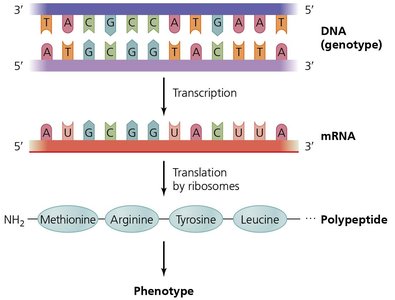
The genotype is the set of genes in the genome, while the phenotype is the physical and functional traits of the organism. Genotype determines phenotype through gene expression.
Transfer of Genetic Information
Transcription
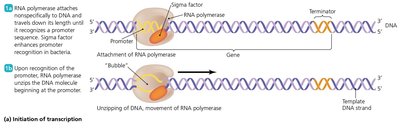
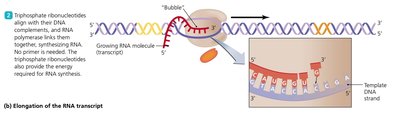
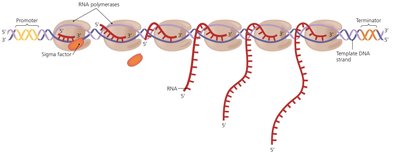
Transcription is the process by which RNA is synthesized from a DNA template. In prokaryotes, it occurs in three steps: initiation, elongation, and termination.
Initiation: RNA polymerase binds to promoter, aided by sigma factor.
Elongation: RNA polymerase synthesizes RNA in the 5’ to 3’ direction.
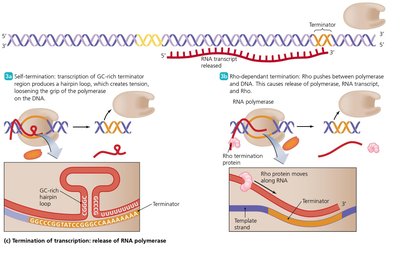
Termination: RNA polymerase and RNA are released by self-terminating or Rho-dependent mechanisms.
Transcriptional Differences in Eukaryotes
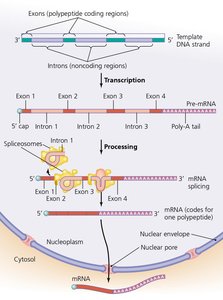
Eukaryotic transcription occurs in the nucleus, mitochondria, and chloroplasts. mRNA is processed before translation: capping, polyadenylation, and splicing (removal of introns).
Translation
Genetic Code and Translation
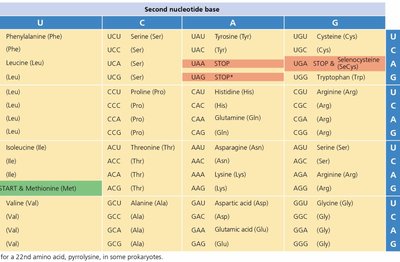
Translation is the process by which ribosomes use the genetic information in mRNA to synthesize polypeptides. The genetic code is redundant and nearly universal.
Codons: Triplets of nucleotides specifying amino acids.
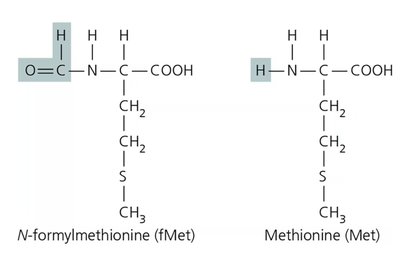
Start Codon: AUG (codes for N-formylmethionine in prokaryotes, methionine in eukaryotes).
Participants: mRNA, tRNA, rRNA.
Transfer RNA (tRNA)
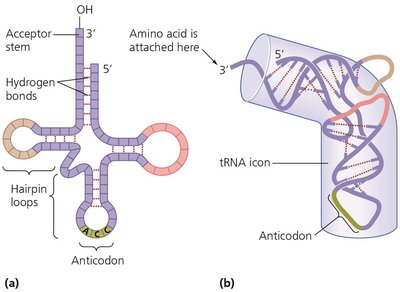
tRNA molecules carry specific amino acids to the ribosome. Each tRNA has an anticodon and an acceptor stem for the corresponding amino acid.
Ribosomal Structure
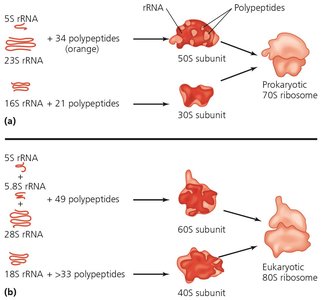
Prokaryotic ribosomes are 70S, composed of 50S and 30S subunits. Eukaryotic ribosomes are 80S, composed of 60S and 40S subunits.
Events in Translation
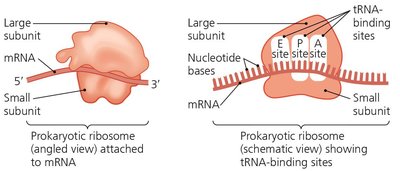
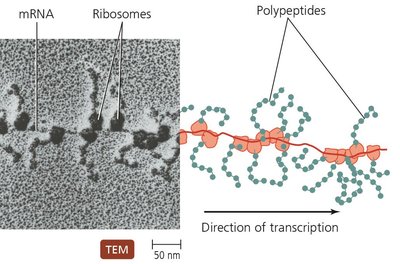
Translation occurs in three stages: initiation, elongation, and termination. Each stage requires protein factors and energy (GTP).
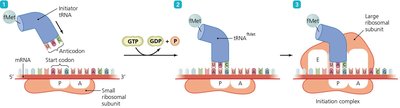
Initiation: Small ribosomal subunit binds mRNA, initiator tRNA binds P site, large subunit joins.
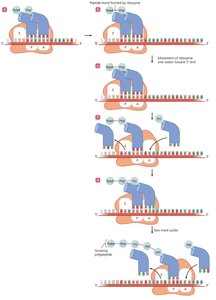
Elongation: tRNA delivers amino acid to A site, peptide bond forms, ribosome moves, tRNA exits E site.
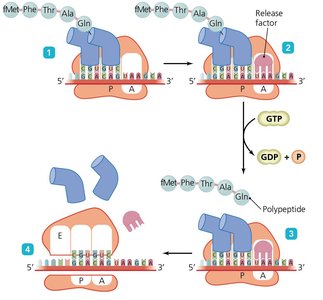
Termination: Release factors halt elongation, polypeptide released, ribosome dissociates.
Comparison of Genetic Processes
Process | Enzyme | Template | Start Site | Fidelity Mechanism | Termination | Location | Product | Energy Source | Direction |
|---|---|---|---|---|---|---|---|---|---|
Replication | DNA polymerases | Both DNA strands | Origin | Proofreading, mismatch repair | Termination sequences | Cytosol (prokaryotes), nucleus (eukaryotes) | Two daughter DNA strands | Deoxyribonucleotides | 5' to 3' |
Transcription | RNA polymerases | One DNA strand | Promoter | None | Terminator | Cytosol (prokaryotes), nucleolus (eukaryotes) | RNA | Ribonucleotides | 5' to 3' |
Translation | Ribosomes | mRNA | AUG start codon | tRNA charging specificity | Stop codons (UAA, UAG, UGA) | Cytosol or RER (eukaryotes) | Polypeptides | GTP, ATP | N to C terminus |
Regulation of Genetic Expression
Gene Regulation and Operons
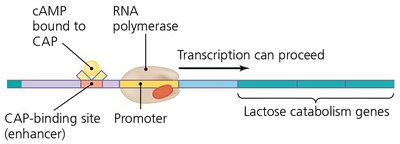
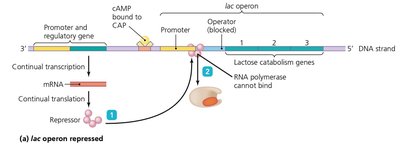
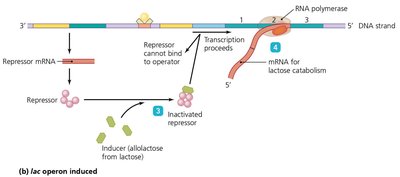
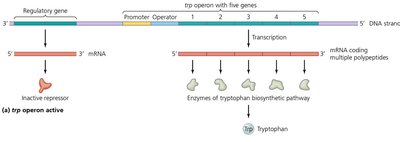
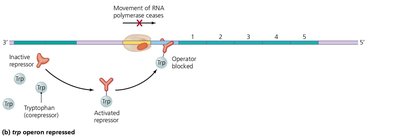
Most genes are constitutive, expressed at all times. Other genes are regulated to conserve energy, typically by halting transcription or translation. Prokaryotic operons consist of a promoter, operator, and a series of genes, controlled by regulatory elements.

Inducible and Repressible Operons
Inducible operons (e.g., lac operon) are activated by inducers and regulate catabolic pathways. Repressible operons (e.g., trp operon) are deactivated by repressors and regulate anabolic pathways.
Type of Regulation | Pathway Regulated | Regulating Condition |
|---|---|---|
Inducible Operons | Catabolic | Presence of substrate |
Repressible Operons | Anabolic | Presence of product |
RNA Regulation
Regulatory RNAs (miRNA, siRNA, riboswitches) can control translation by binding mRNA and preventing translation or by cutting mRNA.
Mutations
Types and Effects of Mutations
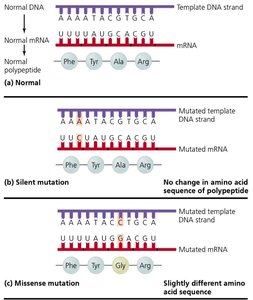
Mutations are changes in the nucleotide base sequence of a genome. They are usually deleterious but can occasionally improve survival. Types include point mutations (substitution, insertion, deletion) and gross mutations (inversions, duplications, transpositions).
Type | Description | Effects |
|---|---|---|
Substitution | Replacement of one base pair | Silent, missense, or nonsense mutation |
Frameshift (insertion) | Addition of nucleotides | Missense, nonsense mutations |
Frameshift (deletion) | Removal of nucleotides | Missense, nonsense mutations |
Mutagenesis
Mutations occur naturally or can be induced by mutagens such as radiation (ionizing and nonionizing) and chemicals (nucleotide analogs, nucleotide-altering chemicals, frameshift mutagens).
DNA Repair
Repair Mechanisms
Cells employ direct repair, single-strand repair, and error-prone repair mechanisms to fix DNA damage.
Direct Repair: Corrects damage to nucleotides in one strand.
Base-excision Repair: Removes and replaces incorrect bases.
Light Repair: Photolyase repairs pyrimidine dimers.
Mismatch Repair: Enzymes scan newly synthesized DNA for mismatches.
Error-Prone Repair: SOS response introduces mutations to salvage DNA.
Identifying Mutants, Mutagens, and Carcinogens
Methods
Positive Selection: Selects mutants by eliminating wild-type phenotype.
Negative Selection: Isolates auxotrophs requiring different nutrients.
Ames Test: Screens for mutagens using revertant colonies in mutant Salmonella.
Genetic Recombination and Transfer
Horizontal Gene Transfer in Prokaryotes
Horizontal gene transfer involves the exchange of genetic material between cells, including transformation (uptake of free DNA), transduction (transfer via virus), and conjugation (cell-to-cell contact via pili).
Mechanism | Requirements |
|---|---|
Transformation | Free DNA, competent recipient |
Transduction | Bacteriophage |
Conjugation | Cell contact, F plasmid |
Transposons
Transposons are DNA segments that move from one location to another, causing frameshift insertions. They contain palindromic sequences and can carry additional genes (e.g., antibiotic resistance).
Insertion Sequences: Simplest transposons, contain only transposase gene.
Complex Transposons: Carry additional genes unrelated to transposition.
