 Back
BackChapter 6 - Microbial Growth: Requirements, Culture, and Measurement
Study Guide - Smart Notes
 Tailored notes based on your materials, expanded with key definitions, examples, and context.
Microbial Growth
Physical and Chemical Requirements for Growth
Microbial growth refers to the increase in the number of cells, not cell size. The requirements for growth are divided into physical and chemical factors, which determine the ability of microorganisms to survive and multiply in various environments.
Physical requirements:
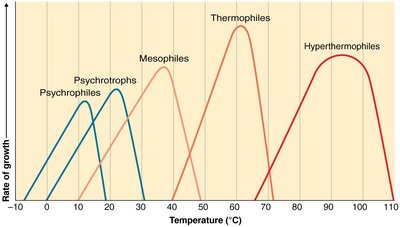
Temperature: Microorganisms have minimum, optimum, and maximum growth temperatures. They are classified as psychrophiles (cold-loving), mesophiles (moderate-temperature-loving), thermophiles (heat-loving), and hyperthermophiles (extreme heat-loving).
pH: Most bacteria grow between pH 6.5 and 7.5; molds and yeasts prefer pH 5–6. Acidophiles thrive in acidic environments.
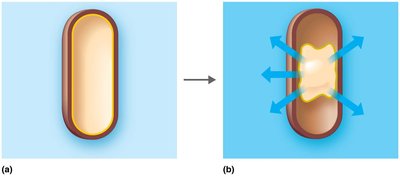
Osmotic pressure: Hypertonic environments cause plasmolysis. Extreme or obligate halophiles require high salt concentrations, while facultative halophiles tolerate them.
Chemical requirements:
Carbon: Essential for all organic molecules. Chemoheterotrophs use organic carbon sources; autotrophs use CO2.
Nitrogen, sulfur, and phosphorus: Needed for proteins, nucleic acids, ATP, and cell membranes. Bacteria obtain these elements from decomposition, inorganic compounds, or nitrogen fixation.
Trace elements: Required in small amounts, often as enzyme cofactors (e.g., iron, copper, zinc).
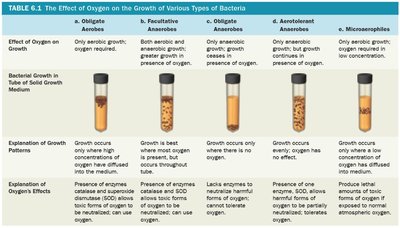
Oxygen: Microorganisms vary in their oxygen requirements and tolerance.
Organic growth factors: Vitamins, amino acids, purines, and pyrimidines that some microbes cannot synthesize.
Temperature and Microbial Growth
Microorganisms are classified based on their temperature preferences:
Psychrophiles: Grow at low temperatures (optimum ~15°C).
Psychrotrophs: Grow between 0°C and 30°C; cause food spoilage.
Mesophiles: Optimum growth at 25–40°C; most human pathogens.
Thermophiles: Optimum growth at 50–60°C; found in hot springs and compost.
Hyperthermophiles: Optimum growth above 80°C; found in extreme environments.
Osmotic Pressure and Plasmolysis
Osmotic pressure affects microbial growth. In hypertonic environments, water leaves the cell, causing plasmolysis and inhibiting growth. Halophiles require or tolerate high salt concentrations.
Oxygen Requirements
Microorganisms are classified by their oxygen requirements:
Obligate aerobes: Require oxygen for growth.
Facultative anaerobes: Can grow with or without oxygen, using fermentation or anaerobic respiration when oxygen is absent.
Obligate anaerobes: Cannot tolerate oxygen.
Aerotolerant anaerobes: Tolerate oxygen but do not use it.
Microaerophiles: Require low oxygen concentrations.
Type | Growth Pattern | Explanation |
|---|---|---|
Obligate Aerobes | Only aerobic growth; oxygen required | Growth occurs only where high concentrations of oxygen have diffused into the medium |
Facultative Anaerobes | Both aerobic and anaerobic growth; greater growth in presence of oxygen | Growth is best where most oxygen is present, but occurs throughout tube |
Obligate Anaerobes | Only anaerobic growth; ceases in presence of oxygen | Growth occurs only where there is no oxygen |
Aerotolerant Anaerobes | Only anaerobic growth; but continues in presence of oxygen | Growth occurs evenly; oxygen has no effect |
Microaerophiles | Only aerobic growth; oxygen required in low concentration | Growth occurs only where a low concentration of oxygen has diffused into medium |
Biofilms
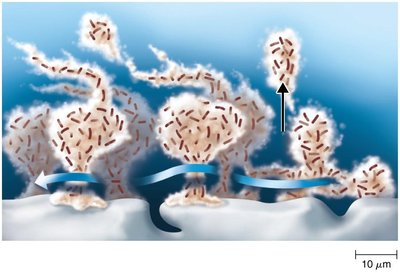
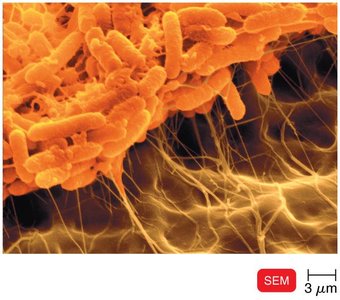
Biofilms are complex microbial communities that form slime or hydrogels adhering to surfaces. They communicate via quorum sensing, share nutrients, and provide protection from environmental hazards. Biofilms are found in natural and artificial environments and are highly resistant to microbicides.
Biofilms can clog pipes and are involved in 70% of infections (e.g., catheters, heart valves, dental caries).
Culture Media and Techniques
Types of Culture Media
Culture media are nutrient solutions used to grow microorganisms in the laboratory. They can be classified as:
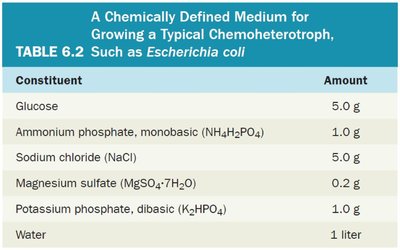
Chemically defined media: Exact chemical composition is known; used for fastidious organisms.
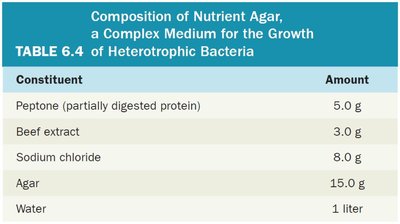
Complex media: Contains extracts and digests of natural products; composition varies.
Reducing media: Used for anaerobic bacteria; contains chemicals to remove oxygen.
Selective media: Suppresses unwanted microbes and encourages desired ones.
Differential media: Distinguishes colonies of different microbes.
Enrichment media: Increases numbers of desired microbes to detectable levels.
Type | Purpose |
|---|---|
Chemically Defined | Growth of chemoautotrophs and photoautotrophs; microbiological assays |
Complex | Growth of most chemoheterotrophic organisms |
Reducing | Growth of obligate anaerobes |
Selective | Suppression of unwanted microbes; encouraging desired microbes |
Differential | Differentiation of colonies of desired microbes from others |
Enrichment | Similar to selective media but designed to increase numbers of desired microbes to detectable levels |
Anaerobic Culture Methods
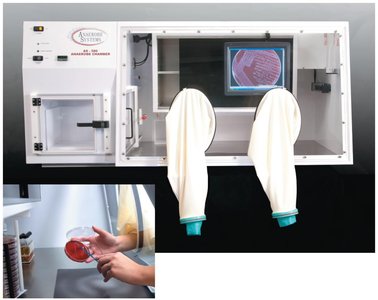
Anaerobic bacteria require special media and conditions to grow. Reducing media contain chemicals that remove oxygen. Anaerobic jars and chambers are used to cultivate these organisms.

Biosafety Levels
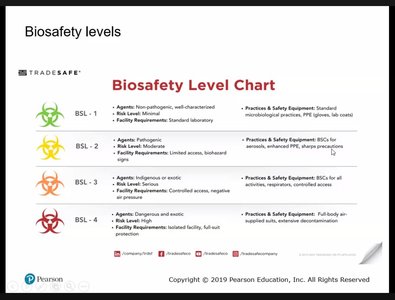
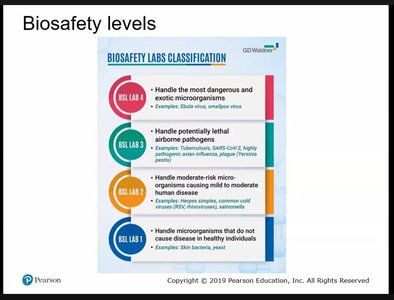
Biosafety levels (BSL) are standards for laboratory safety based on the risk posed by the microorganisms handled:
BSL-1: Basic teaching labs; no special precautions.
BSL-2: Lab coat, gloves, eye protection.
BSL-3: Biosafety cabinets to prevent airborne transmission.
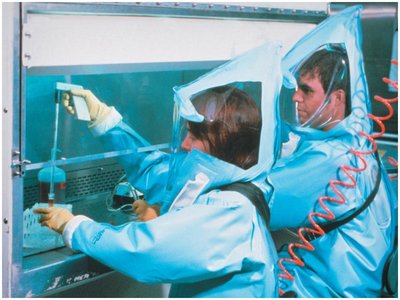
BSL-4: Sealed, negative pressure; "hot zone"; full-body suits; exhaust air filtered twice through HEPA filters.
Selective and Differential Media
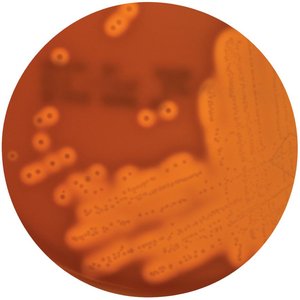
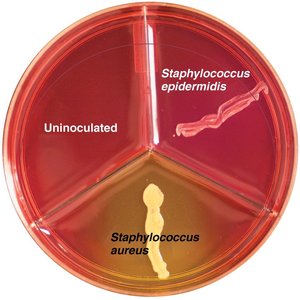
Selective media contain inhibitors to suppress unwanted microbes, while differential media allow distinguishing colonies of different microbes. Some media possess both properties.
Obtaining Pure Cultures
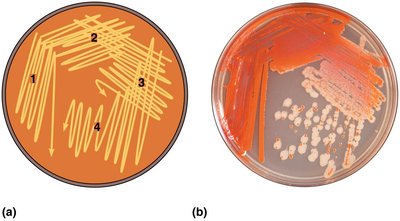
A pure culture contains only one species or strain. Colonies arise from a single cell or group of attached cells and are called colony-forming units (CFUs). The streak plate method is used to isolate pure cultures.
Preserving Bacterial Cultures
Bacterial cultures can be preserved by deep-freezing (–50°C to –95°C) or lyophilization (freeze-drying at –54°C to –72°C).
Bacterial Division and Growth
Binary Fission
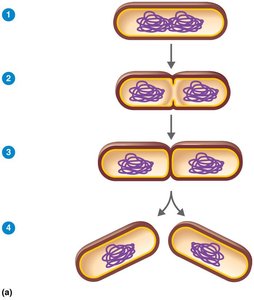
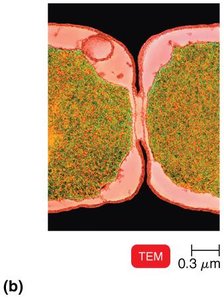
Bacteria reproduce primarily by binary fission, a process in which a cell divides into two identical daughter cells. Some bacteria reproduce by budding.
Generation Time and Growth Curves
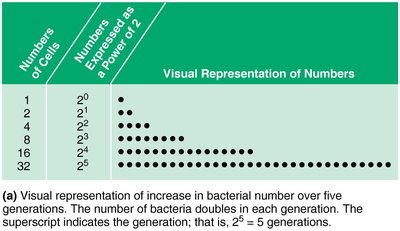
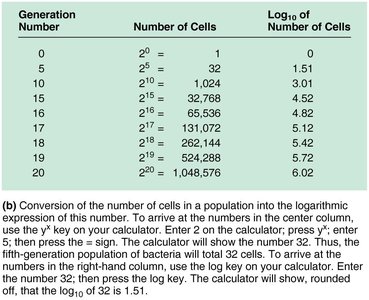
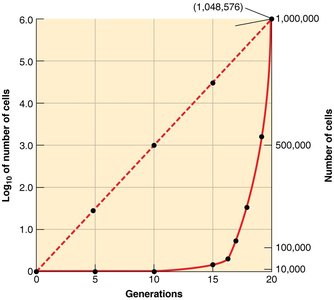
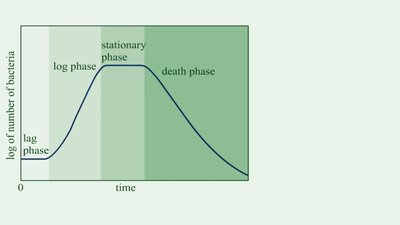
Generation time is the time required for a cell to divide, typically 20 minutes to 24 hours. Binary fission doubles the number of cells each generation. Growth curves are represented logarithmically.
Formula:
Phases of Growth
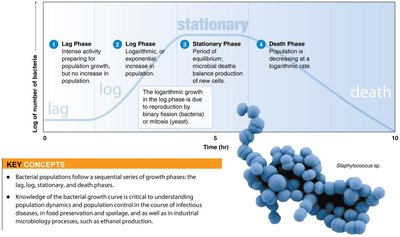
Bacterial populations follow a sequential series of growth phases:
Lag phase: Intense activity preparing for population growth, but no increase in population.
Log phase: Exponential increase in population.
Stationary phase: Period of equilibrium; microbial deaths balance production of new cells.
Death phase: Population decreases as cells die logarithmically.
Measurement of Microbial Growth
Direct Measurement Methods
Direct methods count microbial cells:
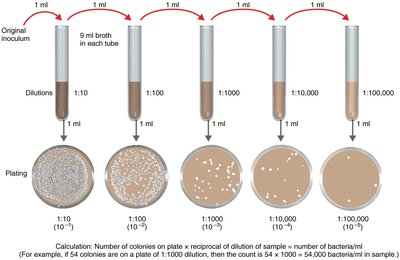
Plate count: Count colonies on plates with 30–300 CFUs; requires serial dilution.
Filtration: Solution passed through a filter that collects bacteria, which are then grown on a Petri dish.
Most probable number (MPN): Multiple tube test; count positive tubes and compare with a statistical table.
Direct microscopic count: Uses a Petroff-Hausser cell counter; calculates average number of bacteria per viewing field.
Indirect Measurement Methods
Indirect methods estimate bacterial numbers:
Turbidity: Measurement of cloudiness with a spectrophotometer.
Metabolic activity: Amount of metabolic product is proportional to the number of bacteria.
Dry weight: Bacteria are filtered, dried, and weighed; used for filamentous organisms.
