 Back
BackMicrobial Growth: Requirements, Media, and Measurement
Study Guide - Smart Notes
 Tailored notes based on your materials, expanded with key definitions, examples, and context.
Microbial Growth
Physical Requirements for Microbial Growth
Microbial growth is influenced by several physical factors, including temperature, pH, and osmotic pressure. Each microorganism has specific requirements for optimal growth.
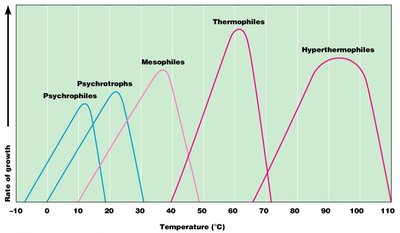
Temperature: Microbes are classified based on their preferred temperature ranges:
Psychrophiles: Grow best at cold temperatures (−10°C to 20°C).
Psychrotrophs: Grow between 0°C and 20–30°C; often responsible for food spoilage.
Mesophiles: Grow best at moderate temperatures (20°C to 45°C); most human pathogens are mesophiles.
Thermophiles: Thrive at higher temperatures (50°C to 60°C).
Hyperthermophiles: Grow at extremely high temperatures (80°C to 110°C).
pH: Most bacteria grow between pH 6.5 and 7.5. Molds and yeasts prefer slightly acidic conditions (pH 5–6). Acidophiles can grow in highly acidic environments.
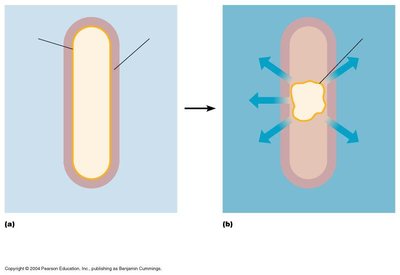
Osmotic Pressure: High salt or sugar concentrations can cause plasmolysis in most cells. Facultative halophiles tolerate high osmotic pressure, while extreme or obligate halophiles require it.
Chemical Requirements for Microbial Growth
Microorganisms require various chemical elements for growth, including carbon, nitrogen, sulfur, phosphorus, trace elements, and organic growth factors.
Carbon: Essential for all organic molecules. Chemoheterotrophs use organic carbon sources, while autotrophs fix CO2 from the atmosphere.
Nitrogen: Needed for amino acids and proteins. Most bacteria obtain nitrogen by decomposing proteins, using NH4+ or NO3−, or fixing atmospheric N2.
Sulfur: Found in amino acids, thiamine, and biotin. Bacteria may use SO42− or H2S as sulfur sources.
Phosphorus: Important for DNA, RNA, ATP, and phospholipids. Provided as PO43−.
Trace Elements: Inorganic elements (e.g., iron, copper, zinc) required in small amounts, usually as enzyme cofactors.
Organic Growth Factors: Compounds that microbes cannot synthesize and must obtain from the environment (e.g., vitamins, amino acids, purines, pyrimidines).
Culture Media
Culture media provide the nutrients necessary for microbial growth in the laboratory. Media can be classified based on their chemical composition and purpose.
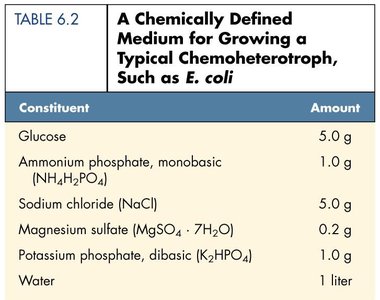
Chemically Defined Media: The exact chemical composition is known. Used for specific research and for growing fastidious organisms.
Complex Media: Contain extracts and digests of yeasts, meat, or plants; the exact composition is not known. Examples include nutrient broth and nutrient agar.
Constituent | Amount |
|---|---|
Glucose | 5.0 g |
Ammonium phosphate, monobasic (NH4H2PO4) | 1.0 g |
Sodium chloride (NaCl) | 5.0 g |
Magnesium sulfate (MgSO4·7H2O) | 0.2 g |
Potassium phosphate, dibasic (K2HPO4) | 1.0 g |
Water | 1 liter |
Constituent | Amount |
|---|---|
Peptone (partially digested protein) | 5.0 g |
Beef extract | 3.0 g |
Sodium chloride | 8.0 g |
Agar | 15.0 g |
Water | 1 liter |
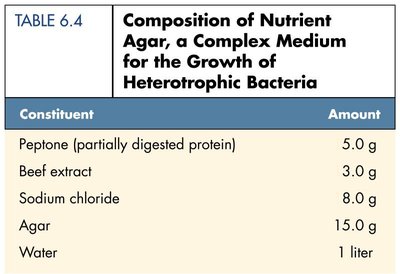
Agar is a complex polysaccharide used as a solidifying agent in culture media. It is not metabolized by most microbes and remains solid at incubation temperatures.
Oxygen Requirements and Toxic Forms of Oxygen
Microorganisms vary in their oxygen requirements and their ability to detoxify reactive oxygen species.
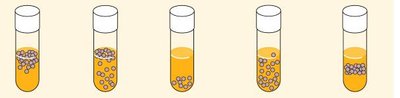
Obligate aerobes: Require oxygen for growth.
Facultative anaerobes: Can grow with or without oxygen but grow better with it.
Obligate anaerobes: Cannot tolerate oxygen.
Aerotolerant anaerobes: Do not use oxygen but can tolerate its presence.
Microaerophiles: Require low levels of oxygen.
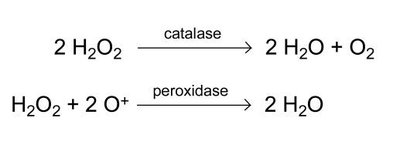
Toxic forms of oxygen include superoxide free radicals (O2−) and peroxide anion (O22−). Enzymes such as catalase and peroxidase neutralize these toxins:
Oxygen requirements can be visualized in thioglycollate broth tubes:
Anaerobic Culture Methods
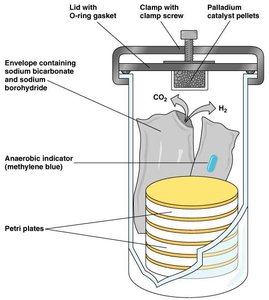
Special techniques are required to grow anaerobic microorganisms, including the use of anaerobic jars and reducing media.
Anaerobic jar: Generates an oxygen-free environment using chemical reactions that produce H2 and CO2, which react with O2 to form water.
Reducing media: Contain chemicals that remove oxygen from the medium.
Selective and Differential Media
Specialized media are used to isolate and identify specific microorganisms.
Selective media: Suppress the growth of unwanted microbes and encourage the growth of desired ones.
Differential media: Make it easy to distinguish colonies of different microbes based on their biological characteristics (e.g., color change due to fermentation).
Isolation and Preservation of Pure Cultures
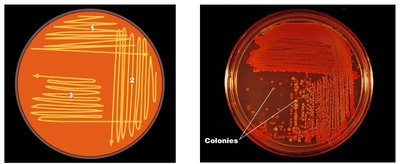
A pure culture contains only one species or strain. Isolation is typically achieved using streak plates, which allow individual colonies to form from single cells.
Preservation methods include deep-freezing and lyophilization (freeze-drying), which allow long-term storage of microbial cultures.
Reproduction in Prokaryotes
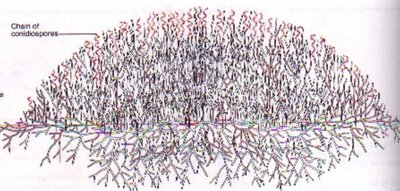
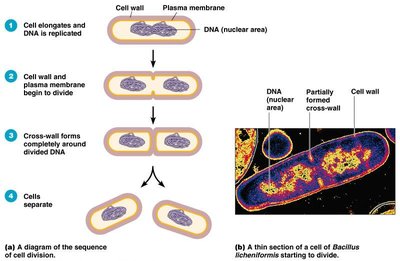
Prokaryotes reproduce primarily by binary fission, but some may reproduce by budding, fragmentation, or the formation of conidiospores (in actinomycetes).
Generation Time and Growth Calculations
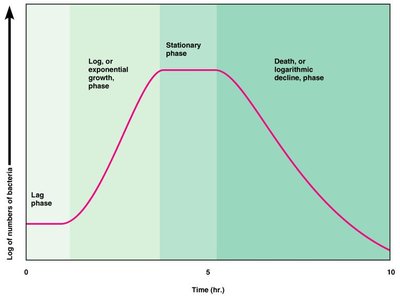
The generation time is the time required for a cell to divide or for a population to double. Bacterial growth can be calculated using the following formulas:
Measurement of Microbial Growth
Microbial growth can be measured directly or indirectly using several methods:
Direct methods: Plate counts, direct microscopic counts, and filtration.
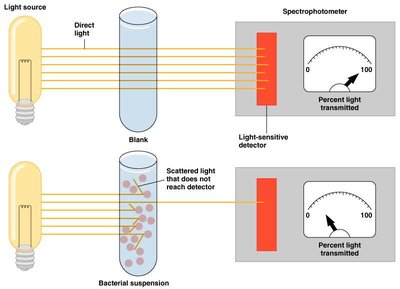
Indirect methods: Turbidity (absorbance), metabolic activity, and dry weight.
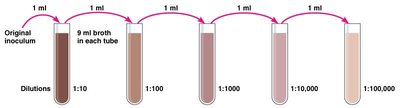
Plate counts involve serial dilution and plating to count colony-forming units (CFUs). Only plates with 25–250 colonies are considered reliable for counting.
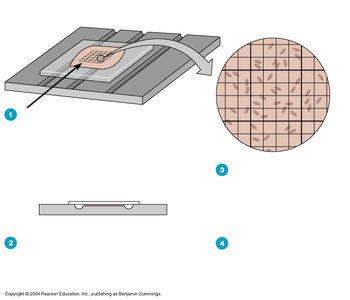
Direct microscopic count uses a counting chamber to estimate cell numbers in a known volume.
Turbidity is measured using a spectrophotometer; increased cell density scatters more light, reducing the amount transmitted through the sample.
Filtration is used for samples with low bacterial counts, such as environmental water samples. The sample is filtered, and the filter is placed on nutrient media to count colonies.
Most Probable Number (MPN) test is a statistical method used for estimating bacterial numbers in samples that do not grow well on solid media.
Metabolic activity and dry weight can also be used to estimate microbial growth, especially for filamentous organisms or those in liquid culture.
