 Back
BackMicrobial Metabolism: Structured Study Notes
Study Guide - Smart Notes
 Tailored notes based on your materials, expanded with key definitions, examples, and context.
Microbial Metabolism
Overview of Metabolism
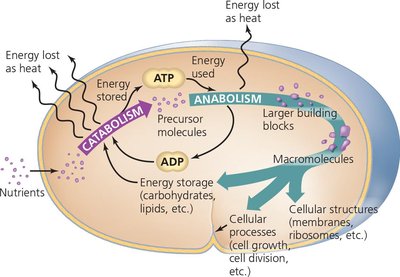
Metabolism is the collection of controlled biochemical reactions that occur within a microbe. The ultimate function of metabolism is to reproduce the organism. Metabolic processes are guided by several fundamental principles:
Every cell acquires nutrients from its environment.
Metabolism requires energy, which is obtained from light or the catabolism of nutrients.
Energy is stored in ATP (adenosine triphosphate).
Cells catabolize nutrients to form precursor metabolites.
Precursor metabolites, ATP, and enzymes are used in anabolic reactions to build macromolecules.
Cells grow by assembling macromolecules.
Cells reproduce once they have doubled in size.
Catabolism and Anabolism
Metabolism consists of two major classes of reactions: catabolic and anabolic pathways.
Catabolic pathways: Break larger molecules into smaller products; these reactions are exergonic (release energy).
Anabolic pathways: Synthesize large molecules from the smaller products of catabolism; these reactions are endergonic (require more energy than they release).
Example: The breakdown of glucose during cellular respiration is catabolic, while the synthesis of proteins from amino acids is anabolic.
Oxidation and Reduction Reactions
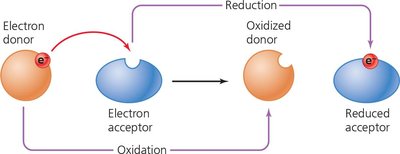
Oxidation-reduction (redox) reactions involve the transfer of electrons from an electron donor to an electron acceptor. These reactions always occur simultaneously and are essential for energy transfer in cells.
Electron carriers (such as NAD+, FAD) transport electrons, often in hydrogen atoms.
Oxidation: Loss of electrons.
Reduction: Gain of electrons.
ATP Production and Energy Storage
Organisms release energy from nutrients, which can be concentrated and stored in high-energy phosphate bonds of ATP. ATP is the primary energy currency of the cell.
ATP (Adenosine Triphosphate): Stores energy in its phosphate bonds.
ADP (Adenosine Diphosphate): Formed when ATP loses a phosphate group, releasing energy.
The Roles of Enzymes in Metabolism
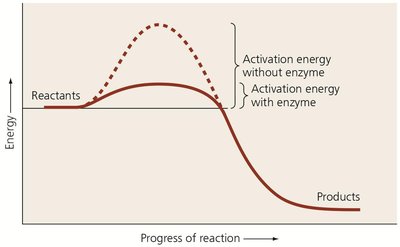
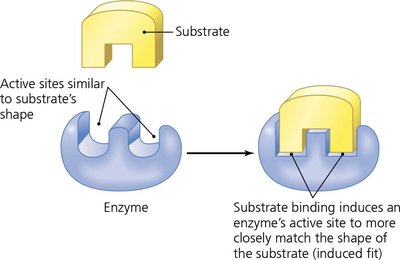
Enzymes are organic catalysts that increase the likelihood of a reaction by lowering the activation energy required. They are essential for metabolic processes.
Enzyme activity is influenced by temperature, pH, enzyme and substrate concentrations, and the presence of inhibitors.
Enzymes are highly specific for their substrates.
Enzyme Regulation
Enzyme activity can be regulated by various mechanisms:
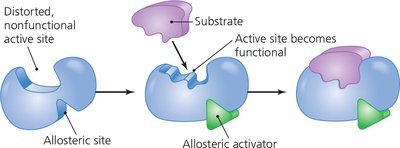
Allosteric activation: An activator binds to an allosteric site, changing the enzyme's shape and making the active site functional.
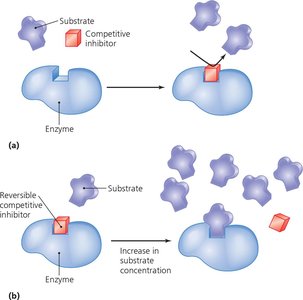
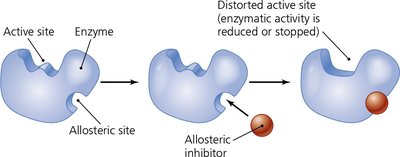
Inhibitors: Substances that block an enzyme’s activity. Includes competitive and noncompetitive inhibitors.
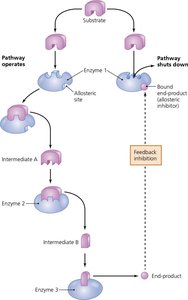
Feedback inhibition: The end product of a pathway inhibits an earlier enzyme, preventing overproduction.
Carbohydrate Catabolism
Glucose Catabolism
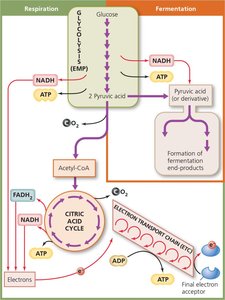
Many organisms oxidize carbohydrates, primarily glucose, as their main energy source for anabolic reactions. Glucose is catabolized by two main processes: cellular respiration and fermentation.
Cellular respiration: Complete oxidation of glucose to produce ATP via glycolysis, Krebs cycle, and electron transport chain.
Fermentation: Partial oxidation of glucose, providing an alternative source of NAD+ and producing less ATP.
Glycolysis
Glycolysis occurs in the cytoplasm of most cells and involves splitting a six-carbon glucose into two three-carbon molecules of pyruvic acid. Substrate-level phosphorylation results in a net gain of two ATP, two NADH, and pyruvic acid.
Location: Cytoplasm
Products: 2 ATP, 2 NADH, 2 pyruvic acid
Cellular Respiration
Cellular respiration consists of three stages: synthesis of acetyl-CoA, Krebs cycle, and electron transport chain. Pyruvic acid is completely oxidized to produce ATP through a series of redox reactions.
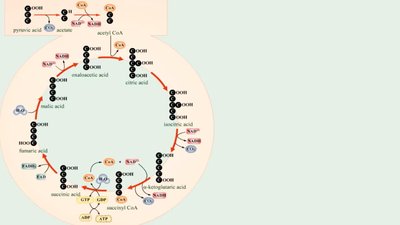
Krebs cycle: Transfers energy from acetyl-CoA to NAD+ and FAD, producing ATP, NADH, FADH2, and CO2.
Location: Cytosol (prokaryotes), mitochondrial matrix (eukaryotes)
Products: 2 ATP, 2 FADH2, 6 NADH, 4 CO2
Electron Transport Chain (ETC)
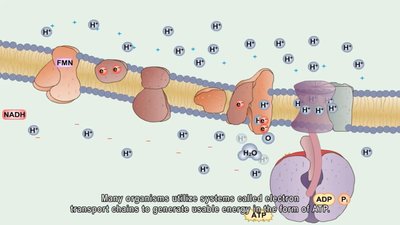
The ETC is a series of carrier molecules that pass electrons to a final electron acceptor. Energy from electrons is used to pump protons across the membrane, creating a proton gradient. This gradient drives ATP synthesis via chemiosmosis.
Location: Inner mitochondrial membrane (eukaryotes), cytoplasmic membrane (prokaryotes)
ATP yield: ~34 ATP per glucose molecule
Chemiosmosis
Chemiosmosis is the use of electrochemical gradients to generate ATP. Protons flow down their gradient through ATP synthase, phosphorylating ADP to ATP. This process is called oxidative phosphorylation.
Equation:
Total ATP: Up to 38 ATP in prokaryotes per glucose
Summary Table: Prokaryotic Aerobic Respiration
Pathway | ATP Produced | ATP Used | NADH Produced | FADH2 Produced |
|---|---|---|---|---|
Glycolysis | 4 | 2 | 2 | 0 |
Synthesis of acetyl-CoA & Citric Acid Cycle | 2 | 0 | 8 | 2 |
Electron Transport Chain | 34 | 0 | 0 | 0 |
Total | 40 | 2 | ||
Net Total | 38 |
Fermentation
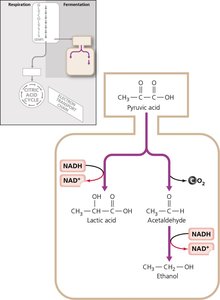
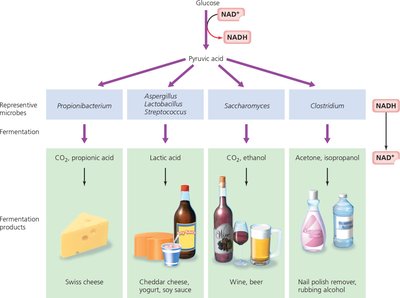
Fermentation occurs when cells cannot completely oxidize glucose by cellular respiration. It provides an alternative source of NAD+ and results in the partial oxidation of sugar, using an organic molecule as the final electron acceptor.
Products: Lactic acid, ethanol, propionic acid, acetone, etc.
ATP yield: 2 ATP per glucose
Comparison Table: Aerobic Respiration, Anaerobic Respiration, and Fermentation
Aerobic Respiration | Anaerobic Respiration | Fermentation | |
|---|---|---|---|
Oxygen Required | Yes | No | No |
Type of Phosphorylation | Substrate-level & oxidative | Substrate-level & oxidative | Substrate-level |
Final Electron Acceptor | Oxygen | Externally acquired organic molecules | Cellular organic molecules |
ATP Produced per Glucose | 38 (prokaryotes), 36 (eukaryotes) | 4–36 | 2 |
Other Catabolic Pathways
Lipid and Protein Catabolism
Lipids and proteins contain energy in their chemical bonds and can be converted into precursor metabolites. These metabolites serve as substrates in glycolysis and the Krebs cycle.
Lipids: Broken down into glycerol and fatty acids.
Proteins: Broken down into amino acids.
Photosynthesis
Overview of Photosynthesis
Many organisms synthesize their own organic molecules from inorganic carbon dioxide. Most capture light energy and use it to synthesize carbohydrates from CO2 and H2O via photosynthesis.
Chlorophylls: Pigment molecules essential for capturing light energy.
Structure: Hydrocarbon tail attached to a light-absorbing active site centered on magnesium ion.
Active sites: Structurally similar to cytochrome molecules in the electron transport chain.
Integration and Regulation of Metabolic Function
Metabolic Regulation
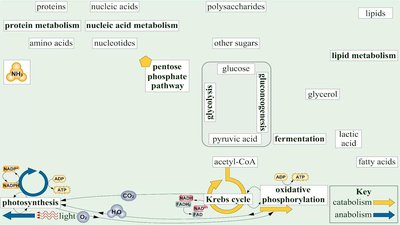
Cells regulate metabolism by controlling enzyme synthesis and activity, choosing energy-efficient pathways, and isolating metabolic processes within organelles (in eukaryotes).
Allosteric regulation: Enzymes are controlled via allosteric sites.
Feedback inhibition: Prevents overproduction of metabolites.
Amphibolic pathways: Require different coenzymes for each direction.
Summary
Microbial metabolism encompasses a wide range of biochemical reactions that enable microbes to acquire energy, build cellular structures, and regulate their growth and reproduction. Understanding these processes is fundamental to microbiology and has applications in medicine, industry, and environmental science.
