 Back
BackMicrobiology Study Guide: Infectious Disease, Epidemiology, Pathogenesis, and Immunity
Study Guide - Smart Notes
 Tailored notes based on your materials, expanded with key definitions, examples, and context.
Disease Terminology and Epidemiology
Basic Concepts in Infectious Disease
Understanding infectious disease and epidemiology is foundational in microbiology. Infectious diseases are illnesses caused by pathogens, while epidemiology is the study and control of disease occurrence in populations to promote public health.
Pathogens: Include prions, viruses, bacteria, protozoans, helminths, and fungi.
Opportunistic pathogens: Cause disease only in weakened hosts.
True pathogens: Can cause disease in healthy hosts.
Emerging pathogens: Newly identified or expanding in distribution (e.g., SARS-CoV-2).
Reemerging pathogens: Previously controlled but now resurging (e.g., antibiotic-resistant bacteria).
Zoonotic diseases: Transmitted from animals to humans.
Patterns of Disease Occurrence
Sporadic: Isolated cases (e.g., Ebola).
Endemic: Routinely detected in a population (e.g., cold viruses).
Epidemic: Widespread outbreak in a region during a specific time.
Pandemic: Epidemic that spreads across countries or continents.
Transmission and Disease Progression
Communicable diseases: Transmit from person to person.
Contagious diseases: Easily transmitted between hosts.
Acute diseases: Rapid onset and progression.
Chronic diseases: Slow onset and progression.
Latent infections: Asymptomatic periods between episodes.
Koch’s Postulates
Koch’s postulates are criteria to establish a causative relationship between a microbe and a disease:
The same organism must be present in every case of the disease.
The organism must be isolated and grown in pure culture.
The isolated organism should cause disease in a susceptible host.
The organism must be re-isolated from the inoculated host.
Limitations: Not all pathogens can be cultured, some only infect humans, and latent or obligate intracellular pathogens may not fit these criteria.
Sources and Transmission of Pathogens
Reservoirs: Natural habitats of pathogens (animate or inanimate).
Endogenous sources: Pathogen originates from the host’s own body.
Exogenous sources: Pathogen comes from outside the host.
Modes of Transmission
Direct contact: Person-to-person, animal bites, vertical (mother to child).
Indirect contact: Airborne, vehicle (fomites, food, water), vector (biological/mechanical).
Stages of Infectious Disease
Infections progress through five general stages:
1. Incubation period
2. Prodromal phase
3. Acute phase
4. Period of decline
5. Convalescent phase
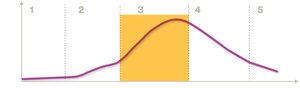
Infectivity: Ability to establish infection. Pathogenicity: Ability to cause disease. Virulence: Severity of disease.
The Epidemiological Triangle
The epidemiological triangle links three factors: host, etiological agent, and environment. Disease results from the interaction of these components.

Host factors: Health, age, sex, lifestyle, genetics.
Etiological agent: Type of microbe (bacteria, virus, etc.).
Environmental factors: Climate, geography, vectors, water/food sources.
Host–Microbe Interactions and Pathogenesis
Normal Microbiota and Pathogenicity
Host–microbe interactions are dynamic. Normal microbiota colonize various body sites and usually do not cause disease. Pathogens have adaptations for host interaction and can cause disease, especially if the microbiota is disrupted (dysbiosis).
Opportunistic pathogens: Cause disease under certain conditions (e.g., weakened immunity).
Tropism: Pathogen preference for specific host tissues.
Virulence and Virulence Factors
Virulence is the degree of pathogenicity. Virulence factors are traits that help pathogens overcome host defenses, adhere, invade, and damage host tissues.
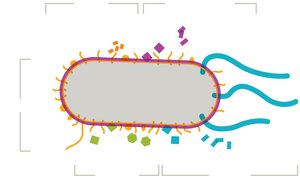
Adhesion (pili, fimbriae, binding factors)
Invasion (enzymes, flagella)
Immune evasion (capsules, antigenic variation)
Toxin production (endotoxins, exotoxins)
Nutrient acquisition (siderophores, iron-binding proteins)
Toxins as Virulence Factors
Endotoxins: Lipopolysaccharide (LPS) from Gram-negative bacteria; released upon cell death; can cause septic shock.
Exotoxins: Secreted proteins affecting specific cell types (neurotoxins, enterotoxins, etc.); produced by both Gram-positive and Gram-negative bacteria.
Five Steps to Infection
To establish infection, a pathogen must:
Enter the host
Adhere to host tissues
Invade tissues and obtain nutrients
Replicate while evading immune defenses
Transmit to a new host
Portals of Entry and Exit
Pathogens enter and exit the body through specific portals, often the same for both processes.
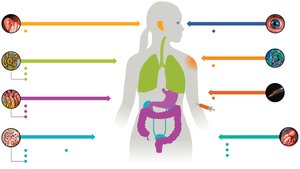
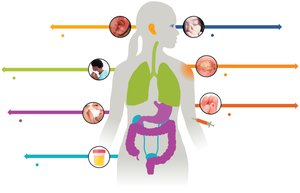
Respiratory mucosa
Gastrointestinal mucosa
Skin
Urogenital tract
Ocular (eyes)
Parenteral (injection, wounds)
Immune Evasion Strategies
Intracellular lifestyle (e.g., Mycobacterium tuberculosis)
Latency (e.g., herpesviruses)
Antigenic masking, mimicry, and variation
Interference with phagocytosis
Immune suppression (e.g., proteases, interference with cytokines)
Innate and Adaptive Immunity
Overview of Immune Responses
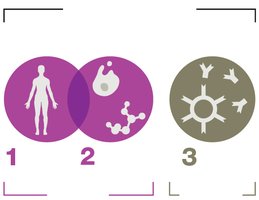
The immune system eliminates antigens through two main branches: innate and adaptive immunity. Both recognize pathogens, eliminate invaders, and distinguish self from non-self.
Innate immunity: Inborn, nonspecific, rapid response.
Adaptive immunity: Specific, develops over time, has memory.
First-Line Defenses
First-line defenses prevent pathogen entry and include mechanical, chemical, and physical barriers.
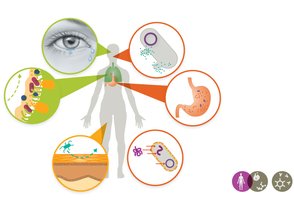
Mechanical: Flushing (tears, urine), mucociliary escalator.
Chemical: Lysozyme, stomach acid, antimicrobial peptides (AMPs), fatty acids.
Physical: Skin, mucous membranes.
Second-Line Defenses: Cellular and Molecular Components
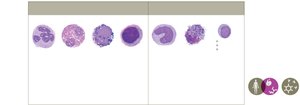
Leukocytes: White blood cells essential for immune responses (neutrophils, eosinophils, basophils, monocytes, lymphocytes).
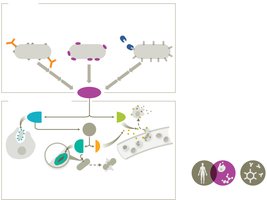
Cytokines: Signaling proteins for immune cell communication.
Complement system: Protein cascade leading to opsonization, inflammation, and cytolysis.
Inflammation and Fever
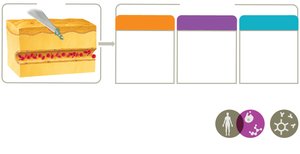
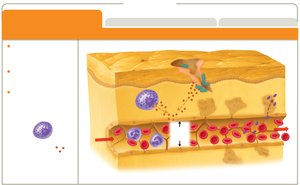
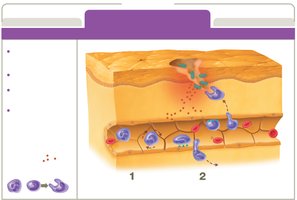
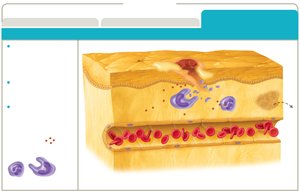
Inflammation is a key innate response to tissue injury, with three phases: vascular changes, leukocyte recruitment, and resolution.
Fever enhances immune function and limits pathogen growth.
Immune System Disorders
Immunodeficiencies
Primary immunodeficiencies: Genetic, present from birth (e.g., SCID, DiGeorge syndrome).
Secondary immunodeficiencies: Acquired later (e.g., due to infections, aging, medical treatments).
Autoimmunity and Hypersensitivities
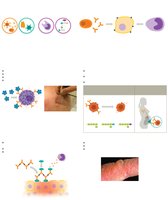
Autoimmunity: Immune attack against self-tissues (e.g., lupus, rheumatoid arthritis).
Hypersensitivities: Inappropriate immune responses classified as Type I (allergy), II (cytotoxic), III (immune complex), IV (delayed).
Transplantation and Graft Rejection
Autografts: From self; no rejection.
Isografts: From identical twin; minimal rejection.
Allografts: From same species; risk of rejection.
Xenografts: From different species; high rejection risk.
Graft-versus-host disease: Transplanted immune cells attack host tissues.
Immunity Types
Active immunity: Host makes own antibodies (natural infection or vaccination).
Passive immunity: Host receives antibodies (maternal, antivenom).
Summary Table: Endotoxins vs. Exotoxins
Feature | Endotoxins | Exotoxins |
|---|---|---|
Source | Gram-negative bacteria (LPS) | Gram-positive and Gram-negative bacteria |
Location | Part of outer membrane | Secreted proteins |
Heat stability | Stable | Unstable (usually destroyed by heat) |
Toxicity | Low (but can cause septic shock) | High (potent effects) |
Specificity | General effects (fever, shock) | Specific targets (nerves, GI tract, etc.) |
Summary Table: Four Classes of Hypersensitivity (ACID)
Type | Mechanism | Examples |
|---|---|---|
I (Allergy) | IgE-mediated, immediate | Allergies, anaphylaxis |
II (Cytotoxic) | IgG/IgM-mediated, cell lysis | Hemolytic anemia, transfusion reactions |
III (Immune Complex) | Immune complex deposition | Lupus, serum sickness |
IV (Delayed) | T cell-mediated, delayed | Contact dermatitis, TB test |
