 Back
BackMicrobiology Study Guide: Pure Culture and Bacterial Colonies
Study Guide - Smart Notes
 Tailored notes based on your materials, expanded with key definitions, examples, and context.
Q2. What is a bacterial colony and how is one formed?
Background
Topic: Bacterial Colonies and Pure Culture Techniques
This question tests your understanding of how bacteria grow on solid media and the concept of a colony, which is fundamental for isolating and studying microorganisms in microbiology.
Key Terms:
Colony: A visible mass of microbial cells originating from a single cell or group of cells.
Pure Culture: A culture containing only one species of microorganism.
Solid Medium: Agar or other solidified nutrient media used to grow bacteria.
Step-by-Step Guidance
Understand that a bacterial colony forms when a single bacterial cell is placed on a solid nutrient medium (such as agar) and allowed to multiply.
Each cell divides repeatedly, and the descendants remain clustered together, forming a visible colony.
Colonies are usually formed by streaking a sample across the surface of the agar plate, which separates individual cells so they can grow into isolated colonies.
Observe the characteristics of colonies, such as shape, color, and size, which can help identify different bacterial species.
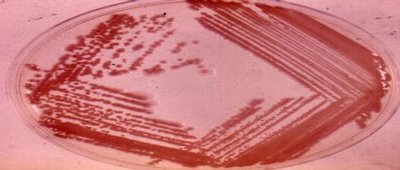
Try solving on your own before revealing the answer!
Final Answer:
A bacterial colony is a macroscopically visible population of cells that originates from a single cell dividing many times on a solid medium, such as agar. Colonies are formed by streaking bacteria onto the plate, allowing individual cells to grow into separate colonies.
This process is essential for isolating pure cultures and studying the properties of specific microorganisms.
