 Back
BackMolecular Information Flow and Protein Processing in Microorganisms
Study Guide - Smart Notes
 Tailored notes based on your materials, expanded with key definitions, examples, and context.
Chapter 6: Molecular Information Flow and Protein Processing
Overview
This chapter explores the molecular mechanisms by which genetic information is stored, expressed, and processed in microorganisms. It covers the structure and function of nucleic acids, the flow of genetic information from DNA to RNA to protein, and the cellular machinery involved in these processes. The chapter also discusses the organization of genetic elements, DNA replication, transcription, translation, and protein processing in bacteria, archaea, and eukaryotes.
I. Molecular Biology and Genetic Elements
6.1 DNA and Genetic Information Flow
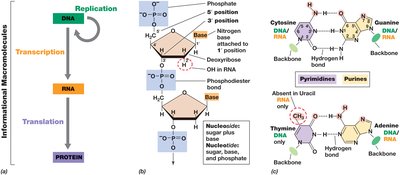
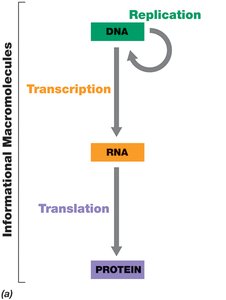
The flow of genetic information in cells follows the central dogma: DNA is transcribed into RNA, which is then translated into protein. This process is fundamental to all living organisms and is mediated by informational macromolecules: nucleic acids (DNA and RNA) and proteins.
Gene: The functional unit of genetic information, typically a segment of DNA encoding a protein or functional RNA.
Genome: The complete set of genetic elements in an organism, including chromosomes and plasmids.
DNA: The genetic blueprint; a double-stranded polymer of nucleotides.
RNA: The transcription product of DNA, which can be messenger RNA (mRNA), transfer RNA (tRNA), or ribosomal RNA (rRNA).
Informational Macromolecules: Nucleic acids and proteins that store and execute genetic instructions.

Nucleotides and Nucleic Acid Structure
Nucleotide: Monomer of nucleic acids, composed of a pentose sugar (ribose in RNA, deoxyribose in DNA), a nitrogenous base, and a phosphate group.
Nucleoside: Consists of a pentose sugar and a nitrogenous base, without a phosphate group.
Nitrogenous Bases: Purines (adenine, guanine) and pyrimidines (cytosine, thymine in DNA, uracil in RNA).
Mnemonic: "Pure As Gold" for purines (adenine and guanine).

Double Helix Properties
DNA is double-stranded, with antiparallel strands (5' to 3' and 3' to 5').
Strands are held together by hydrogen bonds between complementary bases: adenine pairs with thymine, guanine pairs with cytosine.
Phosphodiester bonds link the 3'-carbon of one sugar to the 5'-carbon of the next.
Major and minor grooves provide binding sites for proteins.


DNA Size, Shape, and Supercoiling
DNA size is measured in base pairs (bp), kilobase pairs (kbp), or megabase pairs (Mbp).
Supercoiling compacts DNA to fit inside cells, especially in bacteria and archaea.
Topoisomerases insert or remove supercoils; DNA gyrase introduces negative supercoils, aiding in DNA unwinding.
Positive supercoiling stabilizes DNA at high temperatures (e.g., in some archaea).

Central Dogma and Information Flow
Three main stages: replication (DNA to DNA), transcription (DNA to RNA), translation (RNA to protein).
Three main RNA types: mRNA (carries information), tRNA (adaptor for translation), rRNA (structural/catalytic component of ribosomes).
Prokaryotes vs. Eukaryotes in Gene Expression
Prokaryotes: Multiple genes may be transcribed into a single mRNA (polycistronic); transcription and translation are coupled.
Eukaryotes: Each gene is transcribed individually; transcription occurs in the nucleus, translation in the cytoplasm.
6.2 Genetic Elements: Chromosomes and Plasmids
Types of Genetic Elements
Chromosome: Main genetic element; usually single and circular in prokaryotes, linear and multiple in eukaryotes.
Plasmid: Circular or linear double-stranded DNA, replicates independently, carries accessory genes (e.g., antibiotic resistance).
Virus Genome: DNA or RNA, single- or double-stranded, circular or linear, requires host for replication.
Transposable Elements: DNA segments that can move within or between DNA molecules, causing genetic variation.
Organellar Genomes: Found in mitochondria and chloroplasts, usually circular DNA.
Genetic Element | Structure | Genetic Material | Location | Key Features / Notes |
|---|---|---|---|---|
Chromosome | Circular (prokaryotes), linear (eukaryotes) | dsDNA | Nucleoid/nucleus | Essential genes for life |
Plasmid | Circular or linear | dsDNA | Cytoplasm | Accessory genes, independent replication |
Virus Genome | Circular or linear | ss or ds DNA/RNA | Viral capsid | Requires host for replication |
Transposable Element | Variable | DNA | Within chromosomes/plasmids | Mobile, causes mutations |
Plasmids and Their Functions
R plasmids: Carry antibiotic resistance genes.
Virulence plasmids: Encode toxins or adhesion factors.
Metabolic plasmids: Encode protiens/enzymes that breakdown unusual compounds.
Symbiotic plasmids: Required for nitrogen fixation in rhizobia.
Bacteriocin plasmids: Encode proteins that inhibit related bacteria.
Conjugative plasmids: Carry genes for horizontal gene transfer.
II. Copying the Genetic Blueprint: DNA Replication
6.3 Templates, Enzymes, and the Replication Fork
DNA replication is semiconservative: each new DNA molecule consists of one parental and one newly synthesized strand. Replication proceeds from the 5′ to 3′ direction, requiring a primer and a suite of enzymes.
DNA Polymerases: Catalyze DNA synthesis; DNA Pol III is the main replicative enzyme in bacteria.
Primase: Synthesizes short RNA primers to initiate DNA synthesis.
Helicase: Unwinds the DNA double helix at the replication fork.
Single-Strand Binding Proteins (SSB): Stabilize unwound DNA.
DNA Ligase: Seals nicks in the DNA backbone.
Enzyme | Function |
|---|---|
DNA Pol I | Removes RNA primers, fills gaps |
DNA Pol III | Main DNA synthesis |
Helicase | Unwinds DNA |
Primase | Synthesizes RNA primer |
Ligase | Seals nicks |
Leading and Lagging Strands
Leading strand: Synthesized continuously toward the replication fork.
Lagging strand: Synthesized discontinuously in Okazaki fragments, later joined by ligase.
6.4 Bidirectional Replication, the Replisome, and Proofreading
Replication is bidirectional in prokaryotes with circular chromosomes, forming two replication forks.
The replisome is a large complex of proteins responsible for DNA replication.
Proofreading by DNA Pol III (3′→5′ exonuclease activity) ensures high fidelity, correcting mispaired bases.
III. RNA Synthesis: Transcription
6.5 Transcription in Bacteria
Transcription is the synthesis of RNA from a DNA template, catalyzed by RNA polymerase. It produces mRNA, tRNA, rRNA, and regulatory RNAs.
RNA polymerase holoenzyme (core enzyme + sigma factor) initiates transcription at promoter sequences.
Promoters contain conserved regions: the -10 (Pribnow box, TATAAT) and -35 (TTGACA) sequences.
Termination occurs via intrinsic (stem-loop) or Rho-dependent mechanisms.
Polycistronic mRNA: Single mRNA encoding multiple proteins, common in prokaryotic operons.
Sigma Factor | Recognition Sequence | Function |
|---|---|---|
σ70 | TTGACA | Housekeeping genes |
σ54 | TTGGCACA | Nitrogen assimilation |
σ38 | CCGGCG | Stationary phase, stress |
σ32 | TNTCNCCTTGAA | Heat shock response |
6.6 Transcription in Archaea and Eukarya
Archaea: One RNA polymerase, similar to eukaryotic RNA Pol II; promoters contain TATA box and BRE.
Eukaryotes: Three RNA polymerases (Pol I, II, III); complex promoter architecture; extensive RNA processing (capping, splicing, polyadenylation).
Introns are common in eukaryotic genes, rare in archaea and bacteria.
Feature | Bacteria | Archaea | Eukaryotes |
|---|---|---|---|
RNA Polymerase | One type | One type (Pol II-like) | Three types |
Promoter Elements | -10, -35 boxes | TATA box, BRE | TATA box, BRE, Inr, DPE |
mRNA Processing | None | Minimal | Extensive |
IV. Protein Synthesis: Translation
6.7 Amino Acids, Polypeptides, and Proteins
Proteins are polymers of amino acids linked by peptide bonds.
They serve catalytic, structural, and regulatory roles in the cell.
6.8 Transfer RNA (tRNA)
tRNAs carry amino acids to the ribosome during translation.
Each tRNA has an anticodon that base-pairs with the mRNA codon and an acceptor stem for amino acid attachment.
Aminoacyl-tRNA synthetases charge tRNAs with the correct amino acid, ensuring translation fidelity.
6.9 Translation and the Genetic Code
The genetic code is a triplet code: three nucleotides (codon) specify one amino acid.
There are 64 codons: 61 for amino acids, 3 stop codons (UAA, UAG, UGA).
AUG is the start codon (methionine in eukaryotes/archaea, N-formylmethionine in bacteria).
Wobble base pairing allows efficient translation with fewer tRNAs.
6.10 The Mechanism of Protein Synthesis
Initiation: Small ribosomal subunit binds mRNA, initiator tRNA pairs with start codon, large subunit joins.
Elongation: Aminoacyl-tRNAs enter the A site, peptide bonds form, ribosome translocates along mRNA.
Termination: Stop codon is recognized, release factors promote polypeptide release, ribosome dissociates.
V. Protein Processing, Secretion, and Targeting
6.11 Assisted Protein Folding and Chaperones
Chaperones (e.g., DnaK, DnaJ, GroEL, GroES) assist in proper protein folding and prevent aggregation.
Some proteins require ATP-dependent chaperonins for correct folding.
6.12 Protein Secretion: Sec and Tat Systems
Sec system: Translocates unfolded proteins across the cytoplasmic membrane.
Tat system: Translocates folded proteins using a twin-arginine motif in the signal sequence.
6.13 Protein Secretion: Gram-Negative Systems (survival system?
Type I–VI secretion systems export proteins across both inner and outer membranes. (eg: enzymes, toxins)
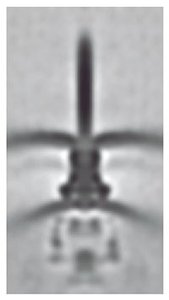
Type III secretion system (injectisome) delivers effectors directly into host cells, important in pathogenesis.

Additional info: This summary integrates and expands upon the provided lecture slides and textbook images, ensuring a comprehensive and academically rigorous overview suitable for microbiology college students.
