 Back
BackPathogenic Fungi: Medical Mycology and Fungal Infections
Study Guide - Smart Notes
 Tailored notes based on your materials, expanded with key definitions, examples, and context.
Pathogenic Fungi
Medical Mycology Vocabulary
Medical mycology is the study of fungi that cause diseases in humans. Understanding the terminology is essential for recognizing the diversity and clinical significance of pathogenic fungi.
Yeast: Unicellular fungi that reproduce by budding.
Molds: Multicellular fungi that grow as long, branched filaments called hyphae.
Spores: Reproductive bodies of molds, important for dissemination and survival.
Dimorphic fungi: Fungi capable of growing as either yeast or mold, depending on environmental conditions.
Dermatophytes: Fungi that typically inhabit the skin, nails, and hair, causing superficial infections.
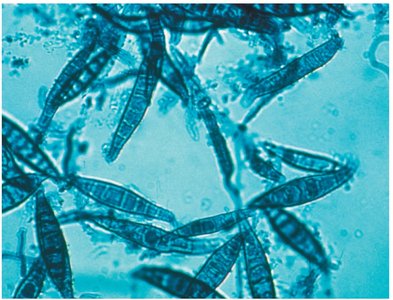
Additional info: Dimorphism is a key adaptation for pathogenicity, allowing fungi to survive in diverse environments, including within the human host.
Fungal Infections (Mycoses)
Mycoses are fungal infections that can affect various tissues and organs. They are common and can range from superficial to life-threatening systemic diseases.
Common mycoses: Fungal nail infections, vaginal candidiasis, ringworm (tinea), and thrush.
Systemic infections: Fungal lung infections may mimic viral or bacterial pneumonia; less commonly, fungi cause meningitis or bloodstream infections.
Risk factors: Immunocompromised individuals are at higher risk for severe mycoses.
Transmission: Usually occurs via inhalation, trauma, or ingestion. Person-to-person transmission is rare, except for dermatophytes, mucocutaneous Candida, and Pneumocystis.
Epidemics: Can result from mass exposure to environmental sources of fungi.
Surveillance: Data on fungal infection occurrence is often limited.
True Pathogenic Fungi and Opportunistic Mycoses
Most fungal infections are opportunistic, but a few fungi are considered true pathogens capable of causing disease in healthy individuals.
True pathogens: Blastomyces dermatitidis, Coccidioides immitis, Histoplasma capsulatum, and Paracoccidioides brasiliensis (all dimorphic Ascomycota, primarily endemic in the Americas).
Opportunistic mycoses: Occur mainly in immunocompromised patients.
Risk factors for opportunistic mycoses:
Medical therapies (e.g., immunosuppressants, chemotherapy)
Certain disease conditions (e.g., HIV/AIDS, diabetes)
Invasive medical procedures
Specific lifestyle factors
Diagnosis of Fungal Infections
Diagnosing mycoses can be challenging due to their similarity to bacterial and viral infections. Accurate diagnosis relies on clinical history and laboratory analysis.
Clinical history: Essential for identifying risk factors and exposure.
Laboratory diagnosis: Definitive identification often requires morphological analysis of the fungus.
Culture media: Sabouraud dextrose agar (40g dextrose, 10g peptone, 15g agar, 1,000 ml water, pH ~5.6) is commonly used to favor fungal growth.
Detection techniques: KOH preparations, Gomori methenamine silver (GMS) stain, and direct immunofluorescence stains are used to visualize fungal cells in specimens.
Challenges: Difficult to distinguish between infection and simple exposure; opportunistic infections are especially hard to diagnose.
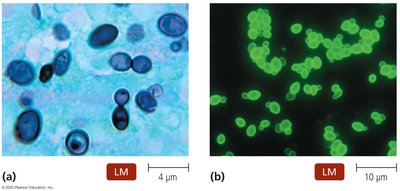

Treatment of Fungal Infections
Fungal infections are among the most difficult diseases to treat due to the similarities between fungal and human cells and the ability of fungi to resist immune responses.
Antifungal targets: Many drugs target ergosterol in the fungal cell membrane.
Amphotericin B: The gold standard fungicidal drug; highly effective but also toxic.
Azoles (ketoconazole, itraconazole, fluconazole): Less toxic, fungistatic alternatives.
Some antifungal drugs act on other targets:
Echinocandins: Inhibit synthesis of β-glucan, a key component of the fungal cell wall.
Griseofulvin: Interferes with microtubule formation and mitosis (antimetabolite).
5-Fluorocytosine: Nucleoside analog that inhibits nucleic acid synthesis.
Opportunistic infections: Often require two-step therapy: high-dose induction to reduce pathogen load, followed by low-dose maintenance therapy.
Antifungal Vaccines
Development of antifungal vaccines has been challenging due to the nature of fungal diseases and the patient populations affected.
Challenges: Most severe fungal infections occur in immunocompromised patients, and the number of affected individuals is relatively small.
Cost: Vaccine development is expensive.
Current research: Vaccines have been developed that protect mice against candidiasis, aspergillosis, and cryptococcosis, but efficacy in humans is unknown.
Review Questions and Answers
Is a severe respiratory fungal infection likely contagious? Answer: False. Most fungal infections are not contagious from person to person, with dermatophytes being a major exception.
Which drug is fungicidal and targets ergosterol in the cell membrane? Answer: Amphotericin B.
What are dermatophytes? Answer: Fungi that normally live on the nails, skin, and hair.
Summary Table: Key Antifungal Drugs
Drug | Target | Mechanism | Notes |
|---|---|---|---|
Amphotericin B | Ergosterol (cell membrane) | Binds ergosterol, forms pores | Fungicidal, toxic |
Azoles (e.g., fluconazole) | Ergosterol synthesis | Inhibits ergosterol synthesis | Fungistatic, less toxic |
Echinocandins | Cell wall (β-glucan) | Inhibits β-glucan synthesis | Useful for resistant fungi |
Griseofulvin | Microtubules | Disrupts mitosis | Used for dermatophytes |
5-Fluorocytosine | Nucleic acid synthesis | Nucleoside analog | Used in combination therapy |
Key Equations and Formulas
Sabouraud Dextrose Agar Preparation:
