 Back
BackPathogenic Gram-Negative Cocci and Bacilli: Structure, Pathogenesis, and Clinical Importance
Study Guide - Smart Notes
 Tailored notes based on your materials, expanded with key definitions, examples, and context.
Pathogenic Gram-Negative Cocci and Bacilli
Introduction
This section explores the medically significant Gram-negative cocci and bacilli, focusing on their taxonomy, structure, pathogenesis, and clinical relevance. These organisms are responsible for a wide range of human diseases, including sexually transmitted infections, meningitis, and various healthcare-associated infections.
Neisseria: Gram-Negative Cocci
General Characteristics
Neisseria is the only genus of Gram-negative cocci that regularly causes disease in humans.
These bacteria are aerobic, nonmotile, and typically arranged as diplococci (pairs of cocci).
They are oxidase positive, which distinguishes them from many other Gram-negative pathogens.
Pathogenic strains possess fimbriae, a polysaccharide capsule, and a cell wall antigen called lipooligosaccharide containing lipid A.
Two species are pathogenic to humans: N. gonorrhoeae and N. meningitidis.
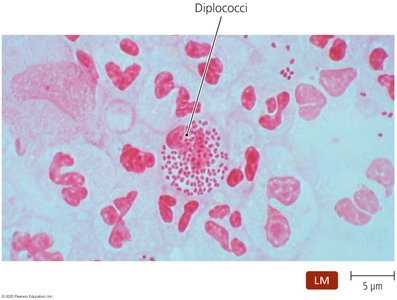
Neisseria gonorrhoeae (The Gonococcus)
Causes gonorrhea, a sexually transmitted disease that only occurs in humans.
Risk of infection increases with the number of sexual encounters; more common in females, often asymptomatic in women but symptomatic in men (painful urination, discharge).
Can trigger pelvic inflammatory disease (PID) in women and cause infections outside the reproductive tract.
Pathogenic mechanisms include adherence to mucosal surfaces, secretion of protease that cleaves secretory IgA, and survival within neutrophils.
Diagnosis, Treatment, and Prevention
Diagnosis: Identification of Gram-negative diplococci in pus; nucleic acid amplification for asymptomatic cases.
Treatment: Broad-spectrum intramuscular cephalosporins; resistance is an increasing problem.
Prevention: Sexual abstinence, monogamy, proper condom use; newborn eye infections prevented with antimicrobials.
Neisseria meningitidis (The Meningococcus)
Most common cause of meningitis in individuals under 20 years of age.
Can be part of the normal microbiota of the upper respiratory tract.
Transmitted by respiratory droplets, especially among people in close contact.
Meningitis can cause death within hours; meningococcal septicemia is also life-threatening.
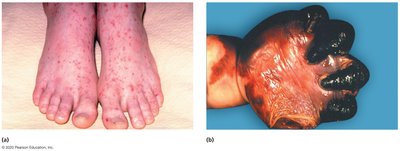
Diagnosis, Treatment, and Prevention
Diagnosis: Rapid identification of Gram-negative diplococci in phagocytes of the CNS is critical.
Treatment: Immediate administration of antimicrobial drugs such as ceftriaxone.
Prevention: Vaccine available for some strains; eradication is difficult due to asymptomatic carriers.
Pathogenic, Gram-Negative Facultatively Anaerobic Bacilli
Overview
Most common Gram-negative pathogens of humans; found in the intestinal microbiota, water, soil, and decaying vegetation.
Two main families: Enterobacteriaceae and Pasteurellaceae.
The oxidase test distinguishes between these families.

The Enterobacteriaceae Family
Motile, bacilli or coccobacilli; reduce nitrate to nitrite and ferment glucose.
Classified into three groups: Coliforms (rapidly ferment lactose), Noncoliform Opportunists (do not ferment lactose), and True Pathogens.
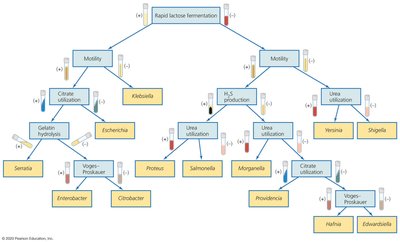
Pathogenesis and Virulence Factors
Possess a variety of antigenic components (membrane, protein, and polysaccharide capsular antigens).
Virulence factors include fimbriae, adhesins, exotoxins, and type III secretion systems.
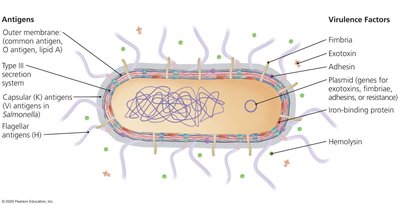
Diagnosis, Treatment, and Prevention
Diagnosis: Detection in urine, blood, or cerebrospinal fluid; biochemical tests for rapid identification.
Treatment: Diarrhea is usually self-limited; internal infections require antimicrobials.
Prevention: Good personal hygiene and proper sewage control.
Coliform Opportunistic Enterobacteriaceae
Aerobic or facultatively anaerobic, Gram-negative rods that ferment lactose to form gas.
Common in soil, plants, and decaying vegetation; presence in water indicates contamination.
Genera include Escherichia, Klebsiella, Serratia, Enterobacter, Hafnia, and Citrobacter.
Escherichia coli
Most common and important coliform; antigens used to identify strains.
Virulent strains have plasmids for fimbriae, adhesins, and exotoxins.
Causes gastroenteritis, pediatric diarrhea, and other diseases.
E. coli O157:H7 produces Shiga-like toxin, causing hemorrhagic colitis and hemolytic uremic syndrome; associated with undercooked beef and contaminated foods.

Klebsiella
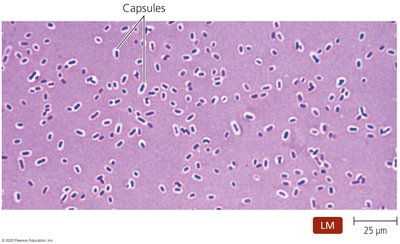
Found in digestive and respiratory systems; capsule protects from phagocytosis.
K. pneumoniae is the most common pathogenic species, causing pneumonia, bacteremia, meningitis, wound infections, and UTIs.
Serratia
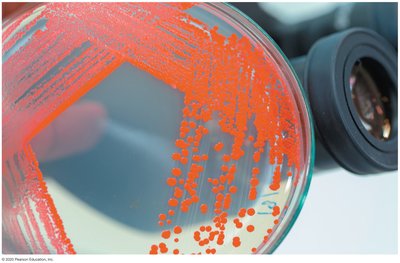
Produces a red pigment at room temperature; grows on hospital supplies and can cause life-threatening infections in immunocompromised patients.
Frequently resistant to antimicrobial drugs.
Enterobacter, Hafnia, and Citrobacter
Reside in digestive tracts, soil, water, and sewage; can contaminate dairy products.
Cause healthcare-associated infections (HAIs) and are often resistant to drugs.
Noncoliform Opportunistic Enterobacteriaceae
Proteus
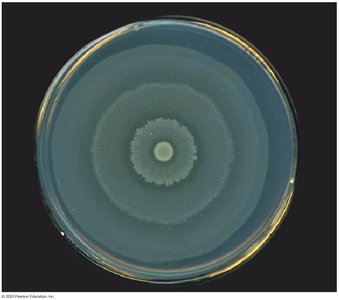
Proteus mirabilis is associated with UTIs in patients with long-term catheters; can cause kidney stones and is resistant to many drugs.
Morganella, Providencia, and Edwardsiella
Cause HAIs, primarily UTIs; Providencia may cause kidney stones.
Truly Pathogenic Enterobacteriaceae
Include Salmonella, Shigella, and Yersinia; almost always pathogenic due to numerous virulence factors, including type III secretion systems.
Salmonella
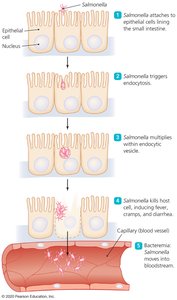
Motile, peritrichous bacilli; live in intestines of birds, reptiles, and mammals.
Human infections usually from contaminated food, especially poultry and eggs.
Can cause salmonellosis and typhoid fever (caused by Salmonella enterica serotype Typhi).
Typhoid fever: humans are the only host; bacteria spread via contaminated food/water, pass through intestines into bloodstream, and can cause systemic disease.

Shigella
Oxidase-negative, nonmotile; primarily a parasite of the human digestive tract.
Produces enterotoxin causing severe dysentery (shigellosis).
Four species: S. dysenteriae (most severe), S. flexneri (developing countries), S. boydii, S. sonnei (industrialized nations).
Spread via contaminated hands or food; person-to-person transmission possible.

Yersinia
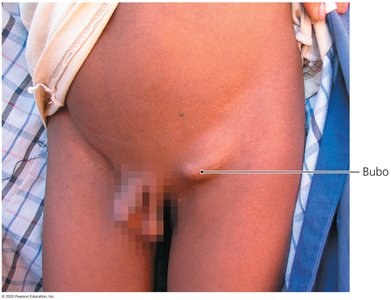
Pathogens of animals; three important species: Y. enterocolitica (food/waterborne), Y. pseudotuberculosis (intestinal inflammation), Y. pestis (bubonic and pneumonic plague).
All contain virulence plasmids for adhesins and type III secretion systems.
Sites of Infection
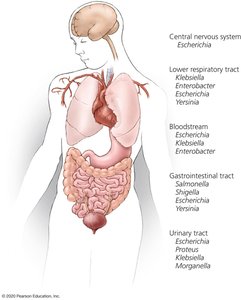
Members of Enterobacteriaceae can infect various body sites, including the CNS, respiratory tract, bloodstream, gastrointestinal tract, and urinary tract.
The Pasteurellaceae Family
Overview
Small, nonmotile, facultative anaerobes; oxidase positive and require heme or cytochromes for growth.
Two main genera: Pasteurella and Haemophilus.
Pasteurella
Normal microbiota in oral and nasopharyngeal cavities of animals; humans infected via animal bites or aerosols.
Most cases (P. multocida) cause localized inflammation; can cause bacteremia in immunosuppressed individuals.
Diagnosed by identification in specimens; treatable with antibacterial drugs.
Haemophilus
Colonize mucous membranes; some species cause opportunistic infections.
H. influenzae type b (Hib) was a common cause of meningitis before vaccination.
H. ducreyi causes a sexually transmitted disease.
Summary Table: Classification of Enterobacteriaceae
Group | Key Features | Representative Genera/Species | Diseases |
|---|---|---|---|
Coliforms | Ferment lactose rapidly | Escherichia, Klebsiella, Serratia, Enterobacter, Hafnia, Citrobacter | UTIs, pneumonia, gastroenteritis |
Noncoliform Opportunists | Do not ferment lactose | Proteus, Morganella, Providencia, Edwardsiella | UTIs, kidney stones |
True Pathogens | Always pathogenic, type III secretion | Salmonella, Shigella, Yersinia | Typhoid, dysentery, plague |
Additional info: This summary integrates and expands upon the provided lecture slides, adding definitions, clinical context, and a classification table for clarity and exam preparation.
