 Back
BackPathogenic RNA Viruses: Structure, Classification, and Human Diseases
Study Guide - Smart Notes
 Tailored notes based on your materials, expanded with key definitions, examples, and context.
Overview of RNA Viruses
Classification and General Features
RNA viruses are unique infective agents that store their genetic information in RNA molecules. They are classified based on their genomic structure, the presence or absence of an envelope, and the size and shape of their capsid. There are four main types of RNA viruses:
Positive single-stranded RNA (+ssRNA)
Retroviruses (+ssRNA viruses that convert their genome to DNA)
Negative single-stranded RNA (-ssRNA)
Double-stranded RNA (dsRNA)
Positive-sense RNA acts directly as mRNA and can be translated by host ribosomes, while negative-sense RNA must first be transcribed into mRNA before translation can occur.
Naked, Positive ssRNA Viruses
Picornaviridae and Related Families
Picornaviridae are the smallest animal viruses and include several genera that cause human disease, such as Rhinovirus, Enterovirus, and Hepatovirus. Other families like Caliciviridae, Astroviridae, and Hepeviridae are larger and primarily cause gastrointestinal diseases.
Rhinoviruses and the Common Cold
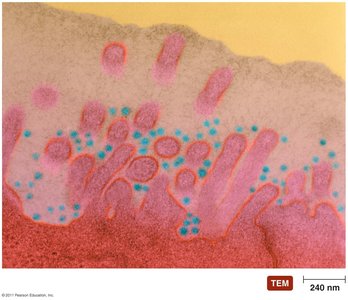
Rhinoviruses are the most common cause of the common cold, with infections typically limited to the upper respiratory tract. Transmission occurs via aerosols, fomites, or direct contact, with person-to-person contact being the most common route. Immunity can develop against specific serotypes, and the frequency of infection decreases with age. Handwashing is the most effective preventive measure.
Enteroviruses: Transmission and Diseases
Enteroviruses are transmitted via the fecal-oral route, often through contaminated food, water, or fomites. They initially infect the pharynx and intestine, then spread via the bloodstream to various organs. Major enteroviruses include polioviruses, coxsackieviruses, and echoviruses.
Poliomyelitis
Caused by one of three serotypes of poliovirus
Four clinical forms: asymptomatic, minor polio, nonparalytic polio, and paralytic polio (which can result in bulbar poliomyelitis)
Postpolio syndrome involves late-onset muscle deterioration
Polio has been nearly eliminated due to vaccines: Inactivated Polio Vaccine (IPV) and Oral Polio Vaccine (OPV)


Other Enterovirus Diseases
Coxsackie A viruses: Cause lesions, fever, herpangina, and hand-foot-and-mouth disease
Coxsackie B viruses: Associated with myocarditis, pericardial infections, and can cross the placenta
Echoviruses: Cause intestinal infections, meningitis, and colds

Diagnosis, Treatment, and Prevention
Most enterovirus infections are mild and not diagnosed unless severe
No effective antiviral therapy
Prevention relies on good hygiene and sanitation
Vaccines are available for hepatitis A and polio
Hepatitis A
Hepatitis A virus is resistant to common disinfectants and is transmitted via the fecal-oral route. Symptoms are due to the immune response, and chronic liver disease does not occur. Most patients recover completely.
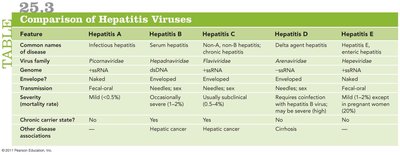
Comparison of Hepatitis Viruses
The following table summarizes the main features of hepatitis viruses:
Feature | Hepatitis A | Hepatitis B | Hepatitis C | Hepatitis D | Hepatitis E |
|---|---|---|---|---|---|
Common names of disease | Infectious hepatitis | Serum hepatitis | Non-A, non-B hepatitis; chronic hepatitis | Delta agent hepatitis | Hepatitis E, enteric hepatitis |
Virus family | Picornaviridae | Hepadnaviridae | Flaviviridae | Arenaviridae | Hepeviridae |
Genome | +ssRNA | dsDNA | +ssRNA | −ssRNA | +ssRNA |
Envelope? | Naked | Enveloped | Enveloped | Enveloped | Naked |
Transmission | Fecal-oral | Needles; sex; blood; perinatal | Needles; sex; blood | Requires coinfection with hepatitis B virus | Fecal-oral |
Severity; mortality rate | Mild (0.1–0.3%) | Occasionally severe (1–2%) | Mild, subclinical to severe (4%) | Very severe (20% mortality in pregnant women) | Mild (1–2% except in pregnant women who may be severe [20%]) |
Chronic carrier state? | No | Yes | Yes | — | No |
Other diseases associated | — | Hepatic cancer | Hepatic cancer | Cirrhosis | — |
Acute Gastroenteritis
Caliciviruses and astroviruses cause outbreaks of acute gastroenteritis, especially in group settings. Caliciviruses cause diarrhea, nausea, and vomiting, while astroviruses cause diarrhea without vomiting. Treatment is supportive, focusing on fluid and electrolyte replacement.
Hepatitis E
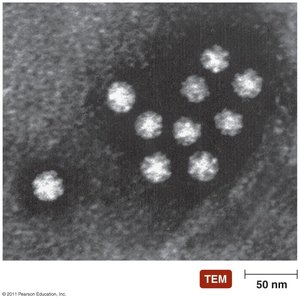
Hepatitis E virus, formerly classified as a calicivirus, causes enteric hepatitis. It is particularly dangerous for pregnant women, with a high fatality rate. Prevention is based on interrupting fecal-oral transmission.
Enveloped, Positive ssRNA Viruses
Togaviridae, Flaviviridae, and Coronaviridae
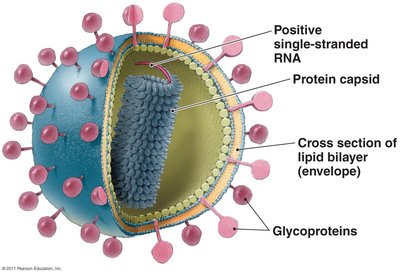
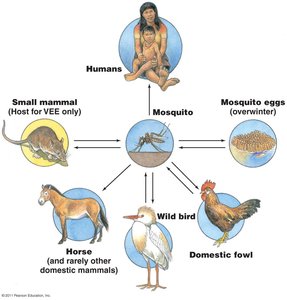
These families include enveloped +ssRNA viruses. Many are arboviruses, transmitted by arthropods such as mosquitoes and ticks. Coronaviruses are enveloped, helical +ssRNA viruses.
Diseases of Positive RNA Arboviruses
Arboviruses are zoonotic, often transmitted from animal hosts to humans by arthropod vectors. Most infections are mild, but some can progress to severe diseases such as encephalitis, dengue fever, and yellow fever. Diagnosis is often serological, and treatment is supportive. Vaccines are available for some arboviruses.
Rubella (German Measles)
Rubella virus causes a mild childhood disease characterized by a rash. Infection in adults can lead to arthritis or encephalitis, and infection during pregnancy can cause congenital defects. Vaccination has greatly reduced the incidence of rubella.


Hepatitis C
Hepatitis C virus (HCV) is the main cause of non-A, non-B hepatitis in the U.S. It is spread through needles, organ transplants, and sexual activity. Chronic infection can lead to severe liver damage and failure. There is no vaccine or specific treatment.
Coronaviruses
Coronaviruses are named for the corona-like halo formed by their envelopes. They are the second most common cause of colds and can cause severe acute respiratory syndrome (SARS). Transmission is via large respiratory droplets. No vaccine or specific treatment is available.


Enveloped, Positive ssRNA Viruses with Reverse Transcriptase (Retroviridae)
Retroviruses: Structure and Replication
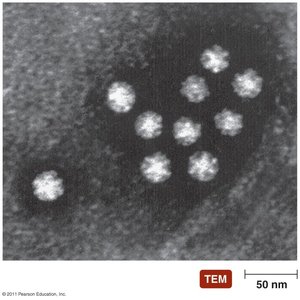
Retroviruses have polyhedral capsids with spiked envelopes and contain two identical +ssRNA molecules. They use reverse transcriptase to synthesize dsDNA from their RNA genome, defying the central dogma of molecular biology. Retroviruses are divided into oncogenic and immunosuppressive types.

Oncogenic Retroviruses
Human T-lymphotrophic viruses (HTLV-1 and HTLV-2) are associated with certain leukemias and are transmitted via sexual contact, blood transfusion, and contaminated needles. Infections are chronic, and there is no specific antiviral treatment.

Acquired Immunodeficiency Syndrome (AIDS) and HIV
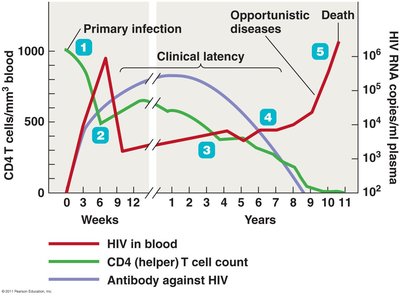
AIDS is a syndrome defined by the presence of certain opportunistic infections and a CD4 T cell count below 200 cells/μL. HIV, the causative agent, likely originated from simian immunodeficiency virus and only replicates in humans. Two types exist: HIV-1 (prevalent in the U.S. and Europe) and HIV-2 (prevalent in West Africa). Glycoproteins gp120 and gp41 on the viral envelope help the virus evade the immune system.



Epidemiology, Diagnosis, and Treatment of AIDS
HIV is found in blood, semen, saliva, vaginal secretions, and breast milk, with blood and semen being most infectious
Transmission requires contact with mucous membranes or injection
Diagnosis is by serological detection of antibodies
HAART (Highly Active Antiretroviral Therapy) is used to reduce viral replication
Prevention includes behavioral changes, safe sex, clean needles, and screening blood products
Enveloped, Unsegmented Negative ssRNA Viruses
Paramyxoviridae
These viruses cause cells to fuse into multinucleate syncytia, helping them evade the immune system. Genera infecting humans include Morbillivirus (measles), Paramyxovirus (parainfluenza), Rubulavirus (mumps), and Pneumovirus (respiratory syncytial virus).
Measles
Measles is a highly contagious childhood disease spread by respiratory droplets. It is characterized by Koplik's spots in the mouth and a body rash. Complications can include pneumonia, encephalitis, and subacute sclerosing panencephalitis (SSPE). Vaccination has eliminated endemic measles in the U.S.
Parainfluenza Virus Diseases
Parainfluenza viruses cause respiratory tract diseases, especially in children. Croup, caused by types 1 and 2, involves inflammation of the larynx, trachea, and bronchi. Most patients recover quickly.
Mumps
Mumps virus infects the upper respiratory tract and spreads to other organs, causing parotitis (painful swelling of the parotid glands). Infection is often asymptomatic, and recovery is typical. Vaccination has nearly eradicated mumps in developed countries.
Respiratory Syncytial Virus (RSV)
RSV is the leading cause of fatal respiratory disease in infants and children. It spreads via fomites, hands, and droplets, causing syncytia formation in the lungs and sometimes dyspnea. Diagnosis is based on respiratory distress and confirmed by immunoassay. Treatment is supportive.
Rhabdoviridae and Filoviridae
Rhabdoviridae includes rabies virus, a classical zoonotic disease transmitted by animal bites. Filoviridae includes Ebola and Marburg viruses, which cause severe hemorrhagic fevers with high mortality rates. Transmission is via body fluids, and treatment is mainly supportive.
Enveloped, Segmented Negative ssRNA Viruses
Orthomyxoviridae (Influenza Viruses)
Influenza A and B viruses cause the flu, primarily infecting the respiratory tract. The viral genome is highly variable, especially in envelope proteins hemagglutinin (HA) and neuraminidase (NA), leading to antigenic drift and shift. Vaccination is the main preventive measure, but vaccines must be updated regularly.
Bunyaviridae and Arenaviridae
Bunyaviruses are mostly zoonotic and transmitted by arthropods. Hantaviruses, a notable exception, are transmitted by inhalation of rodent excreta and can cause hantavirus pulmonary syndrome. Arenaviruses have a sandy appearance due to ribosomes and can cause hemorrhagic fevers and hepatitis D (which requires hepatitis B for virulence).
Naked, Segmented dsRNA Viruses
Reoviridae
Reoviridae are the only microbes with double-stranded RNA genomes. Rotavirus is the most common cause of infantile gastroenteritis and a significant cause of death in developing countries. Transmission is fecal-oral, and treatment is supportive. A vaccine is available. Coltivirus, another member, causes Colorado tick fever, a usually mild zoonotic disease.
Additional info: This guide covers the structure, classification, and major diseases caused by RNA viruses, with emphasis on their clinical significance, transmission, and prevention strategies. Tables and images are included where they directly reinforce the text.
