 Back
BackPractical Applications of Immunology: Vaccines and Diagnostic Immunology
Study Guide - Smart Notes
 Tailored notes based on your materials, expanded with key definitions, examples, and context.
Practical Applications of Immunology
Vaccines: Definition and Historical Context
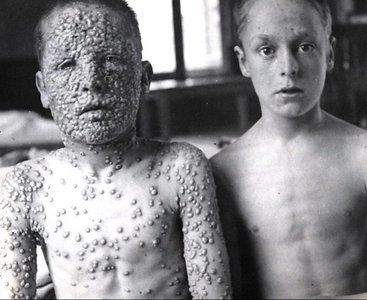
Vaccines are a cornerstone of immunology, providing artificial induction of immunity against infectious diseases. The term 'vaccine' originated from Edward Jenner's work with cowpox to prevent smallpox, and was later expanded by Louis Pasteur to include all artificial immunization methods.
Vaccine: A suspension of organisms or their fractions that induce immunity.
Variolation: Early method of inoculating smallpox virus into the skin.
Historical Example: Jenner inoculated material from cowpox lesions to prevent smallpox.
Principles and Effects of Vaccination
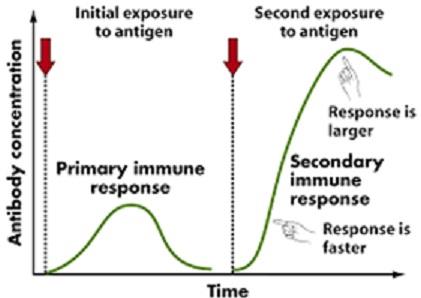
Vaccination provokes a primary immune response, leading to antibody and memory cell formation. Upon subsequent exposure, a rapid and intense secondary response occurs, providing effective protection. Herd immunity arises when most of the population is immune, reducing outbreaks.
Primary Immune Response: Initial antibody production after first exposure.
Secondary Immune Response: Faster and larger response upon re-exposure.
Herd Immunity: Population-level immunity that limits disease spread.
Types of Vaccines and Their Characteristics
Vaccines are classified based on their composition and method of preparation. Each type has distinct advantages and limitations.
Live Attenuated Vaccines: Contain weakened pathogens; mimic natural infection and confer lifelong immunity with few doses. Not suitable for immunocompromised individuals.
Inactivated (Killed) Vaccines: Contain killed pathogens; safer but require booster doses and induce mainly humoral immunity.
Subunit Vaccines: Use antigenic fragments; include recombinant and virus-like particle (VLP) vaccines.
Conjugated Vaccines: Combine antigens with proteins to enhance immune response, especially in children.
Nucleic Acid (DNA) Vaccines: Injected DNA produces protein antigens, stimulating both humoral and cellular immunity.
Toxoids: Inactivated toxins targeting harmful bacterial substances; antitoxins are serums containing antibodies against toxins.
Comparison Table: Principal Vaccines for Bacterial Diseases
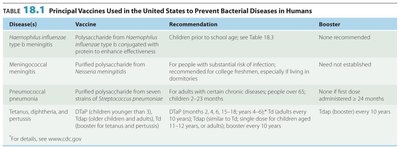
The following table summarizes key vaccines used in the United States to prevent bacterial diseases:
Disease(s) | Vaccine | Recommendation | Booster |
|---|---|---|---|
Haemophilus influenzae type b meningitis | Polysaccharide from Haemophilus influenzae type b conjugated with protein | Children prior to school age | None recommended |
Meningococcal meningitis | Purified polysaccharide from Neisseria meningitidis | For people with substantial risk | Not established |
Pneumococcal pneumonia | Purified polysaccharide from Streptococcus pneumoniae | For adults with certain chronic diseases | None if first dose |
Tetanus, diphtheria, and pertussis | DTaP (diphtheria toxoid, acellular pertussis, tetanus toxoid) | Children and adults | Td booster every 10 years |
Comparison Table: Principal Vaccines for Viral Diseases
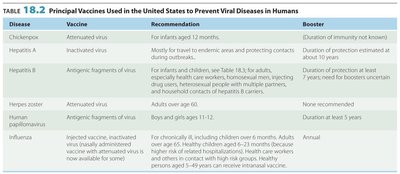
The following table summarizes key vaccines used in the United States to prevent viral diseases:
Disease | Vaccine | Recommendation | Booster |
|---|---|---|---|
Chickenpox | Attenuated virus | For infants aged 12 months | Duration of immunity not known |
Hepatitis A | Inactivated virus | For travel to endemic areas | Duration of protection ~10 years |
Hepatitis B | Antigenic fragments of virus | For infants and at-risk adults | Duration of protection in infants; boosters not recommended |
Herpes zoster | Attenuated virus | Adults over age 60 | None recommended |
Influenza | Injected vaccine, inactivated virus; nasal vaccine, attenuated virus | For chronically ill, children over 6 months, adults over 50 | Annual |
Adjuvants
Adjuvants are chemical additives that enhance the effectiveness of vaccines by improving the innate immune response. Common adjuvants include aluminium hydroxide and aluminium phosphate.
Adjuvant: Substance added to vaccines to boost immune response.
Example: Alum (aluminium salts) was the first adjuvant used.
Safety and Value of Vaccines
Vaccines are the safest and most effective means of preventing infectious diseases in children. Although rare adverse effects can occur, there is no scientific evidence linking vaccines such as MMR to autism.
Acceptable Risks: Minor side effects are outweighed by the benefits of disease prevention.
Diagnostic Immunology
Sensitivity and Specificity in Diagnostic Tests
Diagnostic tests in immunology are evaluated based on sensitivity and specificity.
Sensitivity: Probability that a test correctly identifies true positives (few false negatives).
Specificity: Probability that a test correctly identifies true negatives (few false positives).
Monoclonal Antibodies: Production and Applications
Monoclonal antibodies (Mabs) are produced by hybridomas, which are formed by fusing a cancerous B cell (myeloma) with an antibody-producing normal B cell. Mabs are uniform, highly specific, and produced in large quantities for diagnostic and therapeutic purposes.
Hybridoma: Fusion of myeloma and spleen cells to produce monoclonal antibodies.
Applications: Diagnostic tools, treatment of autoimmune diseases, allergy therapy.
Types: Murine (-omab), chimeric (-ximab), humanized (-zumab), fully human (-umab).

Precipitation Reactions
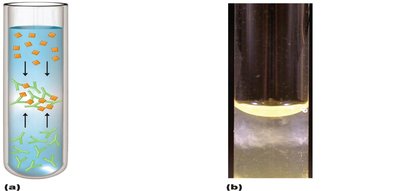
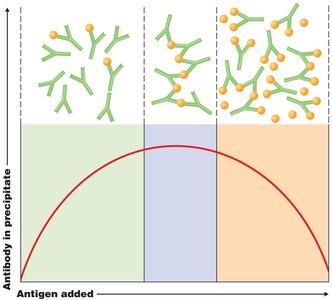
Precipitation reactions involve soluble antigens and antibodies forming large aggregates (lattices) that precipitate from solution. The optimal ratio of antigen to antibody produces a visible precipitate.
Precipitin Ring Test: Cloudy line forms at optimal antigen-antibody ratio.
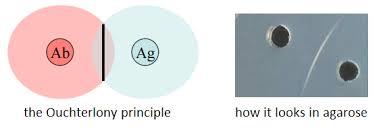
Immunodiffusion Tests: Precipitation reactions in agar gel (Ouchterlony principle).
Immunoelectrophoresis: Combines electrophoresis and immunodiffusion to separate serum proteins.
Agglutination Reactions
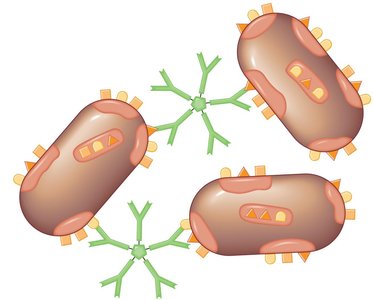
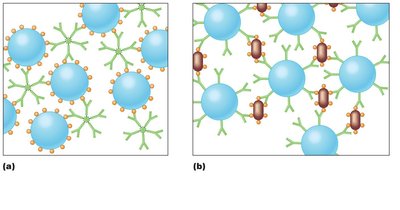
Agglutination reactions involve particulate antigens binding to antibodies, forming visible aggregates. These tests are used to detect antibodies against cellular antigens and to measure antibody concentration (titer).
Direct Agglutination: Detects antibodies against large cellular antigens.
Indirect (Passive) Agglutination: Uses particles coated with antigens or antibodies.
Seroconversion: Significant change in titer as disease progresses.
Hemagglutination
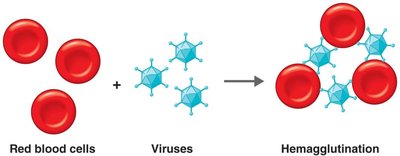
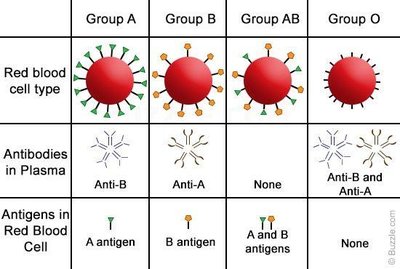
Hemagglutination is the agglutination of red blood cells (RBCs) by antibodies or viruses. It is used in blood typing and viral diagnostics.
Blood Typing: Agglutination of RBC surface antigens and antibodies.
Viral Hemagglutination: Viruses agglutinate RBCs without antigen-antibody reaction (e.g., mumps, measles, influenza).
Neutralization Reactions
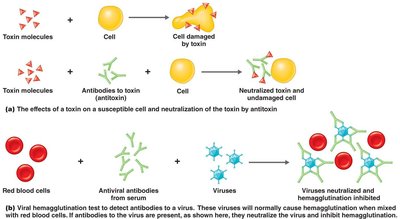
Neutralization reactions occur when antibodies block the harmful effects of exotoxins or viruses. The viral hemagglutination inhibition test is used for virus subtyping.
Antitoxin: Antibody that neutralizes a toxin.
Viral Hemagglutination Inhibition: Patient serum neutralizes virus, inhibiting hemagglutination.
Fluorescent-Antibody Techniques
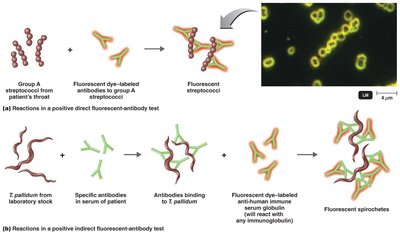
Fluorescent-antibody (FA) techniques use antibodies labeled with fluorescent dyes to detect antigens or antibodies. Direct FA tests identify microorganisms, while indirect FA tests detect specific antibodies in serum.
Direct FA Test: Detects antigen in clinical specimen.
Indirect FA Test: Detects antibody in serum using anti-human immune serum globulin (anti-HISG).
Fluorescence-Activated Cell Sorting (FACS)
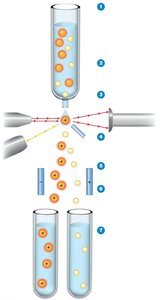
FACS is a technique that separates cells based on their fluorescence and size. Cells are labeled with fluorescent antibodies, and a laser beam imparts a charge to identified cells, which are then sorted into collection tubes.
Enzyme-Linked Immunosorbent Assay (ELISA)
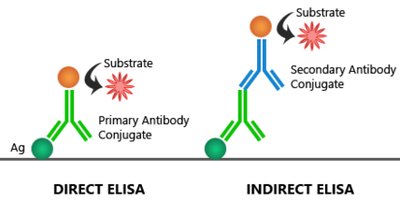
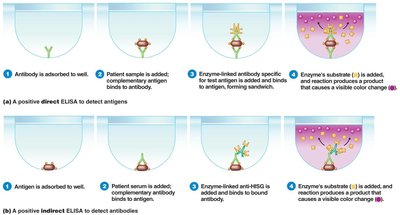
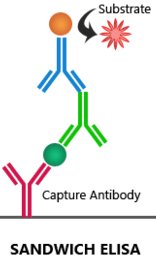
ELISA is a widely used diagnostic technique for detecting antigens or antibodies. Direct ELISA uses one antibody to detect antigens, while indirect ELISA uses two antibodies to detect antibodies.
Direct ELISA: Detects antigens using enzyme-linked antibodies.
Indirect ELISA: Detects antibodies using a secondary enzyme-linked antibody.
Monoclonal Antibodies in Pregnancy Tests
Home pregnancy tests utilize monoclonal antibodies to detect human chorionic gonadotropin (hCG), a hormone produced during pregnancy. A color change indicates a positive result.

Western Blotting (Protein Immunoblotting)
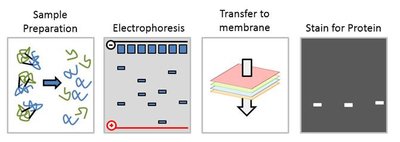
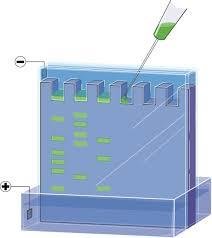
Western blotting is an analytical technique used to identify and locate specific proteins. It involves electrophoresis, transfer to a membrane, and detection using specific antibodies.
Steps: Sample preparation, electrophoresis, transfer to membrane, staining for protein.
Application: Used to confirm HIV infection and other protein-based diagnostics.

Additional info: These notes expand upon the original lecture slides, providing definitions, examples, and context for each immunological technique and vaccine type. All included images directly reinforce the educational content and are strictly relevant to the adjacent explanations.
