 Back
BackPrinciples of Infectious Disease, Epidemiology, and Immunity
Study Guide - Smart Notes
 Tailored notes based on your materials, expanded with key definitions, examples, and context.
Principles of Infectious Disease and Epidemiology
Basic Disease Terminology
Understanding infectious diseases and their spread is fundamental in microbiology. Infectious disease refers to illness caused by a pathogen, while epidemiology is the study and control of disease occurrence in populations to promote public health.
Koch’s Postulates
Koch’s postulates are criteria used to establish a causative relationship between a microbe and a disease:
The same organism must be present in every case of the disease.
The organism must be isolated and grown in pure culture.
The cultured organism should cause disease in a healthy host.
The organism must be re-isolated from the experimentally infected host.
Limitations: Not all pathogens can be cultured, some only infect humans, and latent diseases complicate application.
Sources and Transmission of Pathogens
Pathogens originate from various sources:
Reservoirs: Natural habitats (animate or inanimate) where pathogens are found.
Endogenous: Pathogen comes from the host’s own body.
Exogenous: Pathogen is external to the host.
Transmission modes include direct contact, airborne, vehicle (fomites, food, water), vector (biological/mechanical), and vertical (mother to child).
Stages of Infectious Disease
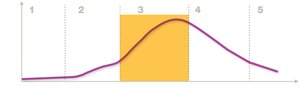
Infections progress through five general stages:
Incubation period: Time between infection and earliest symptoms.
Prodromal phase: Early, mild symptoms appear.
Acute phase: Peak of disease; most severe symptoms.
Period of decline: Symptoms resolve as pathogen is controlled.
Convalescent phase: Recovery; pathogen may remain latent.
The Epidemiological Triangle
The epidemiological triangle links three factors: host, etiological agent, and environment. Disease results from the interaction of these components.
Host factors: General health, age, sex, lifestyle, genetics.
Etiological agent: Type of microbe (bacteria, virus, fungus, parasite, prion).
Environmental factors: Climate, geography, vectors, water/food sources.

Host–Microbe Interactions and Pathogenesis
Five Steps to Infection
To establish infection, a pathogen must:
Enter the host
Adhere to host tissues
Invade tissues and obtain nutrients
Replicate while evading immune defenses
Transmit to a new host
Exotoxins are further classified by their mechanism of action (Type I, II, III).
Immune Evasion Strategies
Pathogens evade the immune system by:
Hiding inside host cells (intracellular lifestyle, latency)
Antigenic masking, mimicry, and variation
Interfering with phagocytosis
Suppressing immune responses
Innate and Adaptive Immunity
Fever
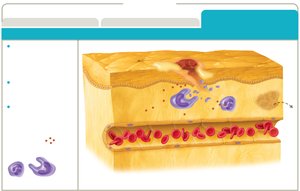
Fever is a systemic innate response that enhances immune function, inhibits pathogen growth, and promotes tissue repair.
Immune System Disorders
Immunodeficiencies
Primary immunodeficiencies: Genetic defects affecting immune function (e.g., SCID, DiGeorge syndrome).
Secondary immunodeficiencies: Acquired due to aging, infections, medical interventions, or systemic disorders.
Autoimmunity and Hypersensitivities
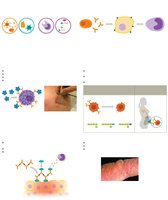
Autoimmunity is an immune attack against self-tissues, leading to chronic disorders (e.g., lupus, rheumatoid arthritis, type I diabetes).
Hypersensitivities are inappropriate immune responses classified as:
Type I: Allergy (IgE-mediated)
Type II: Cytotoxic (IgG/IgM-mediated)
Type III: Immune complex (IgG/IgM complexes)
Type IV: Delayed (T cell-mediated)
Transplantation and Immune Reactions
Transplant rejection: Mediated by T cells recognizing foreign MHC molecules.
Graft-versus-host disease: Donor immune cells attack recipient tissues.
Types of grafts: Autografts, isografts, allografts, xenografts.
Summary Table: Key Concepts
Concept | Definition | Example |
|---|---|---|
Pathogen | Microbe causing disease | Staphylococcus aureus |
Virulence Factor | Trait aiding infection | Toxin, capsule |
Innate Immunity | Non-specific, immediate defense | Skin, phagocytes |
Adaptive Immunity | Specific, memory-based defense | Antibodies, T cells |
Autoimmunity | Immune attack on self | Lupus |
Hypersensitivity | Inappropriate immune response | Allergy, asthma |
