 Back
BackProkaryotic Cell Structure and Function: Bacteria
Study Guide - Smart Notes
 Tailored notes based on your materials, expanded with key definitions, examples, and context.
Prokaryotes: Bacteria
General Characteristics of Bacteria
Bacteria are single-celled, prokaryotic microorganisms that are generally microscopic, though some exceptions can be seen with the naked eye. Despite their small size, bacteria are structurally and functionally complex. They are typically much smaller than eukaryotic cells and exhibit a variety of shapes and arrangements.
Prokaryotic: Lack a true nucleus and membrane-bound organelles.
Shapes: Most bacteria are coccus (spherical), bacillus (rod-shaped), or spiral.
Arrangements: Determined by the planes of cell division and whether cells remain attached after division.
Bacterial Shapes and Arrangements
Coccus (Spherical) Bacteria
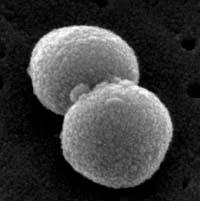
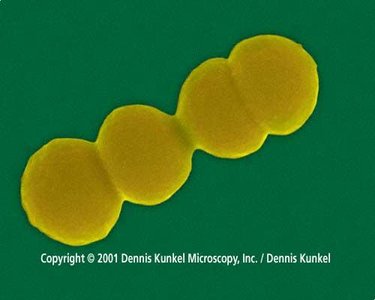
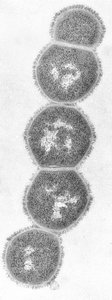
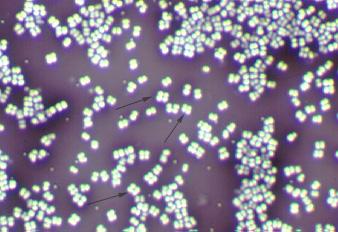
Cocci are spherical or oval bacteria that can be found in several distinct arrangements based on their division planes.
Diplococcus: Pairs of cocci resulting from division in one plane.
Streptococcus: Chains of cocci from repeated division in one plane.
Tetrad: Groups of four cocci arranged in a square, from division in two planes.
Sarcina: Cubes of eight cocci, from division in three planes.
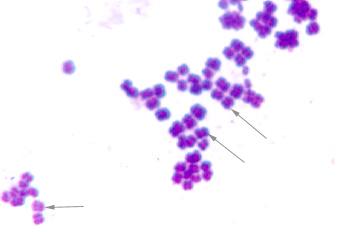
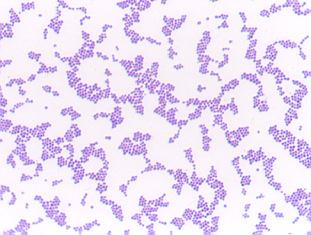
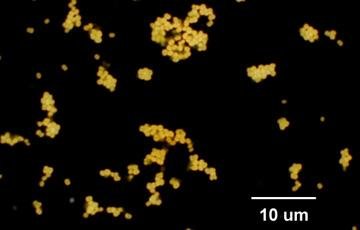
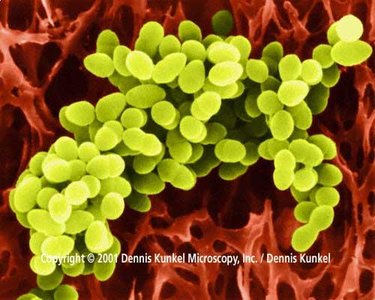
Staphylococcus: Irregular clusters from division in random planes.
Example: Streptococcus pneumoniae (diplococcus), Streptococcus pyogenes (streptococcus), Staphylococcus aureus (staphylococcus).
Bacillus (Rod-Shaped) Bacteria
Bacilli are rod-shaped bacteria that divide in one plane, resulting in different arrangements.
Bacillus: Single rods.
Streptobacillus: Chains of rods.
Coccobacillus: Oval-shaped, intermediate between cocci and bacilli.
Example: Pseudomonas aeruginosa (bacillus).
Spiral Bacteria
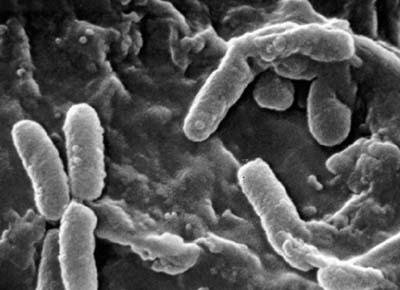
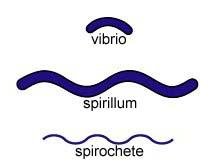
Spiral bacteria come in three main forms:
Vibrio: Comma-shaped.
Spirillum: Rigid, wavy-shaped.
Spirochete: Flexible, corkscrew-shaped.
Other Morphologies
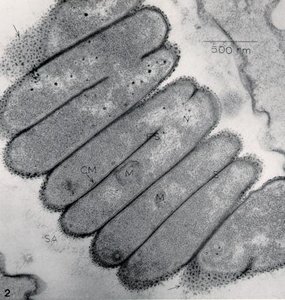
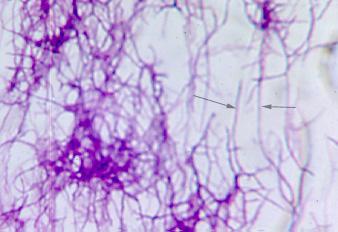
Some bacteria exhibit unusual shapes such as trichome-forming, sheathed, stalked, filamentous, square, star-shaped, spindle-shaped, lobed, and pleomorphic forms.
Cell Structure of Bacteria
Basic Structural Components
A typical bacterium consists of:
Cytoplasmic membrane: Phospholipid bilayer with embedded proteins, selectively permeable.
Cell wall: Contains peptidoglycan, provides rigidity and prevents osmotic lysis.
Cytoplasm: Contains nucleoid, ribosomes, and various inclusion bodies.
External structures: Glycocalyx, flagella, pili.
Cytoplasmic Membrane
The cytoplasmic membrane is a thin, flexible barrier that controls the movement of substances into and out of the cell. It is stabilized by hopanoids and is the site of various transport mechanisms.
Passive diffusion: Movement of small molecules from high to low concentration without energy input.
Osmosis: Diffusion of water across the membrane, influenced by solute concentration.
Facilitated diffusion: Transport of substances via proteins along a concentration gradient.
Active transport: Movement of substances against a concentration gradient using energy (proton motive force, ATP, or PEP).
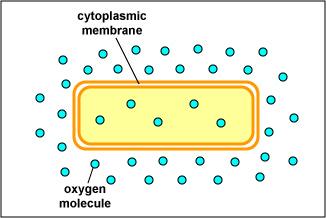
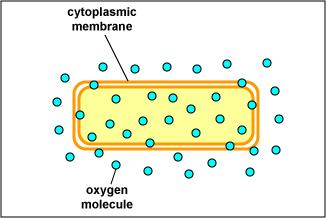
Transport Proteins
Antiporters: Transport two substances in opposite directions.
Symporters: Transport two substances in the same direction.
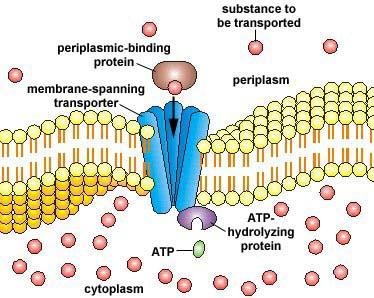
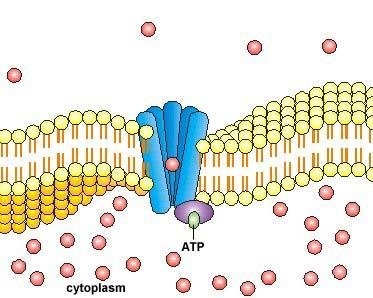
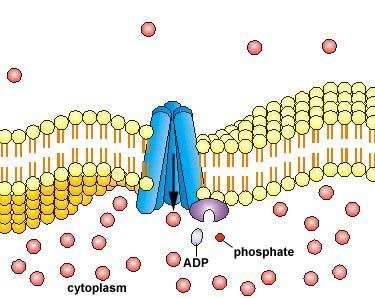
ABC transporters: Use ATP hydrolysis to transport substances via periplasmic-binding proteins.
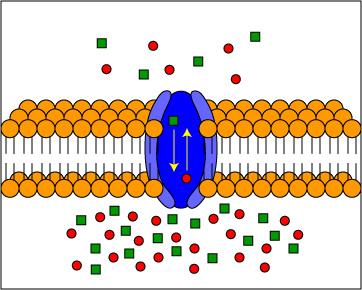
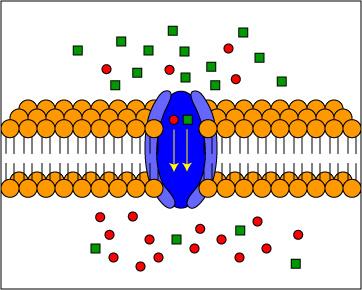
Group Translocation
In group translocation, a substance is chemically modified during transport, preventing its exit from the cell.
Binary Fission
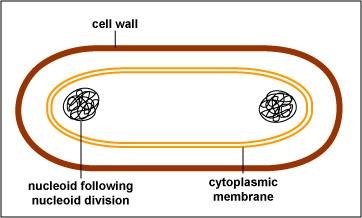
Bacteria reproduce by binary fission, a process in which one cell divides into two genetically identical daughter cells. This leads to exponential population growth.
DNA replication: Chromosomes attach to the division plane and segregate as the cell grows.
Antibiotic action: Some antibiotics disrupt the cytoplasmic membrane, causing cell lysis.
Peptidoglycan Cell Wall
The bacterial cell wall is composed of peptidoglycan, a strong, mesh-like polymer that provides structural support and prevents osmotic lysis. Many antibiotics target peptidoglycan synthesis.
Classification by Cell Wall Structure
Gram-positive: Thick peptidoglycan layer, stains purple.
Gram-negative: Thin peptidoglycan layer, outer membrane, stains pink.
Acid-fast: Waxy cell wall, resists decolorization, stains red.
Examples: Streptococcus (Gram-positive), Escherichia coli (Gram-negative), Mycobacterium tuberculosis (acid-fast).
Structures Within the Cytoplasm
Cytoplasm
The cytoplasm is the site of most metabolic activity and contains water, enzymes, nutrients, wastes, and cell structures.
Nucleoid
The nucleoid contains the bacterial chromosome, a single, circular, double-stranded DNA molecule. DNA is supercoiled and associated with histone-like proteins. Topoisomerases are essential for DNA replication and maintenance.
Plasmids and Transposons
Plasmids: Small, circular DNA molecules carrying non-essential genes, often for antibiotic resistance.
Transposons: Mobile genetic elements that can move between DNA molecules, spreading traits like antibiotic resistance.
Ribosomes
Bacterial ribosomes (70S) are the site of protein synthesis. Many antibiotics target bacterial ribosomes, inhibiting translation.
Endospores
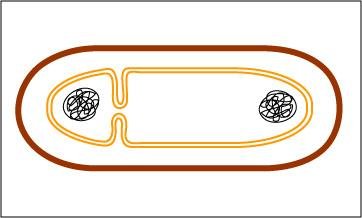
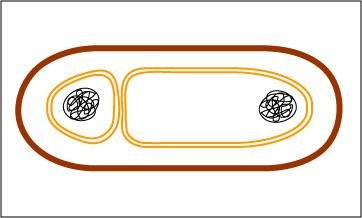
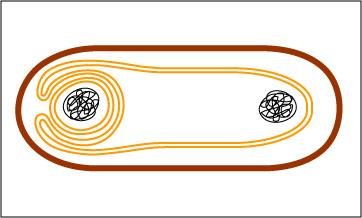
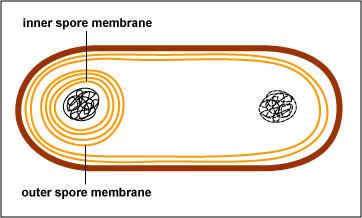
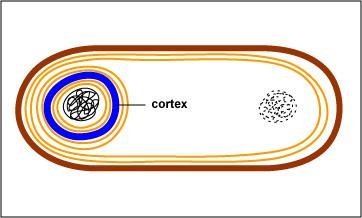
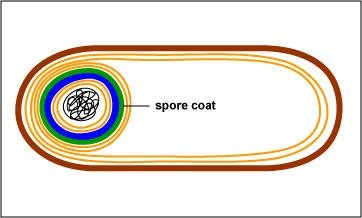
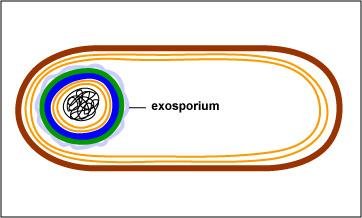
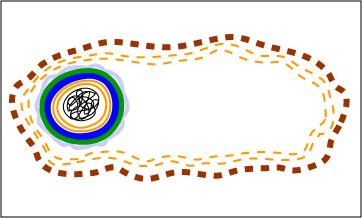
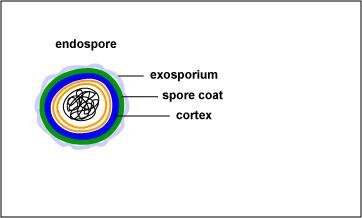
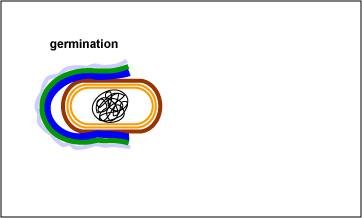
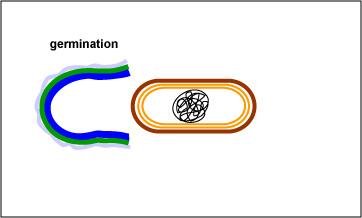
Endospores are highly resistant, dormant structures formed by some bacteria for survival under adverse conditions. They can withstand extreme temperatures, desiccation, and chemicals. Germination occurs when conditions become favorable.
Organelles for Photosynthesis
Cyanobacteria: Oxygenic photosynthesis, generate O2.
Green and purple bacteria: Anoxygenic photosynthesis, use reduced molecules as electron donors.
Other Inclusion Bodies
Cyanophycin granules: Nitrogen storage.
Carboxysomes: Contain enzymes for CO2 fixation.
Gas vacuoles: Regulate buoyancy.
Polyhydroxybutyrate/glycogen granules: Energy reserves.
Structures Outside the Cell Wall
Glycocalyx
The glycocalyx is a viscous, gelatinous layer external to the cell wall. It can be a capsule (organized, tightly bound) or a slime layer (unorganized, loosely attached). It is composed of polysaccharides or polypeptides and aids in resisting phagocytosis and adhering to surfaces.
S-Layer
The S-layer is a regularly structured protein or glycoprotein layer that protects bacteria from environmental threats and aids in adhesion.
Flagella
Flagella are long, whip-like structures used for bacterial motility. They consist of a filament, hook, and basal body. Movement is powered by a proton gradient, and flagella can rotate in both directions.
Pili
Pili are thin, protein tubes that originate from the cytoplasmic membrane. They have adhesive tips for attachment to surfaces or host cells, facilitating colonization and resisting removal. Some pili are involved in genetic exchange (conjugation pili).
Summary Table: Bacterial Cell Structures and Functions
Structure | Composition | Function |
|---|---|---|
Cytoplasmic membrane | Phospholipid bilayer, proteins | Selective permeability, transport, energy generation |
Cell wall | Peptidoglycan | Shape, protection, prevents lysis |
Nucleoid | DNA | Genetic information |
Plasmid | DNA | Accessory genes (e.g., antibiotic resistance) |
Ribosome | rRNA, protein | Protein synthesis |
Endospore | Multiple layers | Dormancy, resistance |
Glycocalyx | Polysaccharide/protein | Protection, adhesion |
Flagellum | Protein | Motility |
Pilus | Protein | Attachment, genetic exchange |
