 Back
BackStudy Guide: Infection, Infectious Diseases, and Epidemiology
Study Guide - Smart Notes
 Tailored notes based on your materials, expanded with key definitions, examples, and context.
Symbiotic Relationships Between Microbes and Their Hosts
Types of Symbiosis
Symbiosis refers to the interaction between two different organisms living in close physical association. Microbes and their hosts can engage in various symbiotic relationships, which are fundamental to understanding microbial ecology and pathogenesis.
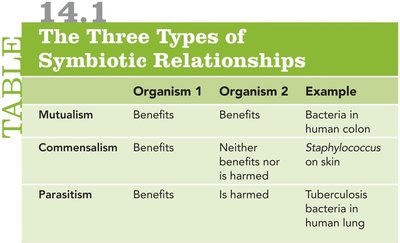
Mutualism: Both organisms benefit from the relationship. Example: Bacteria in the human colon synthesize vitamins for the host and receive nutrients.
Commensalism: One organism benefits, while the other is neither helped nor harmed. Example: Staphylococcus on skin.
Parasitism: One organism benefits at the expense of the other. Example: Tuberculosis bacteria in human lung.
Type | Organism 1 | Organism 2 | Example |
|---|---|---|---|
Mutualism | Benefits | Benefits | Bacteria in human colon |
Commensalism | Benefits | Neither benefits nor is harmed | Staphylococcus on skin |
Parasitism | Benefits | Is harmed | Tuberculosis bacteria in human lung |
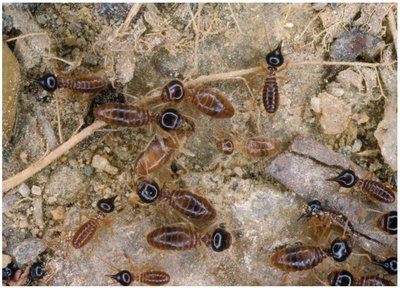
Mutualism Example
Mutualistic relationships are common in nature. For example, termites rely on symbiotic protozoa and bacteria in their gut to digest cellulose, which they cannot do on their own.
Normal Microbiota in Hosts
Definition and Types
Normal microbiota, also known as normal flora or indigenous microbiota, are microorganisms that colonize the body’s surfaces without causing disease under normal circumstances. They are classified as:
Resident microbiota: Remain throughout life and are mostly commensal.
Transient microbiota: Present for a short period; cannot persist due to competition, elimination by body defenses, or changes in the body.
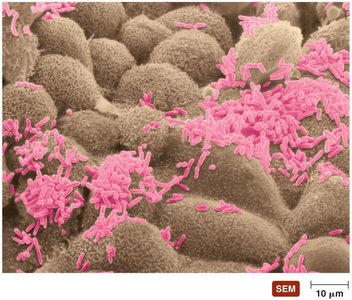
Example of Normal Microbiota
Resident microbiota can be visualized colonizing epithelial surfaces, such as the human intestine, where they play roles in digestion and protection against pathogens.
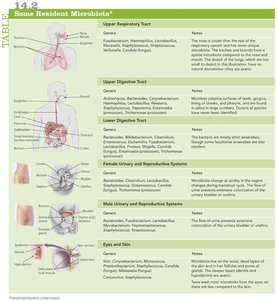
Distribution of Resident Microbiota
Resident microbiota are found in various regions of the body, including the respiratory tract, digestive tract, urinary and reproductive systems, and skin. Their composition varies by location and environmental conditions.
Body Region | Genus | Notes |
|---|---|---|
Upper Respiratory Tract | Staphylococcus, Haemophilus, etc. | Microbiota colonize surfaces of nasal, oral, and pharyngeal mucosa. |
Upper Digestive Tract | Actinomyces, Bacteroides, etc. | Microbiota colonize teeth, gums, and oral mucosa. |
Lower Digestive Tract | Bifidobacterium, Clostridium, etc. | Microbiota are mostly anaerobes. |
Female Urinary & Reproductive Systems | Lactobacillus, Streptococcus, etc. | Microbiota change with hormonal cycles. |
Male Urinary & Reproductive Systems | Staphylococcus, Mycobacterium, etc. | Microbiota are found on the outer urethral surface. |
Eyes & Skin | Staphylococcus, Micrococcus, etc. | Microbiota are found on exposed surfaces. |
Acquisition and Role of Normal Microbiota
Acquisition
Humans develop normal microbiota during the birthing process and early months of life. The womb is typically axenic (free of microorganisms), but colonization begins at birth.
Opportunistic Pathogens
Normal microbiota can become opportunistic pathogens under certain conditions, such as immune suppression, introduction to unusual sites, or changes in abundance. These pathogens can cause disease when the host’s defenses are compromised.
Reservoirs of Infectious Diseases
Types of Reservoirs
Reservoirs are sites where pathogens are maintained as sources of infection. They include:
Animal reservoirs: Zoonoses are diseases naturally spread from animal hosts to humans via direct contact, consumption, or arthropod vectors.
Human carriers: Infected individuals who are asymptomatic but can transmit pathogens.
Nonliving reservoirs: Soil, water, and food contaminated by feces or urine.
The Movement of Microbes into Hosts: Infection
Contamination vs. Infection
Contamination is the presence of microbes on or in the body, while infection occurs when microbes evade defenses, multiply, and establish themselves.
Portals of Entry
Pathogens enter the body through specific sites known as portals of entry. The four major pathways are:
Skin: Acts as a barrier; pathogens enter through cuts or by burrowing.
Mucous membranes: Line body cavities; respiratory tract is the most common entry site.
Placenta: Usually a barrier, but some pathogens can cross and infect the fetus.
Parenteral route: Pathogens are deposited directly beneath skin or mucous membranes.
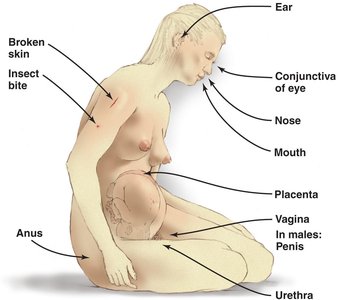
Skin as a Portal of Entry
The skin’s outer layer of dead cells provides protection, but pathogens can enter through breaks or by digesting the skin.
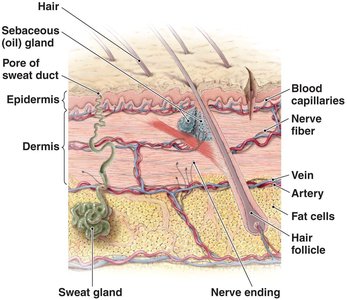
The Role of Adhesion in Infection
Adhesion is the process by which microorganisms attach to host cells, a critical step for colonization. Adhesion factors include specialized structures and attachment proteins (ligands) that bind to host cell receptors.
Attachment proteins determine host specificity.
Blocking ligands or receptors can prevent infection.
Biofilms are formed by some bacteria through mutual attachment.
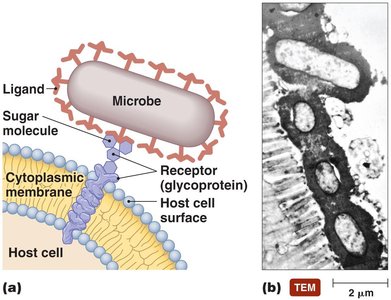
Biofilm Formation
Bacterial pathogens can attach to each other and surfaces to form biofilms, which protect them from host defenses and increase virulence.
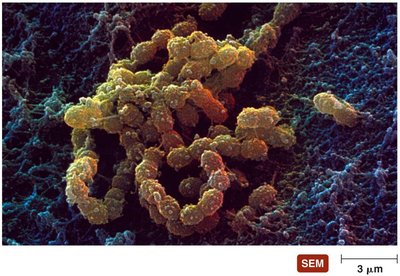
The Nature of Infectious Disease
Definitions
Infection is the invasion of the host by a pathogen. Disease (morbidity) results when the pathogen alters normal body functions.
Manifestations: Symptoms, Signs, and Syndromes
Symptoms: Subjective experiences felt by the patient (e.g., pain).
Signs: Objective evidence observed by others (e.g., fever).
Syndrome: A group of symptoms and signs that characterize a disease.
Asymptomatic (subclinical) infections: Lack symptoms but may show signs.
Causation of Disease: Etiology
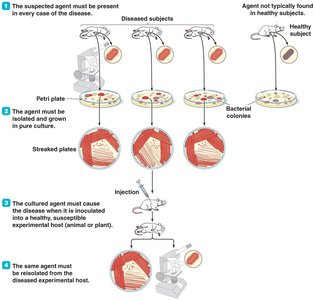
Etiology is the study of the cause of disease. The germ theory states that diseases are caused by pathogenic microorganisms. Robert Koch developed postulates to prove causation:
The suspected agent must be present in every case of the disease.
The agent must be isolated and grown in pure culture.
The cultured agent must cause disease in a healthy host.
The same agent must be reisolated from the diseased host.
Exceptions to Koch’s Postulates
Some pathogens cannot be cultured.
Some diseases are caused by multiple pathogens or cofactors.
Ethical constraints prevent testing on humans.
Virulence Factors of Infectious Agents
Pathogenicity and Virulence
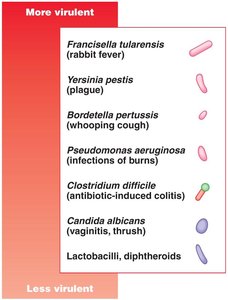
Pathogenicity is the ability to cause disease; virulence is the degree of pathogenicity. Virulence factors include adhesion, biofilms, extracellular enzymes, toxins, and antiphagocytic factors.
Extracellular Enzymes
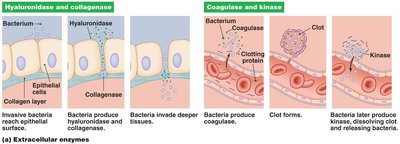
Pathogens secrete enzymes that dissolve structural chemicals, aiding invasion and evasion of host defenses. Examples include hyaluronidase, collagenase, coagulase, and kinase.
Toxins
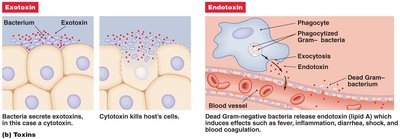
Toxins are chemicals that damage tissues or trigger harmful immune responses. Toxemia is the presence of toxins in the bloodstream. Two main types:
Exotoxins: Secreted by bacteria; kill host cells.
Endotoxins: Released from dead Gram-negative bacteria; cause fever, inflammation, and shock.
Antiphagocytic Factors
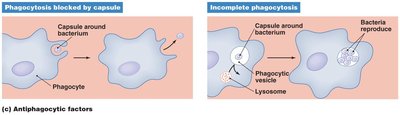
These factors prevent phagocytosis by host cells. Bacterial capsules are composed of chemicals not recognized as foreign and are slippery, making engulfment difficult. Antiphagocytic chemicals prevent fusion of lysosome and phagocytic vesicles; leukocidins destroy phagocytic cells.
The Stages of Infectious Disease
Stages
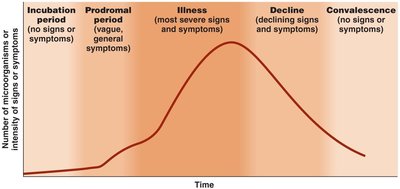
Infectious diseases typically progress through five stages:
Incubation period: No signs or symptoms.
Prodromal period: Vague, general symptoms.
Illness: Most severe signs and symptoms.
Decline: Declining signs and symptoms.
Convalescence: No signs or symptoms.
The Movement of Pathogens Out of Hosts: Portals of Exit
Portals of Exit
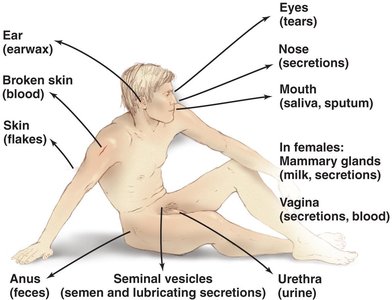
Pathogens leave the host through portals of exit, often the same as portals of entry. They are expelled in secretions or excretions.
Modes of Infectious Disease Transmission
Transmission Groups
Transmission occurs from a reservoir or portal of exit to another host’s portal of entry. Three main groups:
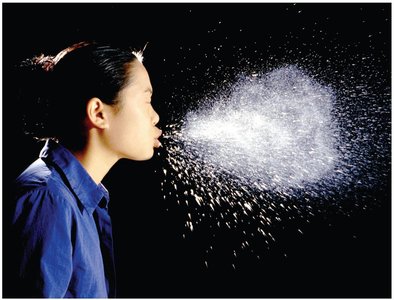
Contact transmission: Direct, indirect, or droplet.
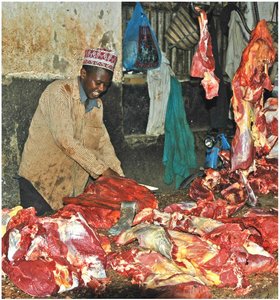
Vehicle transmission: Airborne, waterborne, or foodborne.
Vector transmission: Biological or mechanical.
Classification of Infectious Diseases
Classification Criteria
Diseases can be classified by the body system affected, taxonomic category, longevity and severity, mode of transmission, and population effects.
Acute: Rapid onset, short duration.
Chronic: Slow onset, long duration.
Subacute: Intermediate between acute and chronic.
Latent: Pathogen inactive for a period.
Communicable: Spread from host to host.
Contagious: Easily spread.
Epidemiology of Infectious Diseases
Frequency of Disease
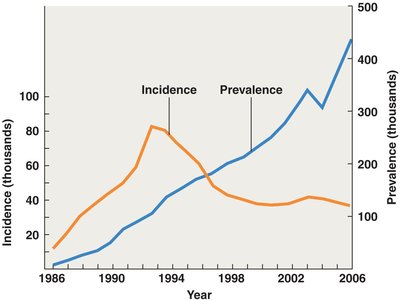
Epidemiologists track disease occurrence using incidence (new cases) and prevalence (total cases). Occurrence is also evaluated by frequency and geographic distribution.

Epidemiological Studies
Descriptive epidemiology: Tabulation of data, location, time, and patient information; identifies index case.
Analytical epidemiology: Determines cause, mode of transmission, and prevention; often retrospective.
Experimental epidemiology: Tests hypotheses; application of Koch’s postulates.
Hospital Epidemiology: Nosocomial Infections
Nosocomial infections are acquired in healthcare settings. Types include:
Exogenous: Acquired from the environment.
Endogenous: Arise from normal microbiota due to healthcare factors.
Iatrogenic: Result from medical procedures.
Hand washing is the most effective method to reduce nosocomial infections.
Epidemiology and Public Health
Public health agencies monitor and control disease transmission, ensure water and food safety, and educate the public to limit disease spread. Examples include the United States Public Health Service and the World Health Organization (WHO).
